Skip to content

Star Queen Chronicles

Space obsession, queen confessions.

Menu
  • Star Queen Chronicles
  • About the Star Queen
  • Posts Page
  • Privacy Policy
  • Gallery
Menu

Basic Rocket Science: How Rockets Defy Gravity and Reach the Stars

Posted on January 4, 2026January 5, 2026 by admin

Rockets fascinate us because they make the impossible look routine—blasting massive machines off Earth and into orbit or beyond. But the science behind them boils down to a few key principles that anyone can grasp. Let’s break it down step by step, no PhD required!

1. Newton’s Third Law: Action and Reaction

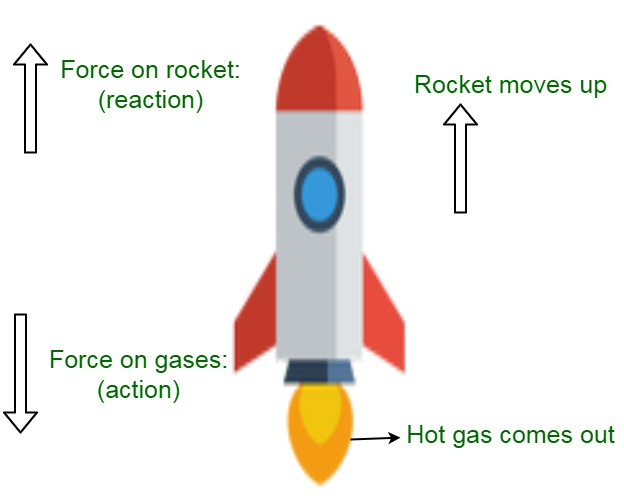
The foundation of rocket propulsion is Isaac Newton’s Third Law: For every action, there’s an equal and opposite reaction.

In a rocket:

  • Hot gases blast out the nozzle (action).
  • The rocket shoots forward (reaction).

No air needed in space—this works in vacuum because the rocket carries its own propellant.
Newton's Third Law of Motion - GeeksforGeeks
geeksforgeeks.org
Rocket Propulsion Diagram
byjus.com
How do Rocket Engines work? | The Space Techie
thespacetechie.com

2. Stages: Why Rockets Shed Weight

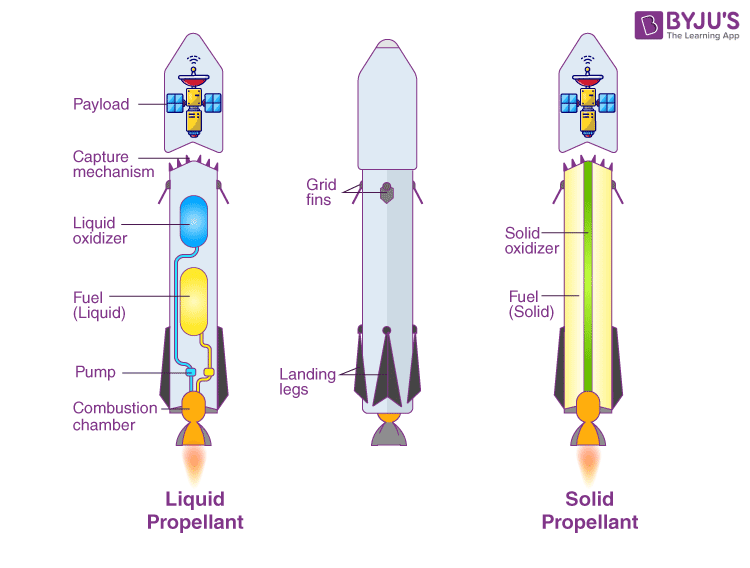
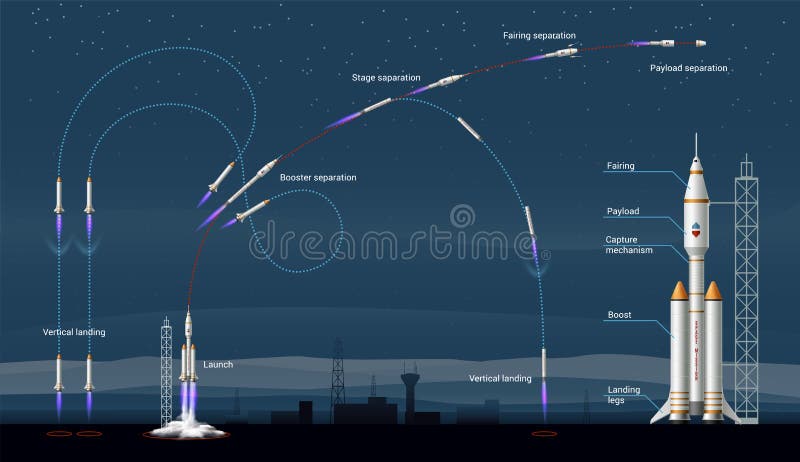
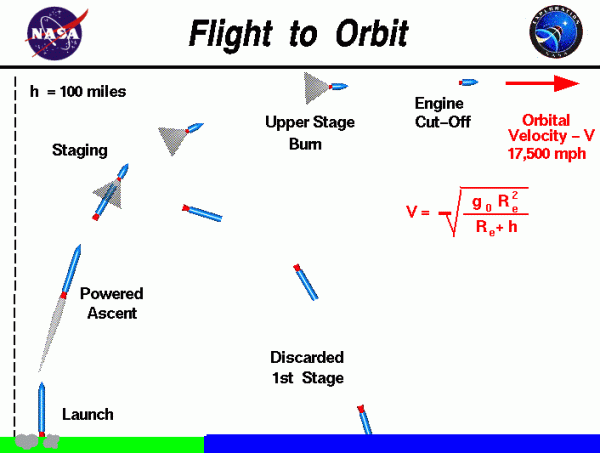
Most rockets are multi-stage—think layers that drop off as fuel burns.

Why? To ditch dead weight. An empty fuel tank is useless mass. Staging lets the rocket accelerate faster with less effort.

Typical stages:

  • Booster (Stage 1): Heavy lift-off thrust.
  • Upper stages: Finer control for orbit or beyond.
Flight To Orbit | Glenn Research Center | NASA
www1.grc.nasa.gov
Rocket Launch Stages Infographics Stock Vector - Illustration of ...
dreamstime.com
6+ Hundred Satellite Launch Vehicle Stages Royalty-Free Images ...
shutterstock.com

3. The Rocket Equation: Delta-V Matters Most

The Tsiolkovsky rocket equation tells us how far a rocket can go:

Δv = v_e × ln(m_0 / m_f)

  • Δv (delta-v): Change in velocity—the “budget” for reaching orbit or other planets.
  • v_e: Exhaust velocity (how fast gases exit).
  • m_0 / m_f: Initial mass vs. final mass (more fuel = more Δv, but heavier rocket).

To orbit Earth (~9.4 km/s Δv), rockets need massive fuel loads—often 90%+ of launch mass is propellant!
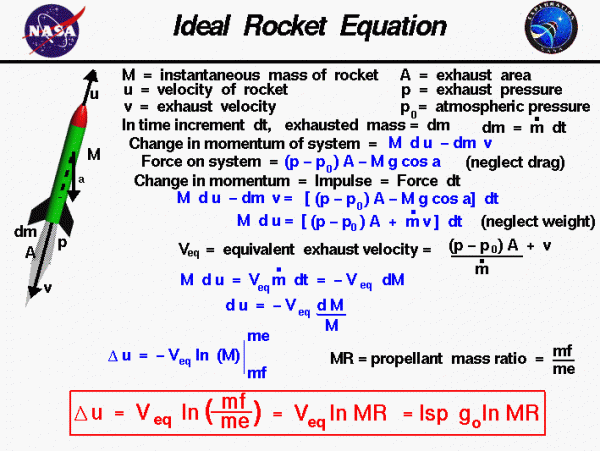
Ideal Rocket Equation | Glenn Research Center | NASA
www1.grc.nasa.gov
I did some calculations for delta v, and found something ...
reddit.com

The Magic in the Chaos

Rockets look simple—fire out the bottom, go up—but the engineering to make it reliable is mind-blowing. From Falcon 9 landings to Starship tests, every flight teaches us more.

That’s why I’m obsessed. The science is elegant. The execution is epic.

What part of rocket basics blows your mind most? Drop a comment—I’d love to geek out with you!

— The Star Queen 🌟🚀

Post navigation

← Why Starship Flight Tests Keep Me Up at Night – A Space Fan’s Obsession
The Orbit of Letting Go →

Leave a Reply Cancel reply

Your email address will not be published. Required fields are marked *

Recent Posts

  • The Quiet Moons of Anxiety
  • From Empty Field to Towering Dream: Gigabay Rising at KSC (End of Year 2025 Update)
  • Constellations I Drew Between Us
  • Supernova Heartbreak
  • The Orbit of Letting Go

Categories

Archives

Tags

Boca Chica constellation cosmic cosmic dust Falcon 9 full-moon Gigabay grid fins Hangar X heartbreak Kennedy Space Center landing legs Mars moon moons multi-planetary multi-stage new-moon orbit orbital payload propellant rocket rockets rocket science sky solar flare SpaceX star Starbase stars Starship Starship Test Flight supernova universe

Starbase Live

Space Coast Live

Launch Pad Live

© 2026 Star Queen Chronicles | Powered by Minimalist Blog WordPress Theme