By The Star Queen · Star Queen Chronicles
My loves, last week NASA gave the clearest picture yet of how astronauts are supposed to get back onto the Moon, and Blue Origin’s lander is a big part of it. 🌙 Blue Moon is really two vehicles, a small cargo lander and a big crewed one, and the plan changed again on October 23. Let’s sort out what’s what.
Everything here is as of October 25, 2026. I’ll mark what’s official, what’s reported, and what’s my own arithmetic.
The Short Version
- Blue Moon Mark 1 (Mk1) is an uncrewed cargo lander. Its first flight, named Endurance, is targeted for Q1 2027, and it needs a working New Glenn.
- Blue Moon Mark 2 (Mk2) is the crewed lander. It’s the one NASA hired to take astronauts to the surface.
- NASA’s October 23 update says Artemis III will be a 2027 test in Earth orbit, and landings are now planned for 2028.
- NASA says it will pick which company lands astronauts first based on readiness. It has not assigned a landing mission to either Blue Origin or SpaceX.
Terms to know ✨
- HLS (Human Landing System): NASA’s name for the landers that take astronauts from lunar orbit to the surface and back.
- BE-7: Blue Origin’s lunar-lander engine. It burns liquid hydrogen and liquid oxygen (“hydrolox”) and produces 10,000 lbf, with deep throttling down to 2,000 lbf (Blue Origin’s engine page).
- Propellant transfer: moving rocket fuel from one spacecraft to another in orbit, like a gas station in space.
- Elliptical polar orbit: a stretched-out orbit that passes over the Moon’s poles, which is where NASA wants to land.
- CLPS: NASA’s Commercial Lunar Payload Services program, which buys rides for science instruments to the Moon.
- Test article: a version of a spacecraft built to be tested, not to land astronauts.
Mark 1: The Cargo Lander
Mk1 is a single-launch lander that Blue Origin says delivers 3 metric tons of payload to the lunar surface on New Glenn 7×2, with more on the 9×4. It uses one BE-7 engine. Blue Origin’s page lists the first four vehicles this way: MK1-101 Endurance (a demonstration ahead of VIPER), MK1-102 (carrying NASA’s VIPER rover), and MK1-103 and MK1-104 (delivering two Lunar Terrain Vehicles).
NASA says Endurance is a commercial demonstration that Blue Origin funded itself, working under a reimbursable Space Act Agreement. It will test precision landing, cryogenic propulsion and autonomous guidance, and carry two NASA instruments to the lunar south pole region: cameras to study how the engine plume disturbs the surface, and a laser reflector array.
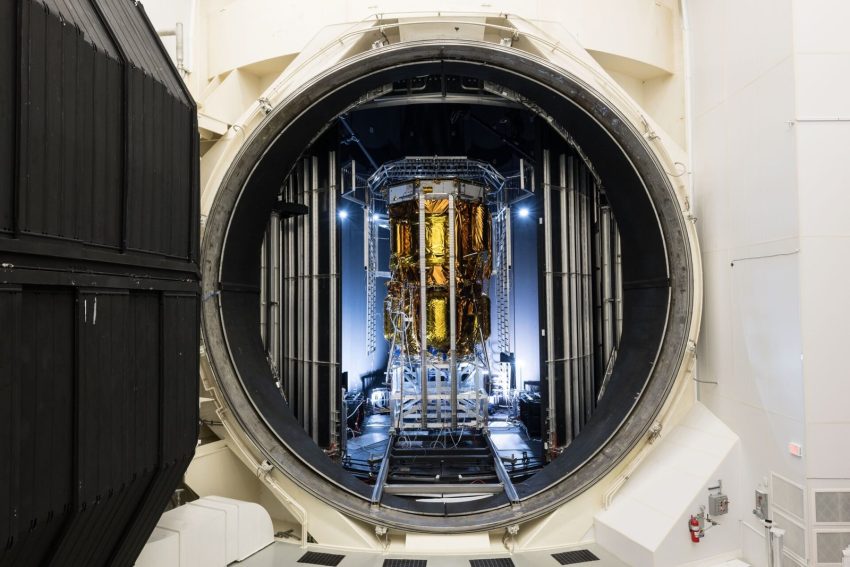
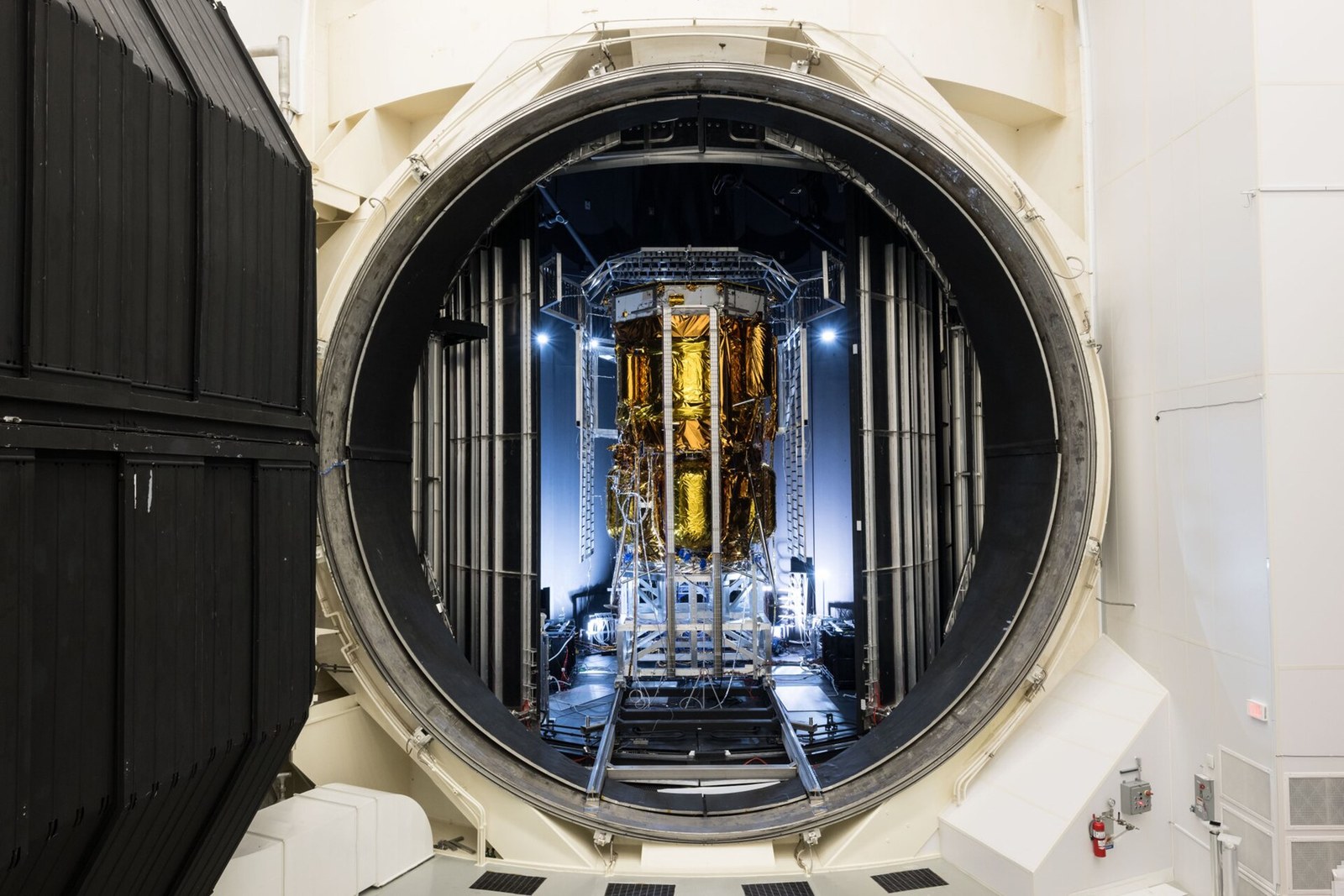
Progress so far (official, NASA): Mk1 finished environmental testing in the thermal vacuum chamber at Johnson Space Center. By August 4, NASA said the structure, propulsion and avionics were assembled and communications checks were done, with fueling tests next. Aerospace America quoted NASA’s Jacki Cortese in September calling it a “high-risk, high-reward mission.”
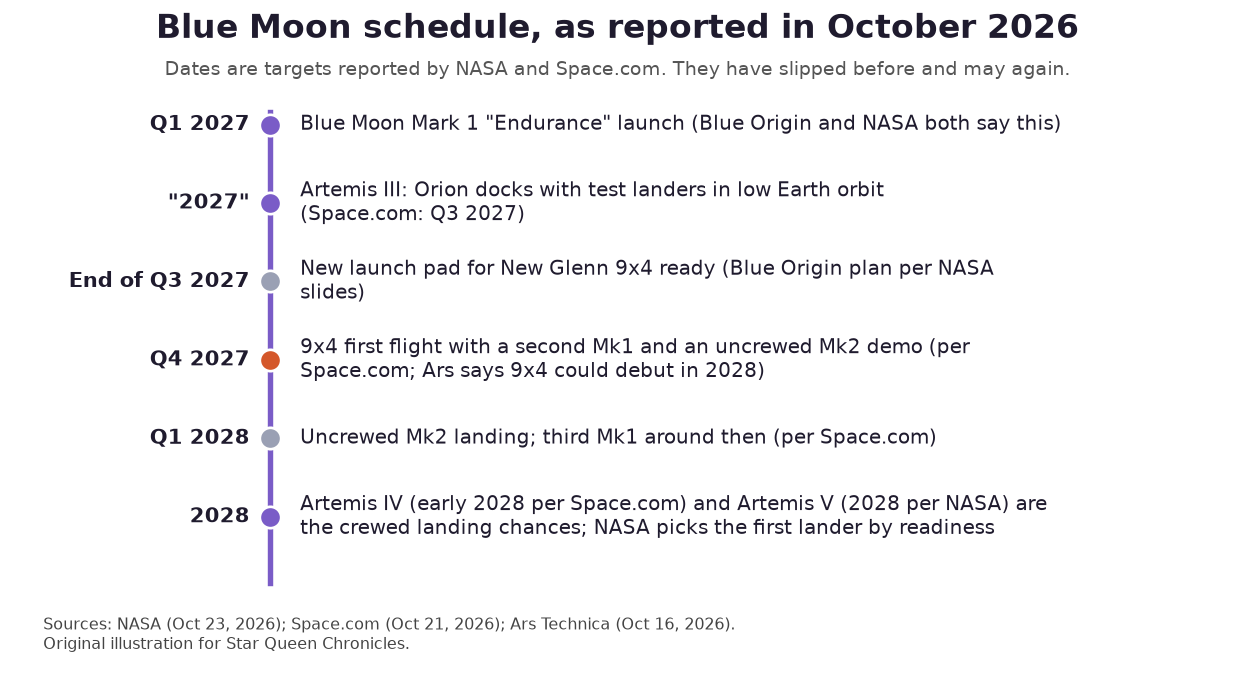
Schedule: Endurance was first planned for late summer 2026. After the May 28 New Glenn explosion, Blue Origin’s John Couluris said, “We expect that launch to occur in Q1 of 2027.” NASA’s lander timeline shows the same quarter. In June, NASA’s Isaacman said, “Plan A was always New Glenn,” and another NASA official said the agency was looking at options such as flying Mk1 on a different rocket.
Mark 2: The Crewed Lander
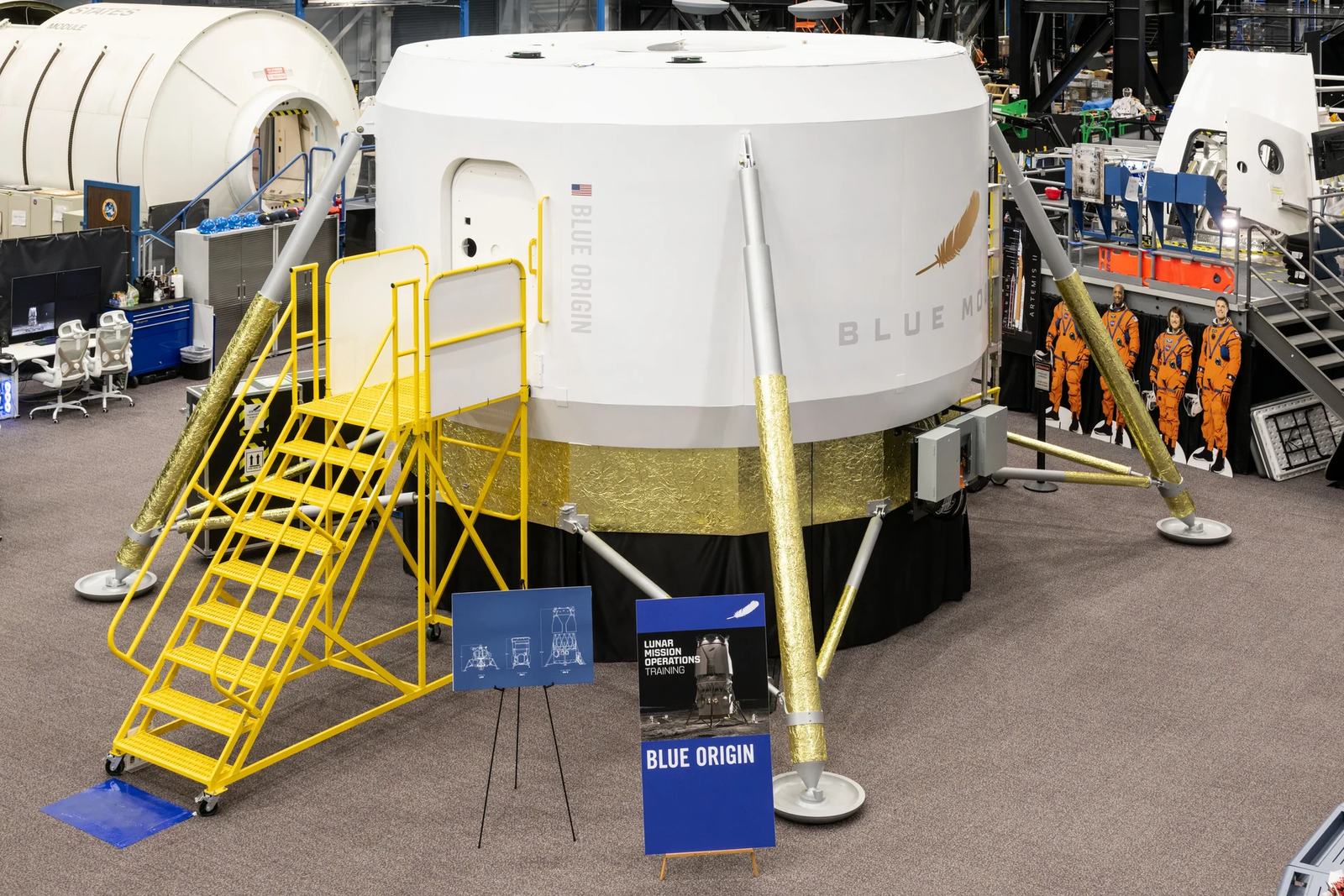
Blue Origin describes the Mk2 crew variant as four-crew capable, and says a cargo variant carries up to 30 metric tons to the surface. For Artemis, NASA says the lander stands about 52 feet (16 m) tall and takes two astronauts to the surface while two stay aboard Orion. Space.com reports it has three BE-7 engines.
The crew cabin is at the base of the lander, where two astronauts will eat, sleep and work. NASA says the full-size trainer at Johnson is more than 15 feet (5 m) tall.
The Contract
NASA picked Blue Origin in May 2023 as its second lander provider, a $3.4 billion firm-fixed-price deal under the Sustaining Lunar Development program. Under the original plan, Starship was assigned Artemis III and IV and Mk2 was assigned Artemis V. NASA said in October that the contracts were updated earlier this year, with both companies adding milestones, and now neither provider is assigned to a specific landing mission.
Artemis III: A Docking Test
NASA’s October 23 announcement says Artemis III launches in 2027 as a 14-day flight in Earth orbit with four astronauts (Bresnik, Rubio, Douglas and Parmitano). Space.com reports it’s targeted for Q3 2027. The Blue Moon Mk2 test article waits in a circular orbit of about 237 nautical miles, and NASA says the crew enters it for about two days. The Starship test article is different: it docks for up to two hours, and the crew doesn’t go inside. NASA says the two landers have different docking arrangements.
The New Blue Moon Plan
NASA says Blue Origin will defer propellant transfer for the first landing. Instead, three transfer stages built from existing Mk1 and Mk2 hardware launch into Earth orbit, followed by the “Mark 2 Alpha Lander.” They dock, and the stack heads to an elliptical polar orbit around the Moon, dropping each transfer stage as it runs out of fuel. Orion then meets the lander there.
Ars Technica reports that this plan needs four New Glenn launches, could use the expendable 7×2 or the reusable 9×4, and has no ship-to-ship refueling. Ars also reported that Orion docks in an orbit about 8,500 km up, based on a NASA graphic. Both providers must fly an uncrewed demonstration first.
How It Compares to Starship
NASA says SpaceX is sticking with in-orbit propellant transfer: multiple tanker Starships fill a depot Starship, which fuels the lander. Starship HLS then waits in Earth orbit for Orion, docks, and performs the burn toward the Moon itself, going to low lunar orbit.
How many launches is that? Ars reports a NASA safety panel estimated about 22 tanker launches, SpaceX’s Elon Musk said 6 to 8, and NASA declined to give a number. Those are very different answers, so I’ll treat them as unsettled.
Schedule Risks
Here’s what I’d keep an eye on, and where sources disagree:
- New Glenn has to fly first. Endurance can’t launch until New Glenn does. Blue Origin says before the end of the year and Bezos says December; Ars says early 2027 is likelier. Space.com’s report of NASA’s timeline puts the return in Q4 2026, and notes a Reuters report pointing to early 2027. I couldn’t open the Reuters article myself.
- The 9×4 date is shaky. Space.com, reporting NASA’s presentation, says the new pad is ready by the end of Q3 2027 and the 9×4 flies in Q4 2027 with a second Mk1 and the uncrewed Mk2 demo. Ars’s October 16 story says the 9×4 could debut in 2028. I haven’t seen Blue Origin publish either date itself.
- Uncrewed Mk2 landing: Q1 2028 (Space.com’s report of NASA’s timeline). Artemis IV, the first landing opportunity, is targeted for early 2028 per Space.com; NASA’s May release says Artemis IV and V are both in 2028.
- The engine is new. NASASpaceflight says Endurance’s mission will validate technologies including the BE-7. My read: that makes it a big test for the whole program.
What to Watch Next
- A New Glenn launch date. Everything lunar waits on it.
- Endurance’s fueling tests and shipment to the Cape. NASA said fueling was next as of August.
- Updated Artemis III dates (Q3 2027 per Space.com).
- Any change in the 9×4 and pad timeline.
- NASA’s choice of which lander goes first.
The Star Queen’s Takeaway 👑
Blue Origin’s approach is steady and a little cautious: a smaller lander first, a new three-stage trip to the Moon, and no tanker fleet for the first landing. But almost every date depends on a rocket that is grounded right now. If Endurance launches in early 2027 and lands, the whole schedule gets more believable. If it slips, so will everything behind it. 🌙
Sources
- Blue Origin, Blue Moon (undated): https://www.blueorigin.com/blue-moon
- Blue Origin, Blue Moon Mark 1 (undated): https://www.blueorigin.com/blue-moon/mark-1
- Blue Origin, Engines: BE-7 (undated): https://www.blueorigin.com/engines/be-7
- NASA, Blue Origin moon lander completes testing at NASA vacuum chamber (May 4, 2026): https://www.nasa.gov/missions/artemis/blue-origin-moon-lander-completes-testing-at-nasa-vacuum-chamber/
- NASA, Industry moon lander training cabin lands at NASA (May 7, 2026): https://www.nasa.gov/directorates/esdmd/artemis-campaign-development-division/human-landing-system-program/industry-moon-lander-training-cabin-lands-at-nasa-for-artemis/
- NASA, Moon Base cargo lander updates (Aug 4, 2026): https://www.nasa.gov/missions/moon-base/nasa-provides-updates-on-moon-base-cargo-landers-tech-demonstrations/
- NASA, Partners accelerate lander development for 2028 (Oct 23, 2026): https://www.nasa.gov/missions/artemis/nasa-partners-accelerate-lander-development-for-2028-moon-missions/
- NASA, Artemis III mission to test lander operations (Oct 23, 2026): https://www.nasa.gov/missions/artemis/nasas-artemis-iii-mission-to-test-future-moon-lander-operations/
- NASA, Selects Blue Origin as second Artemis lunar lander provider (May 19, 2023): https://www.nasa.gov/news-release/nasa-selects-blue-origin-as-second-artemis-lunar-lander-provider/
- Space.com, when will SpaceX and Blue Origin fly to the Moon (Oct 21, 2026): https://www.space.com/space-exploration/artemis/when-will-spacex-and-blue-origin-fly-to-the-moon-nasa-reveals-lunar-lander-timelines-and-an-artemis-iii-update
- Ars Technica, NASA updates lander plans (Oct 23, 2026): https://arstechnica.com/space/2026/10/nasa-updates-lander-plans-for-moon-landings-finally-solves-long-festering-orion-issue/
- Ars Technica, Blue Origin is going all in on New Glenn (Oct 16, 2026): https://arstechnica.com/space/2026/10/blue-origin-is-going-all-in-on-the-new-glenn-rocket/
- Aerospace America, NASA expects one lunar launch this year (Sep 15, 2026): https://aerospaceamerica.aiaa.org/nasa-expects-one-lunar-launch-this-year-moon-base-manager-says/
- Spaceflight Now, Blue Origin return-to-flight logistics (Jun 30, 2026): https://spaceflightnow.com/2026/06/30/blue-origin-outlines-return-to-flight-logistics-for-its-new-glenn-rockets/
- Spaceflight Now, Blue Origin identifies engine issue (Aug 6, 2026): https://spaceflightnow.com/2026/08/06/blue-origin-identifies-engine-issue-behind-new-glenn-explosion/
- NASASpaceflight, BlueBird 7 declared lost after New Glenn launch (Apr 19, 2026): https://www.nasaspaceflight.com/2026/04/ast-bluebird-7-lost-new-glenn-launch/