By The Star Queen · Star Queen Chronicles
My loves, this is my favorite kind of space story: a bold idea, a thrilling launch, a hard lesson, and a company that rebuilt itself around what it learned. 🛠️ Relativity Space started by promising to print nearly an entire rocket. Then it flew one, learned a lot, and decided to build something much bigger and quite different. Let’s follow the story from Terran 1 to Terran R.
Labels: official is from Relativity, reported is from journalists, and my take is opinion.
Terran 1: The Printed Rocket
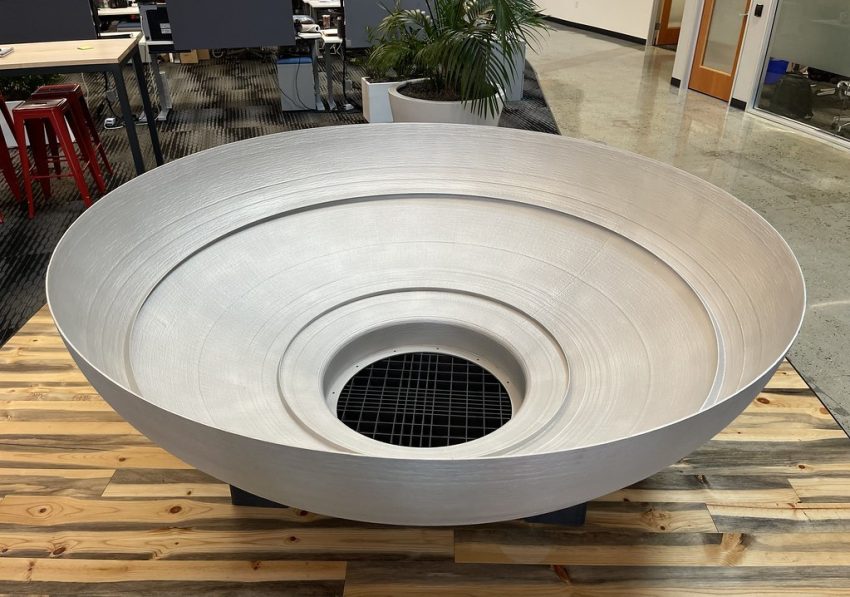
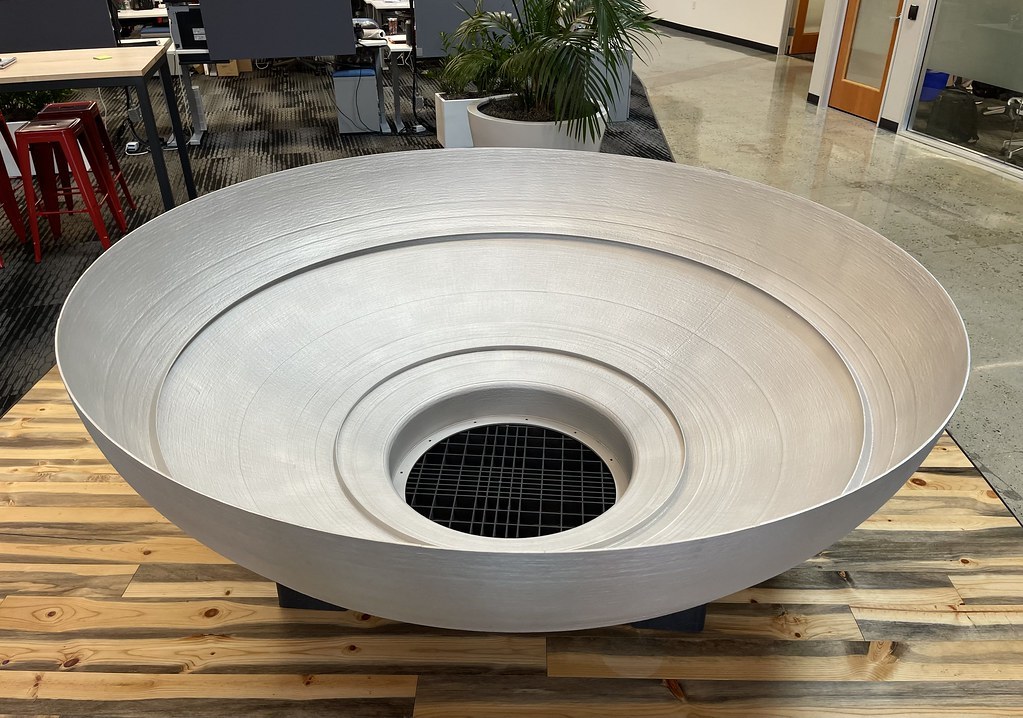
Terran 1 was built around 3D printing, a technique where a machine builds metal parts layer by layer. TCT Magazine reported that the vehicle was about 85% 3D printed by mass, powered by nine Aeon 1 engines producing 207,000 pounds-force of thrust combined at liftoff.
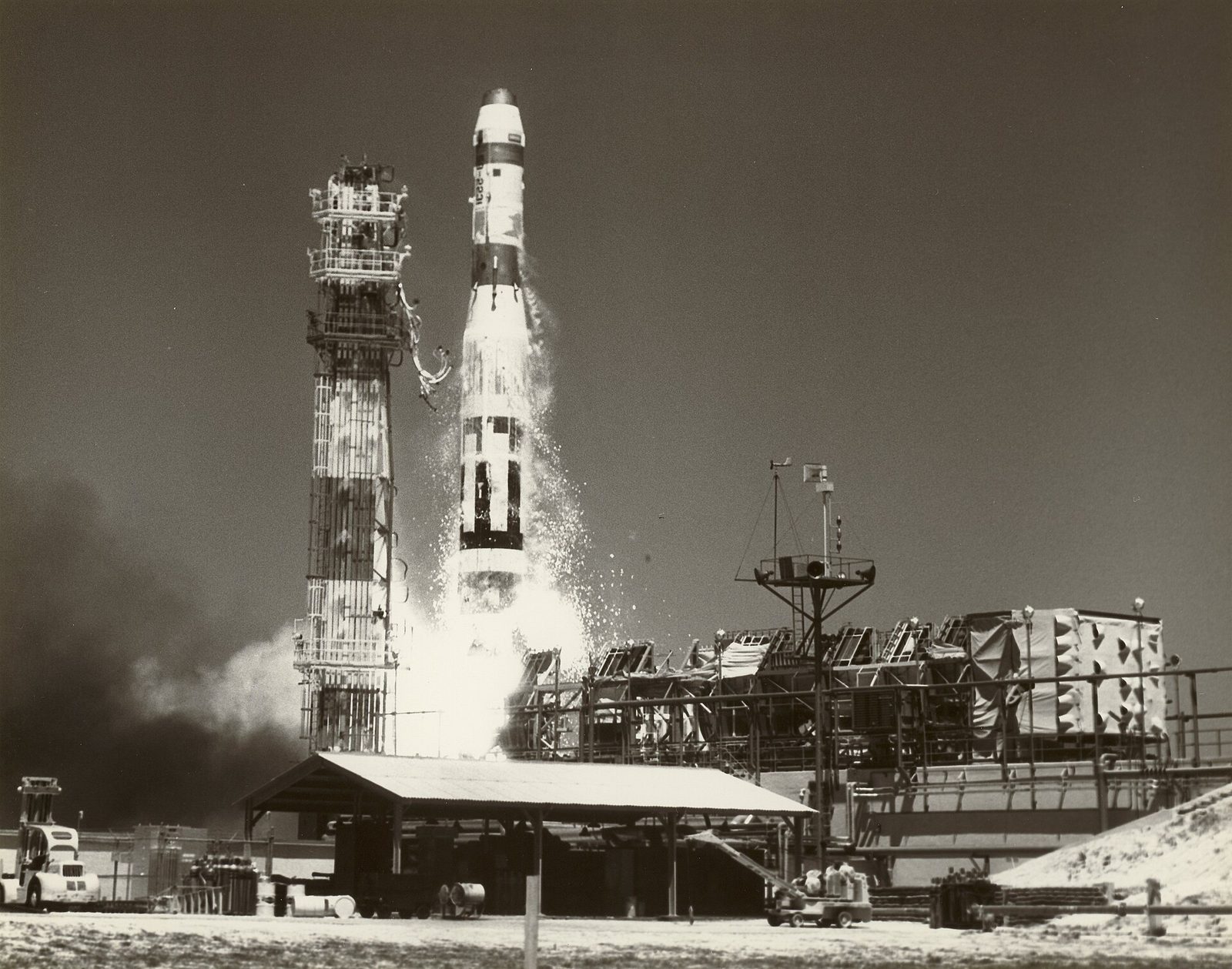
It launched from Launch Complex 16 at Cape Canaveral in the evening of March 22, 2023 according to Ars Technica. The Cape Canaveral Space Force Museum says March 23. My guess, and only a guess: the one-day difference may be Eastern time versus UTC, but I couldn’t confirm that.
What Happened on the Flight
- Official claim: Relativity called Terran 1 “the world’s first 3D printed rocket to fly and reach space.”
- Reported: TCT said the rocket crossed the Kármán line (the traditional 100 km boundary of space) at T+191 seconds, and Ars reported it reached about 134 km.
- The problem: Ars reported that a second-stage engine did not reach full thrust at about 2 minutes 48 seconds into the flight, and the vehicle did not reach orbit.
- The explanation: TCT’s summary of Relativity’s findings pointed to valves and a vapor bubble in a liquid-oxygen pump. (I’m paraphrasing a news summary of a technical report, so please treat the details as secondhand.)
In other words, the rocket got to space but didn’t get to orbit. That’s an honest and heartbreaking sort of “almost.” I also love that the company was open about the problems.
The Pivot: “We’re Moving On”
Less than a month later, on April 12, 2023, Relativity announced it was moving on from Terran 1 and shifting its focus to Terran R, a far larger rocket. Ars Technica’s headline said it was “moving on” to “something much bigger.”
The original 2023 Terran R plan, per Relativity’s own release:
- 270 feet tall and 18 feet in diameter, with a 5-meter fairing.
- An Aeon R engine rated at 258,000 pounds-force (a number that has since risen to 269,000, so please don’t quote the old one).
- A first stage designed for 20 reuses.
- A claimed $1.65 billion launch backlog across seven customers.
- A plan to build more than 45 rockets per year at the company’s Long Beach factory.
Reported: Ars said Terran R had about 3.35 million pounds of thrust and a first stage intended to land on a drone ship. It also noted the second stage would be expendable, that Relativity had raised more than $1.3 billion, and that it employed about 1,000 people. My math: 13 engines at 258,000 gives 3,354,000 pounds, so the 3.35 million figure matches a 13-engine first stage.
The Big Shift in Philosophy (My Take)
Relativity’s original pitch was that you could print almost everything and thereby make rockets faster and cheaper. The pivot moved away from that. I am not claiming printing is gone entirely, only that it is no longer the headline for the tanks. In March 2025, Ars described a plan with friction-stir-welded aluminum tanks and domes and fairings sourced from Europe. That doesn’t mean 3D printing failed. It means that, for a very large reusable rocket, a mixed approach looked more practical. I find that refreshing: a company willing to change its founding story to match reality.
A New Owner and a New Boss
On March 10, 2025, Ars reported that former Google CEO Eric Schmidt had taken a controlling interest in Relativity and become its CEO. Co-founder Tim Ellis moved to the board while remaining a co-founder. According to Ars, Schmidt had been bankrolling the company since about October 2024. Ars also reported a goal of building 50 to 100 rockets per year. I couldn’t find the exact size of Schmidt’s stake in what I read.
Schmidt’s arrival matters because a big rocket company needs deep pockets, and Terran R is big. It also makes the next chapter hard to compare with the 2023 plan: different leadership, different priorities, and an even bigger spotlight.
What I Think the Pivot Teaches (My Take)
- Flying beats planning. One launch gave Relativity data no simulation could. TCT’s account of the findings (valves, a pump bubble) reads like an engineer’s to-do list.
- Say the number you can defend. In 2023 the company claimed 258,000 pounds-force for Aeon R. The current page says 269,000. Specs move, and I admire teams that publish them anyway.
- Patient money matters. A rocket this size needs a lot of funding, and a single backer’s commitment can shape the whole schedule.
Where Things Stand in October 2026
The pivot has produced real hardware. Relativity’s company updates for August and September 2026 describe 13 engines installed on the first stage, Stage 2 on a test stand at Stennis, a lightning tower raised at LC-16, and the first laser weld on an Aeon V nozzle extension. Ars reported that Stage 2’s first integrated hot fire took place on October 16. Meanwhile, the company’s own page still says Terran R’s first launch comes “starting in late 2026,” while Ars predicts September 2027.
On June 17, 2026, NASA announced Aeolus, a Mars science mission targeting 2028, with Relativity providing the spacecraft, rocket and cruise operations. That’s a big endorsement for a company that, three years earlier, was recovering from a partial success. 🌌
Terms to know ✨
- 3D printing (additive manufacturing): building a part by adding material layer by layer, rather than cutting it from a block.
- Kármán line: the traditional 100 km altitude boundary of space.
- Backlog: the total value of launches customers have signed up for.
- Friction-stir welding: joining metal with a spinning tool that stirs the pieces together without melting them.
- Orbit vs. suborbital: reaching space is about altitude; reaching orbit means also going fast enough sideways to keep circling Earth.
What to Watch Next (As of October 25, 2026)
- The first launch date for Terran R. Official: “late 2026.” Ars: September 2027.
- Whether Relativity names a first payload for flight one.
- More Stage 2 hot fires and a Stage 1 test campaign at Stennis.
- Aeolus Mars mission progress toward 2028.
- Any new details about Schmidt’s role or new funding.
The Star Queen’s Takeaway 👑
Terran 1 is proof that daring can reach space, and Terran R is proof that a daring company can learn and change course. I don’t know whether Terran R will fly in 2026 or 2027, but I know I’m rooting for the team that said “we’re moving on” and meant it. And if you want the physics behind these stories, my primer on how rockets work is a good place to start. 💜
Sources
All sources below were opened on October 25, 2026.
- Relativity Space is moving on from the Terran 1 rocket to something much bigger — Ars Technica, Apr 12, 2023
- Relativity: key findings from the Terran 1 launch, shifts focus to Terran R — TCT Magazine, Apr 12, 2023
- Relativity Space unveils Terran R — Relativity Space, Apr 12, 2023
- Former Google CEO Eric Schmidt is the new leader of Relativity Space — Ars Technica, Mar 10, 2025
- Launch Complex 16 — Cape Canaveral Space Force Museum (undated)
- August 2026 Company Update — Relativity Space, Sep 11, 2026
- September 2026 Company Update — Relativity Space, Oct 12, 2026
- Terran R — Relativity Space vehicle page (undated)
- Does anyone actually want to win the medium-lift race in the United States? — Ars Technica, Oct 20, 2026
- NASA announces public-private partnership to advance Mars science — NASA, Jun 17, 2026
- Relativity Space 3D Print — Steve Jurvetson, Feb 3, 2022, via Flickr
- Launch Complex 16 (Titan I C-1 RVX-3 test) — U.S. Air Force, Mar 8, 1960, via Wikimedia Commons
