Hi friends! 👋 You know I love my SpaceX, but this weekend some of the biggest Moon news came from the other side of the world. On Saturday, October 31, at the 7th Manned Space Symposium in Beijing, China gave its most detailed public walkthrough so far of how it plans to land astronauts on the Moon. I couldn’t wait to break it down for you.
The plan: two launches, one meeting in lunar orbit
Wang Xiang, deputy chief designer of China’s human spaceflight program and chief designer of its lunar exploration program, explained the approach China calls “two launches, lunar orbit rendezvous.”
Here’s how it works, step by step:
- One Long March 10 rocket sends the Lanyue lunar lander toward the Moon.
- A second Long March 10 sends the Mengzhou crew spacecraft on the same trip.
- The two vehicles rendezvous and dock in orbit around the Moon.
- Mengzhou carries three astronauts. Two of them move into Lanyue, ride it down to the surface, do their science work, and then fly back up to Mengzhou for the ride home.
Wang said the design fits China’s existing technology and launch facilities, and that building the ship and the lander separately gives each one a clear job. It also lets China standardize them into a long-lasting family of vehicles for future missions, not just a one-time flag-planting trip.
What China has already tested
This isn’t just slides on a screen. According to Xinhua, China has already completed several big tests:
- A zero-altitude abort test of Mengzhou, proving the escape system can pull the crew away from the pad.
- A landing and takeoff test of the Lanyue lander.
- On February 11, 2026, a low-altitude flight of a Long March 10 test stage from Wenchang, paired with a maximum dynamic pressure abort of Mengzhou. The capsule escaped at the toughest point of ascent and splashed down safely, and the booster made a controlled splashdown at sea too. Wang called that flight China’s first rocket re-entry recovery.
What comes next
China’s Manned Space Agency says the next key missions include a Long March 10 verification flight, the first flights of Mengzhou and Lanyue, and the robotic Chang’e-7 mission. SpaceNews reports that China plans a standalone Lanyue mission and a full uncrewed landing rehearsal before any astronauts go. The stated goal is still a crewed landing before 2030. No specific launch dates were announced, so I’ll treat any dates you see online as unofficial until China confirms them.
Why this matters (and why I’m excited!) ✨
If you’ve followed NASA’s Artemis program, this setup may sound familiar. Artemis also has a crew capsule, Orion, meeting a separately launched lander near the Moon. The big difference is the hardware: China is using two launches of the same rocket and its own purpose-built lander. Two nations racing to put boots back on the lunar surface means more science, more innovation, and more amazing launches for all of us to watch. 🌕
China also said its space station will open to scientists worldwide and expects to host its first international astronaut. The Moon is getting busy, friends, and I’ll be right here cheering on every step!
What do you think? Which crew will walk on the Moon first? Tell me in the comments! 💫
— The Star Queen 👑
Sources
- Xinhua: China unveils detailed plan for manned moon landing (Oct. 31, 2026)
- CGTN: China’s first crewed lunar mission: Three astronauts, two to land (Oct. 31, 2026)
- SpaceNews: China outlines uncrewed test campaign for buildup to crewed moon landing (Oct. 31, 2026)
- China National Space Administration: Long March 10 low-altitude demonstration and Mengzhou max-Q abort test (Chinese) (Feb. 11, 2026)
- Global Times: China completes low-altitude Long March-10 test (Feb. 2026)
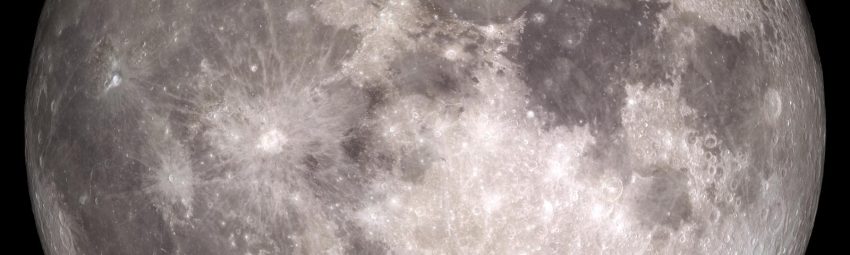
Image: NASA.