By The Star Queen · Star Queen Chronicles
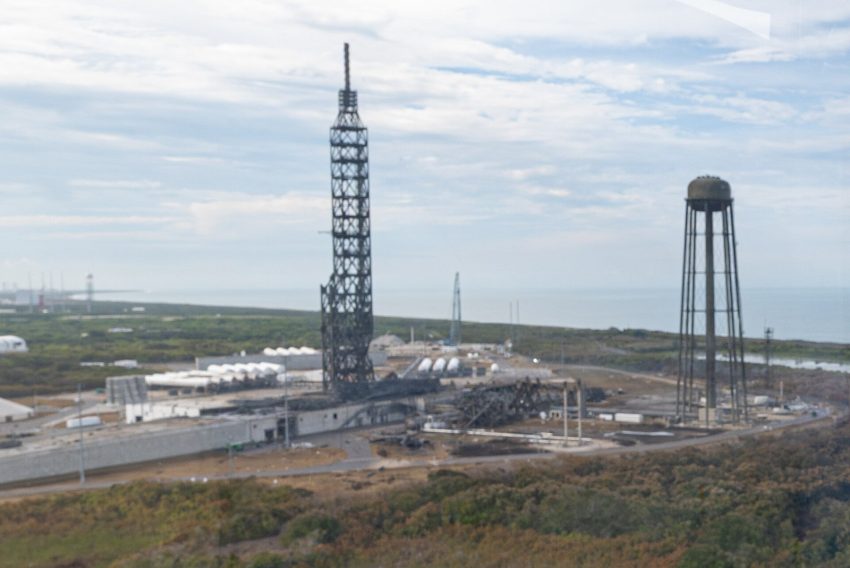
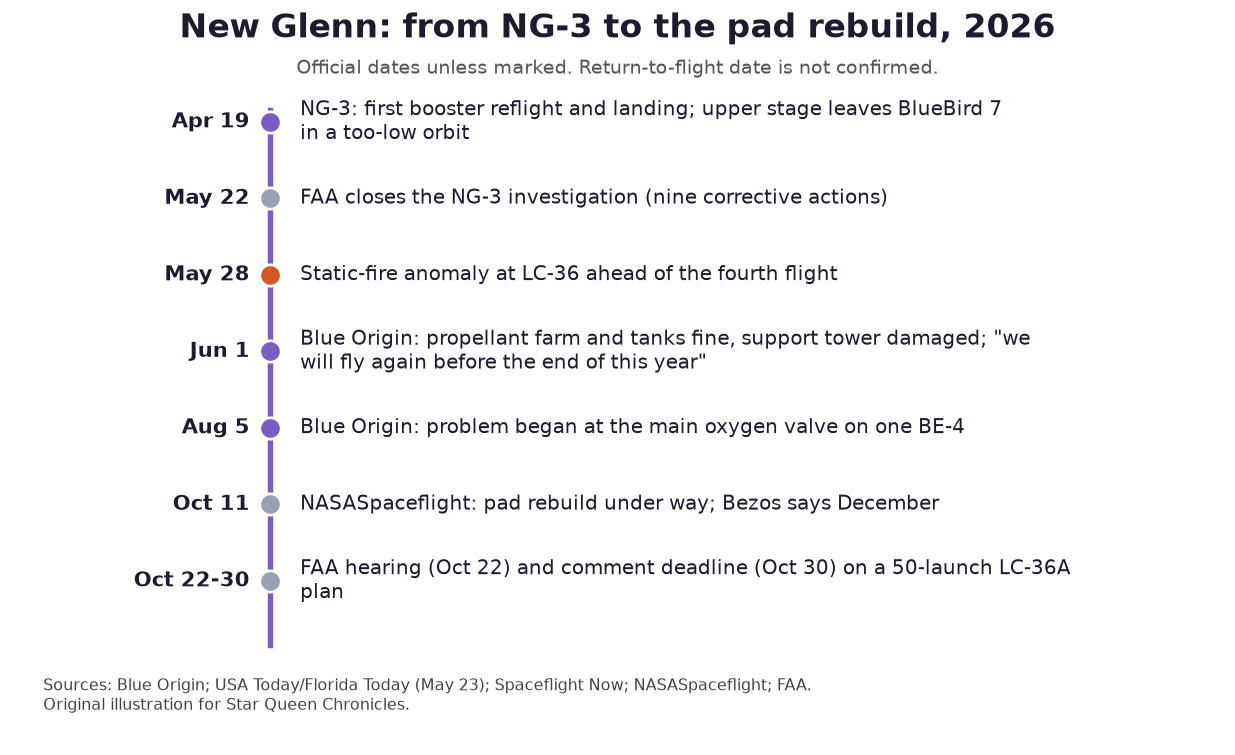
My loves, if you live on the Space Coast, you probably heard about this one before you read it. 💥 On May 28, 2026, Blue Origin was testing a New Glenn on its pad at Cape Canaveral when the rocket exploded. Wikipedia’s summary says no injuries were reported, but the pad took heavy damage. Five months later, the rebuild is well along, and the rocket still hasn’t flown again.
Everything here is as of October 25, 2026. I’ll mark what’s official (Blue Origin, FAA, NASA), what’s reported, and what’s my own arithmetic.
The Short Version
- What happened: an anomaly during a static fire on May 28 destroyed a New Glenn at LC-36. It was preparing for the fourth flight, a launch of 48 Amazon Leo satellites. The satellites weren’t on the rocket.
- Why: Blue Origin says the problem started at the main oxygen valve on one BE-4 engine. It has made small valve modifications.
- When it flies: Blue Origin says before the end of 2026. Reports differ on whether that’s realistic.
Terms to know ✨
- Static fire / hotfire: a test where the rocket stays on the pad and runs its engines.
- Anomaly: space-industry shorthand for “something went wrong.”
- Flame trench: the channel under a launch mount that carries engine exhaust away.
- Transporter-erector: the vehicle that carries a rocket to the pad lying down and raises it upright.
- Water deluge: a system that sprays water at launch to cool the pad and soften sound.
- Fault tree analysis: a method of listing every way something could fail and checking each one.
The Day Itself
Spaceflight Now’s caption says the test was in preparation for a launch planned as soon as June 4. The rocket exploded on the pad, and Blue Origin’s first statement was short: “We experienced an anomaly during today’s hotfire test.” Blue Origin says LC-36, which was completed in 2021 and had more than $1 billion invested, is its orbital launch site. Spaceflight Now calls it Blue Origin’s “sole orbital launch site.”
Blue Origin CEO Dave Limp said, as reported by Spaceflight Now on June 30, “Early analysis points to the aft section of the first stage,” and that the wreckage was cleared in nine days.
What Was Damaged
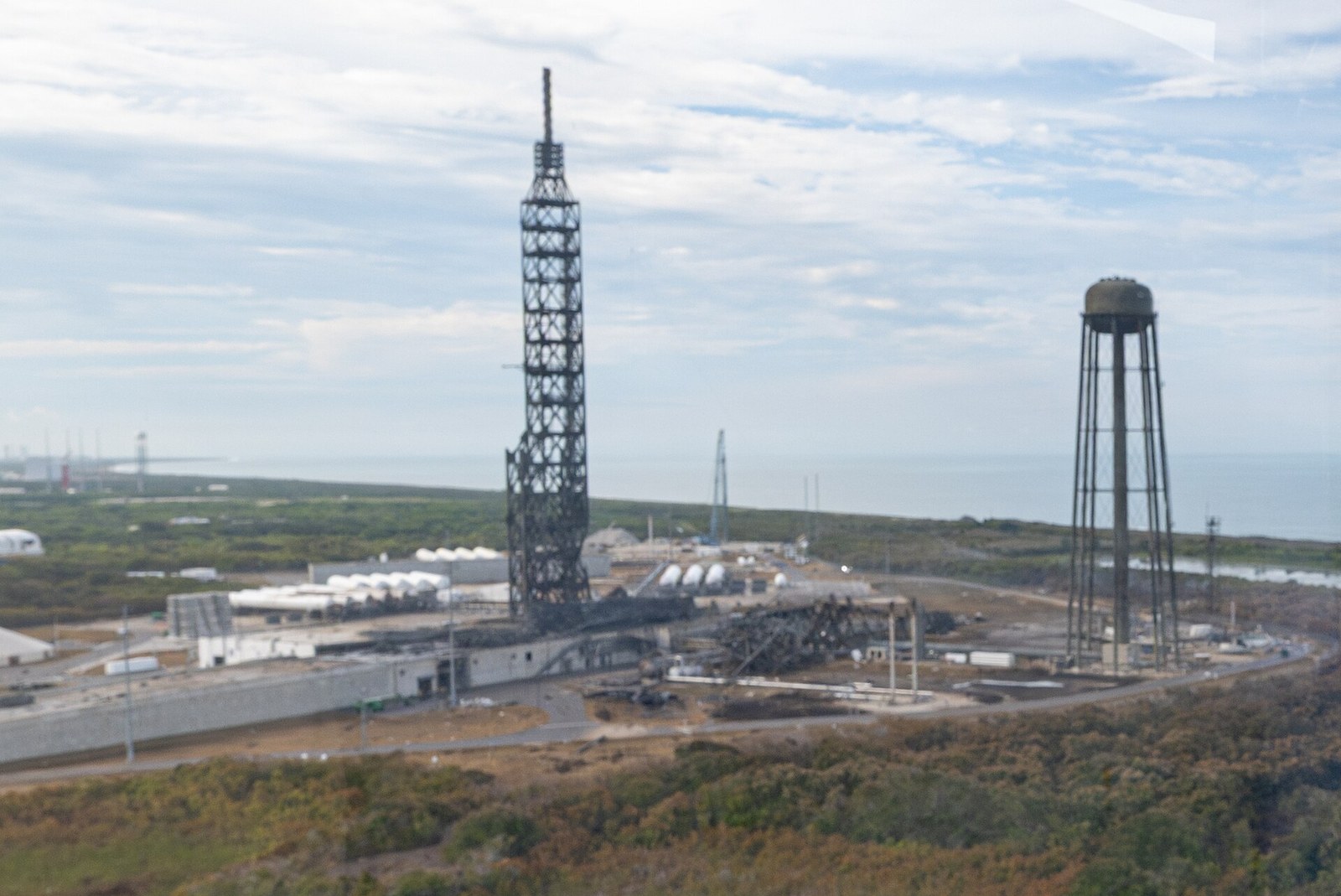
Blue Origin’s June 1 update said the propellant farm and the liquid oxygen, liquid hydrogen and LNG tanks were fine. The support tower was damaged but repairable. The booster Never Tell Me The Odds and three upper stages in the integration facility looked good.
NASASpaceflight’s October 11 report adds more detail: the lightning tower toppled, the support tower was bent, and the transporter-erector was lost. The launch mount and the bridge collapsed into the flame trench. The bridge has been restored and the water deluge piping reinstalled.
One name is unsettled. Wikipedia lists the destroyed booster as “No, It’s Necessary,” but I couldn’t confirm that name from a primary source.
The Cause: One Valve
On August 5, Blue Origin said, “The anomaly originated at the main oxygen valve on one of the BE-4 engines, which was later confirmed by hardware recovery and inspections.” The company said it is making small modifications to the valve that can be retrofitted to existing engines, with updated hardware ready by the end of August, while it finishes the fault tree analysis.
What it means for Vulcan: ULA flies two BE-4s on each Vulcan. Spaceflight Now reports that ULA’s engines aren’t identical to New Glenn’s (New Glenn’s have features for relight, landing and reuse), and that a ULA spokesperson said Blue Origin will do the modifications at ULA’s Alabama and Cape Canaveral sites. Spaceflight Now reported in August that Vulcan had been grounded since a solid booster problem in February, which ULA said was unrelated.
The Rebuild
The big change is how New Glenn gets stacked. Limp described a hybrid in late June, using a crane with both horizontal and vertical steps. NASASpaceflight reports Blue Origin has moved toward vertical integration, like Starship. On July 30, Limp posted that six door panels were going up on the integration facility’s north side, each 88 feet tall and about 40,000 pounds, for an opening about 196 feet wide.
Ars Technica reported on October 16 that Blue Origin is expanding fast: more launch pads, a factory for up to 150 upper stages, more landing ships, and a Space Force customer integration facility, with about $3 billion invested. NASASpaceflight counts four pads under construction: LC-36A, LC-36B, Vandenberg’s SLC-14 and a rumored LC-46. Spaceflight Now says LC-36A serves the 7×2 and LC-36B is being built for the 9×4.
The FAA piece: the FAA’s license allows 12 New Glenn launches a year from LC-36A, and Blue Origin has proposed 50. The agency scheduled a virtual hearing for October 22, and comments close October 30.
Reports differ on the factory. Spaceflight Now reports a $330 million, 1.37-million-square-foot upper-stage factory due in summer 2027. Florida Today reported in May a $600 million, 830,000-square-foot facility called Project Horizon. They may be separate projects or different phases. I can’t tell from what I’ve read.
When Does It Fly Again?
This is where sources split:
- Blue Origin (official): “We will fly again before the end of this year” (June 1), and Spaceflight Now reported in August that it still hoped to.
- Jeff Bezos (reported): he told Fox News that he wants December. NASASpaceflight says he joked about December 31.
- NASA’s timeline (reported by Space.com): Q4 2026, with Space.com noting a Reuters report pointing to early 2027. I couldn’t open the Reuters story myself.
- Ars Technica (reported): called a December return “unlikely” and expects the first few months of 2027.
- Blue Origin on its lunar lander: its Mk1 launch is expected in Q1 2027, which, in my inference, means New Glenn is flying again before then.
I haven’t seen a firm launch date from Blue Origin. NASASpaceflight says the return flight is expected to carry a Blue Ring spacecraft.
Who Is Waiting?
Spaceflight Now notes New Glenn can carry more Amazon Leo satellites per flight than the other four rockets Amazon contracted, and AST SpaceMobile hoped to fly eight BlueBird Block 2 satellites per New Glenn, compared with three on a Falcon 9. NASA also needs New Glenn for the Blue Moon Mark 1 lander.
What to Watch Next
- A launch date. My guess is the first sign will be a static fire of a rebuilt vehicle.
- October 30. The FAA comment deadline on the 50-launch plan.
- LC-36 pad milestones: the new integration doors, the launch mount and the stacking process.
- Vulcan’s status. It shares the BE-4, so the valve fix matters there too.
- Blue Origin’s hotfire updates page, where the company has posted its status.
The Star Queen’s Takeaway 👑
Pads are hard to rebuild, and this one is rebuilding with a new way of stacking the rocket. Blue Origin deserves credit for being open about the cause and the damage. But when one company has one orbital pad, one pad explosion becomes a months-long delay for Amazon, AST SpaceMobile and NASA. I’ll be watching for a static fire. 👀
Sources
- Blue Origin, GS1-3 hotfire updates (May 28 to Aug 5, 2026): https://www.blueorigin.com/news/gs1-3-hotfire-updates
- Blue Origin, New Glenn (undated page): https://www.blueorigin.com/new-glenn
- Spaceflight Now, Blue Origin identifies engine issue behind New Glenn explosion (Aug 6, 2026): https://spaceflightnow.com/2026/08/06/blue-origin-identifies-engine-issue-behind-new-glenn-explosion/
- Spaceflight Now, Blue Origin outlines return-to-flight logistics (Jun 30, 2026): https://spaceflightnow.com/2026/06/30/blue-origin-outlines-return-to-flight-logistics-for-its-new-glenn-rockets/
- Spaceflight Now, Blue Origin to add Florida launch pads (Oct 16, 2026): https://spaceflightnow.com/2026/10/16/blue-origin-to-add-new-florida-launch-pads-seeks-aggressive-increase-in-new-glenn-flight-rate/
- NASASpaceflight, Blue Origin LC-36 rebuild (Oct 11, 2026): https://www.nasaspaceflight.com/2026/10/blue-origin-lc-36-rebuild-new-glenn/
- Ars Technica, Blue Origin is going all in on New Glenn (Oct 16, 2026): https://arstechnica.com/space/2026/10/blue-origin-is-going-all-in-on-the-new-glenn-rocket/
- FAA, Blue Origin New Glenn environmental review (undated page): https://www.faa.gov/space/stakeholderengagement/blue-origin-new-glenn
- Florida Today/USA Today, FAA clears Blue Origin; Project Horizon expansion (May 23, 2026): https://www.usatoday.com/story/tech/science/space/2026/05/23/faa-oks-blue-origin-new-glenn-rocket-launches-amid-600m-brevard-expansion-project-on-merritt-island/90235453007/
- Space.com, when will SpaceX and Blue Origin fly to the Moon (Oct 21, 2026): https://www.space.com/space-exploration/artemis/when-will-spacex-and-blue-origin-fly-to-the-moon-nasa-reveals-lunar-lander-timelines-and-an-artemis-iii-update
- Wikipedia, 2026 New Glenn rocket explosion (booster name only; not a primary source): https://en.wikipedia.org/wiki/2026_New_Glenn_rocket_explosion