By The Star Queen · Star Queen Chronicles
My loves, when we talk about Blue Origin, it’s usually New Glenn and the Moon. 🌙 But the company has a few other things going on that are easy to miss: a rocket it just put on pause, a spacecraft meant to move satellites around once they’re in space, and, as of this month, a crew vehicle it has finally acknowledged. Let’s look at all three.
Everything here is as of October 25, 2026. I’ll mark what’s official (from Blue Origin), what’s reported by news outlets, and what’s my own arithmetic.
The Short Version
- New Shepard (the suborbital tourist rocket) is on pause for at least two years. Blue Origin says it is shifting resources to its lunar program.
- Blue Ring is an in-space vehicle for moving and hosting payloads. Per NASASpaceflight, the next New Glenn flight is expected to carry one.
- Space Vehicle is a crew spacecraft. Blue Origin’s CEO confirmed investment in human spaceflight technology on October 7. Reporting says a crewed launch isn’t expected before the early 2030s.
Terms to know ✨
- Suborbital: a flight that goes to space and comes straight back down, without going around the Earth.
- Kármán line: the commonly used boundary of space, 100 km (62 miles) up.
- Delta-V: how much a spacecraft can change its speed, a bit like a fuel budget for maneuvers in space. It’s measured in meters per second.
- ESPA Grande ports: standard mounting points that let many small satellites attach to one host spacecraft.
- GTO: geostationary transfer orbit, the stretched orbit satellites use to reach a high one.
- Commercial Crew Program: NASA’s program that put SpaceX’s Dragon and Boeing’s Starliner into service to fly astronauts.
New Shepard: A Pause That Looks Permanent
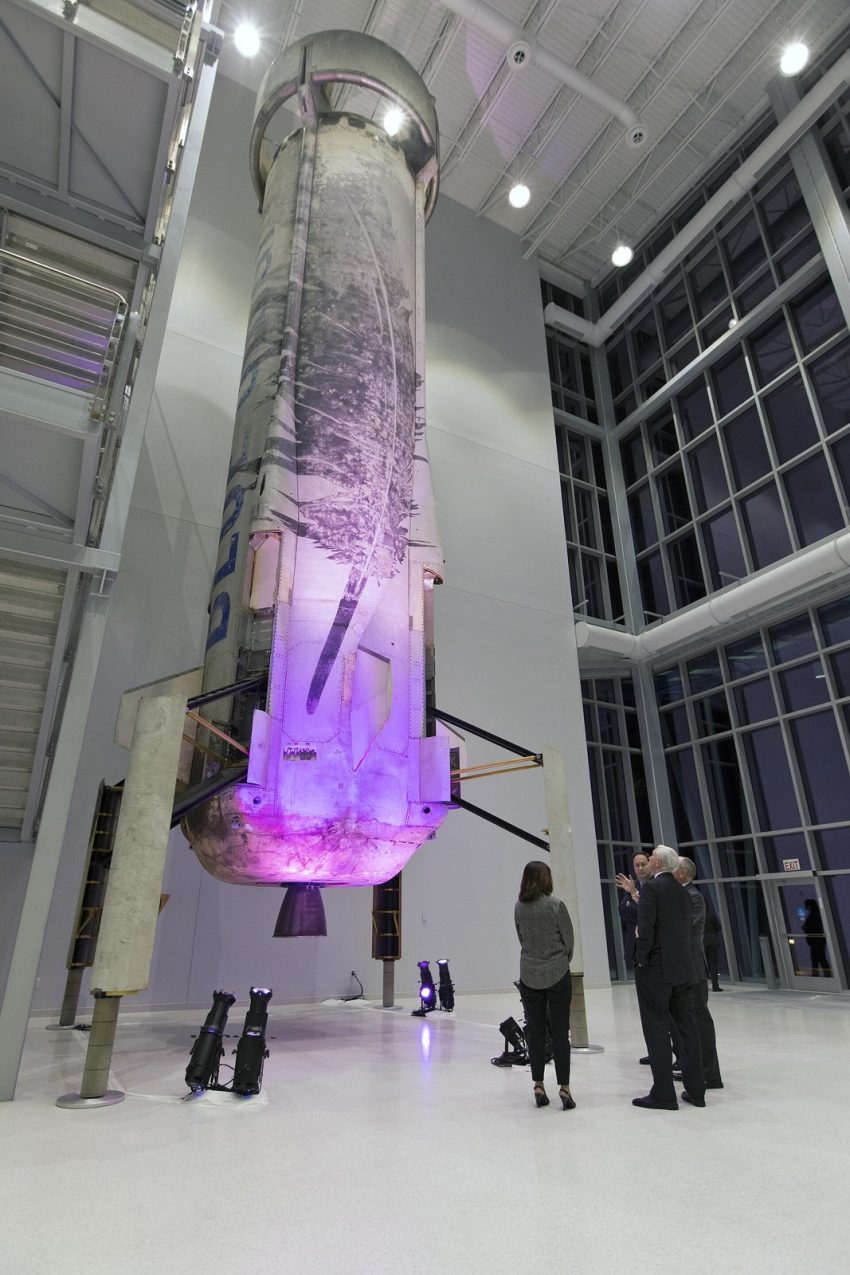
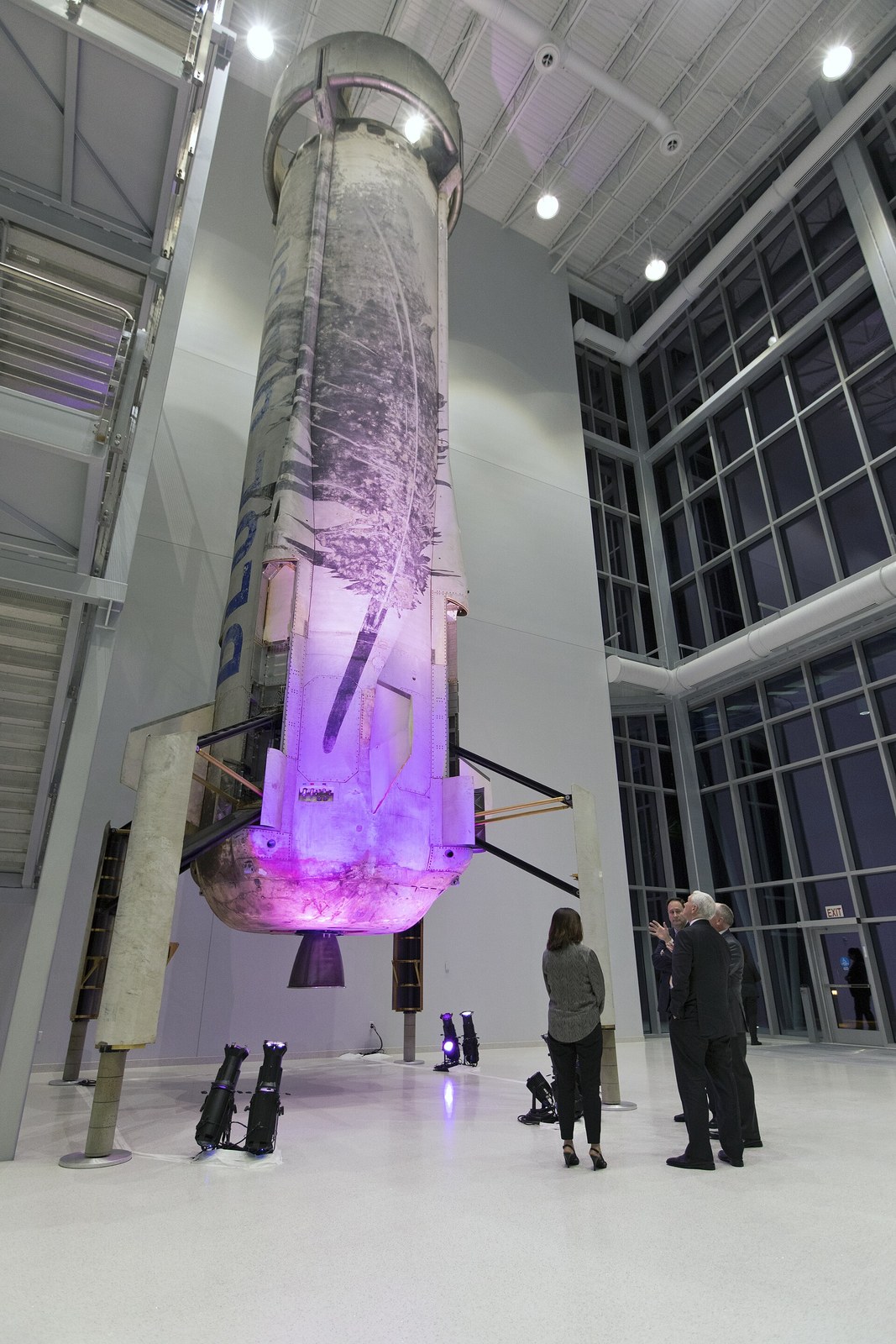
On January 30, 2026, Blue Origin announced it would pause New Shepard “for no less than two years” and redirect resources to accelerate its human lunar capabilities. Blue Origin says New Shepard flew 38 times, carried 98 people above the Kármán line, and launched more than 200 research payloads.
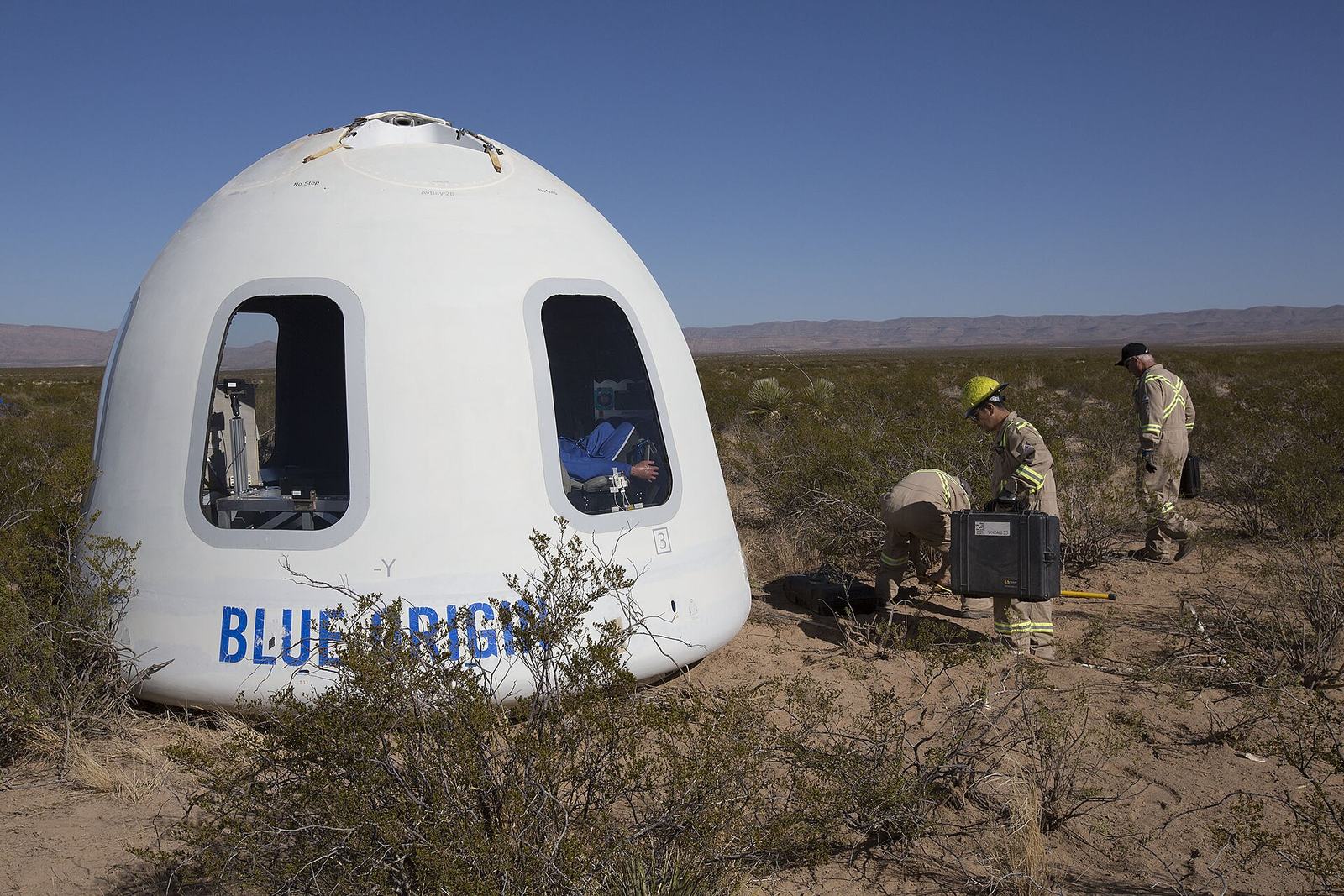
Ars Technica added details I can’t confirm elsewhere: 36 landings, all but one launch successful, about $1 million per seat, more than 500 people working part- or full-time on the program, and a last flight eight days before the announcement with six people aboard. Ars called the pause one that “likely signals a permanent end.” That’s Ars’s read, not Blue Origin’s. Ars also quoted CEO Dave Limp saying, “We will redirect our people and resources toward further acceleration of our human lunar capabilities inclusive of New Glenn.”
My arithmetic: “no less than two years” from January 30, 2026 means no flights before about the end of January 2028.
Blue Ring: A Spacecraft That Moves Other Spacecraft
Blue Ring is Blue Origin’s in-space vehicle. According to Blue Origin’s page:
- It uses hybrid solar-electric and chemical propulsion.
- It has 3,000 to 4,000 meters per second of delta-V.
- It has up to 12 ESPA Grande ports plus one forward port.
- It can deliver more than 4,000 kg of payload.
Blue Origin flew a Blue Ring Pathfinder on New Glenn’s first flight in January 2025. In July 2025, Space.com reported the first operational Blue Ring would carry Scout Space’s Owl space-surveillance sensor to GTO, planned for spring 2026. New Glenn’s May pad explosion came after that. Launch tracker Next Spaceflight (a third-party site, not Blue Origin) now lists the mission as Blue Ring-1, no earlier than December 2026, from LC-36A. It lists Owl plus a second payload, Optimum Technologies’ Caracal optical sensor, and several Blue Origin payloads.
NASASpaceflight reports that Bezos told Fox News the return-to-flight mission is targeting December and will carry a Blue Ring spacecraft. The two reports line up, but I haven’t seen Blue Origin itself confirm that the return flight is Blue Ring-1.
Space Vehicle: The Crew Ship
On October 6, Aviation Week’s Irene Klotz posted from the International Astronautical Congress that Blue Origin’s Orbital Reef program manager said Blue has no plans to internally fund a crewed vehicle and is waiting for an on-ramp from NASA. She added that Blue Origin has an unfunded NASA Space Act Agreement for crew vehicle technology.
The next day, Ars Technica’s Eric Berger posted that Blue Origin has been working on a crew vehicle called Space Vehicle, or SV, with a team of a few dozen people for several years. He said it will do wind tunnel testing at NASA Langley and arcjet testing at NASA Ames this month, along with parachute tests, and “There is real hardware.” Limp replied on X: “Eric is spot on for this one. We’ve made significant investments in human spaceflight technologies over the past couple of years.”
NASASpaceflight called this the first public confirmation of a Blue Origin orbital crew vehicle in many years. It noted that it’s unclear whether SV relates to the “Biconic Crew Vehicle” Blue Origin started under NASA’s Commercial Crew Development program in 2012, before leaving the program. In a September 29 article, Berger reported that design work is “well advanced” and that he’d heard “no earlier than” dates of 2031 for a crew launch, which he called “probably optimistic.”
Why it matters: Ars Technica reports SpaceX plans to retire Dragon after supporting the space station through 2030, and NASA is putting $359 million more into Boeing’s Starliner. Berger writes that a new competition would cost NASA billions, and that Isaacman seems reluctant to spend that. NASASpaceflight says NASA would support another crew vehicle but won’t fund a new program to onboard one.
What’s official and what isn’t: Limp’s quote is official. Everything about timing and the testing schedule is reporting by journalists or posts on X, and Blue Origin hasn’t published a schedule or an image of the vehicle that I could find.
How This Fits the Bigger Picture
Together these moves tell a consistent story. Blue Origin ended its money-losing tourist program to focus on New Glenn and the Moon, kept investing in an in-space transport vehicle, and has been working on crew transport quietly. Ars also notes Blue Origin has been criticized for “trying to do too many things at once.” The pause is a sign of narrower focus. The crew vehicle might be the opposite. I can’t tell which will win out.
What to Watch Next
- The New Glenn return flight and its Blue Ring. Whether it flies, and with what, will say a lot.
- Test results from NASA Langley and Ames. Berger said they were scheduled for October.
- A formal announcement with images of the crew vehicle. NASASpaceflight suggests it could come as a New Glenn 9×4-style reveal.
- NASA’s decision on a second crew vehicle. NASA says it won’t fund a new program for one.
- Any change to New Shepard’s pause. The earliest return would be around January 2028 (my arithmetic).
The Star Queen’s Takeaway 👑
Blue Origin is trading a flashy program for a focused one, and I think that’s the right instinct. The crew vehicle is the one I’m most curious about: real hardware, a few dozen people and no schedule from the company. If it’s real, it’s one of the quieter stories in spaceflight right now. I’ll be watching for those first test results. 🛰️
Sources
- Blue Origin, Blue Origin to Pause New Shepard Flights for No Less Than Two Years (Jan 30, 2026): https://www.blueorigin.com/news/new-shepard-to-pause-flights
- Ars Technica, Here’s why Blue Origin just ended its suborbital space tourism program (Jan 30, 2026): https://arstechnica.com/space/2026/01/heres-why-blue-origin-just-ended-its-suborbital-space-tourism-program/
- Blue Origin, Blue Ring (undated page): https://www.blueorigin.com/blue-ring
- Blue Origin, NG-1 mission (Jan 16, 2025): https://www.blueorigin.com/news/new-glenn-ng-1-mission
- Space.com, Blue Origin to fly AI-powered space surveillance sensor on first Blue Ring flight (Jul 25, 2025): https://www.space.com/space-exploration/launches-spacecraft/blue-origin-to-fly-ai-powered-space-surveillance-sensor-on-1st-flight-of-blue-ring-spacecraft
- NASASpaceflight, Blue Origin LC-36 rebuild; Space Vehicle (Oct 11, 2026): https://www.nasaspaceflight.com/2026/10/blue-origin-lc-36-rebuild-new-glenn/
- Eric Berger and Irene Klotz posts on X, read through a public mirror (Oct 7, 2026): https://nitter.cf/SciGuySpace/status/2107875447950205403
- Ars Technica, NASA has a Dragon dilemma (Sep 29, 2026): https://arstechnica.com/space/2026/09/nasa-has-a-dragon-dilemma-and-there-appear-to-be-no-good-answers/
- Next Spaceflight, Blue Ring-1 (launch tracker, checked Oct 25, 2026): https://www.nextspaceflight.com/launches/details/8431/