By The Star Queen · Star Queen Chronicles
My loves, some rockets arrive with a roar and others arrive with a spreadsheet. Terran R, from Relativity Space, is the second kind right now: a huge rocket on a launch pad with a lot of hardware racing toward a date that keeps being questioned. 📅 In this post I’ll walk through what Terran R is, what Relativity has said about it lately, and where the evidence gets fuzzy.
Labels: official is from Relativity or NASA, reported is from journalists, and my math is mine.
The Rocket on Paper (Official)
From Relativity’s Terran R page:
- Size: 284 feet (86.6 meters) tall, with a diameter and payload fairing of 17.7 feet (5.4 meters).
- First stage: 13 Aeon R engines at 269,000 pounds-force each, for 3,497,000 pounds of liftoff thrust. My math: 13 times 269,000 is 3,497,000, so the numbers check out.
- Second stage: one Aeon V vacuum engine at 323,000 pounds-force.
- Payload: 23,500 kg to low Earth orbit when the first stage lands downrange, 33,500 kg to low Earth orbit when the rocket is expended, and 5,500 kg to geostationary transfer orbit.
- Engines: Relativity says Aeon R went from design to qualification in 14 months. Its propellants are liquid oxygen and methane, and it’s a gas-generator engine (my rocket-science primer explains why engine cycles matter).
A rocket that has changed. When Relativity announced Terran R on April 12, 2023, it described a 270-foot rocket, 18 feet in diameter, with Aeon R at 258,000 pounds-force and Aeon Vac at 279,000. Today’s numbers are different: 284 feet, 269,000 for Aeon R, and 323,000 for the vacuum engine. That’s normal development, but it’s a reminder that early numbers are drafts too.
Reuse: What Comes Back
The first stage is designed to land and fly again; the 2023 release said it was designed for 20 reuses. In 2023, Ars Technica reported that the second stage would be expendable. The current page lists separate payload numbers for “downrange landing” and for an expended rocket, which fits that picture: bringing the first stage home costs payload. I haven’t seen a recent company statement saying how soon the first stage will actually be reflown.
Reported disagreement: Ars Technica said on October 20, 2026 that Terran R’s payload to orbit with a reusable first stage is “closer to 20 metric tons,” not Relativity’s 23.5. I treat that as an outside opinion, not a measurement.
What the Hardware Did This Fall
Relativity’s monthly company updates are excellent reading, and they’re official (and obviously flattering, as company updates are):
- August 2026 update (published Sep 11): 1,099 flight parts released, all 13 engines installed on the first-stage thrust structure, and Stage 2 completed its cryoproof testing. Flight two’s barrels were complete, flight three had begun, and work was moving on the pad’s flame diverter and LNG farm.
- September 2026 update (published Oct 12): the downcomer (a big propellant line) was installed, gimbal testing was underway, and Stage 2 was on the A2 test stand at NASA’s Stennis Space Center for a test readiness review and wet dress rehearsal. At the pad, a 530-foot lightning tower was raised and 480-volt power was brought in. The company also reported the first laser weld of an Aeon V nozzle extension.
- Stage 2 hot fire: Ars Technica said on October 20 that Relativity had run Stage 2’s first integrated hot fire at Stennis “last Friday.” By my reading of Ars’s date, that was Friday, October 16, 2026. I could not open Relativity’s own post about it, so treat the date as “reported.”
Notice what’s not in those updates: a firm launch date.
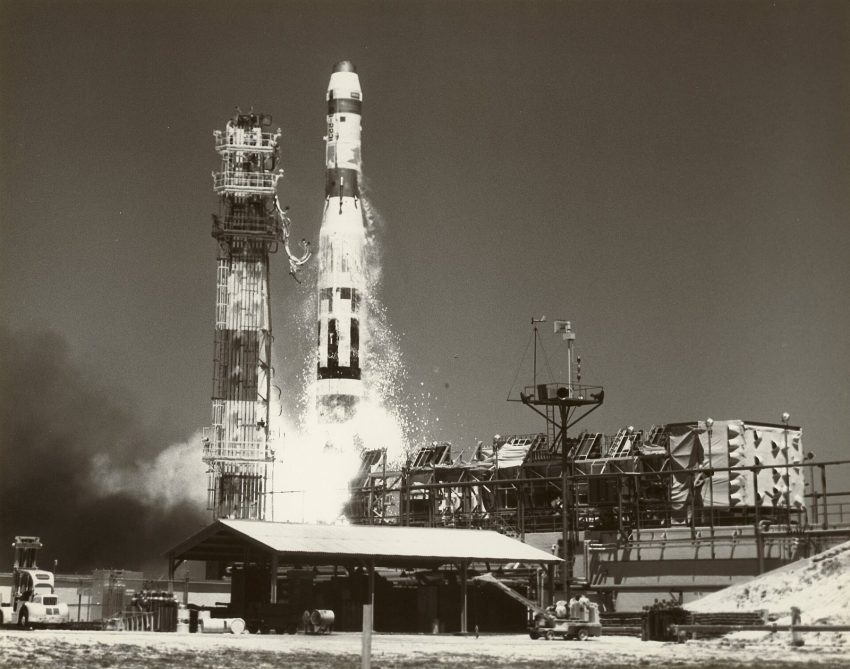
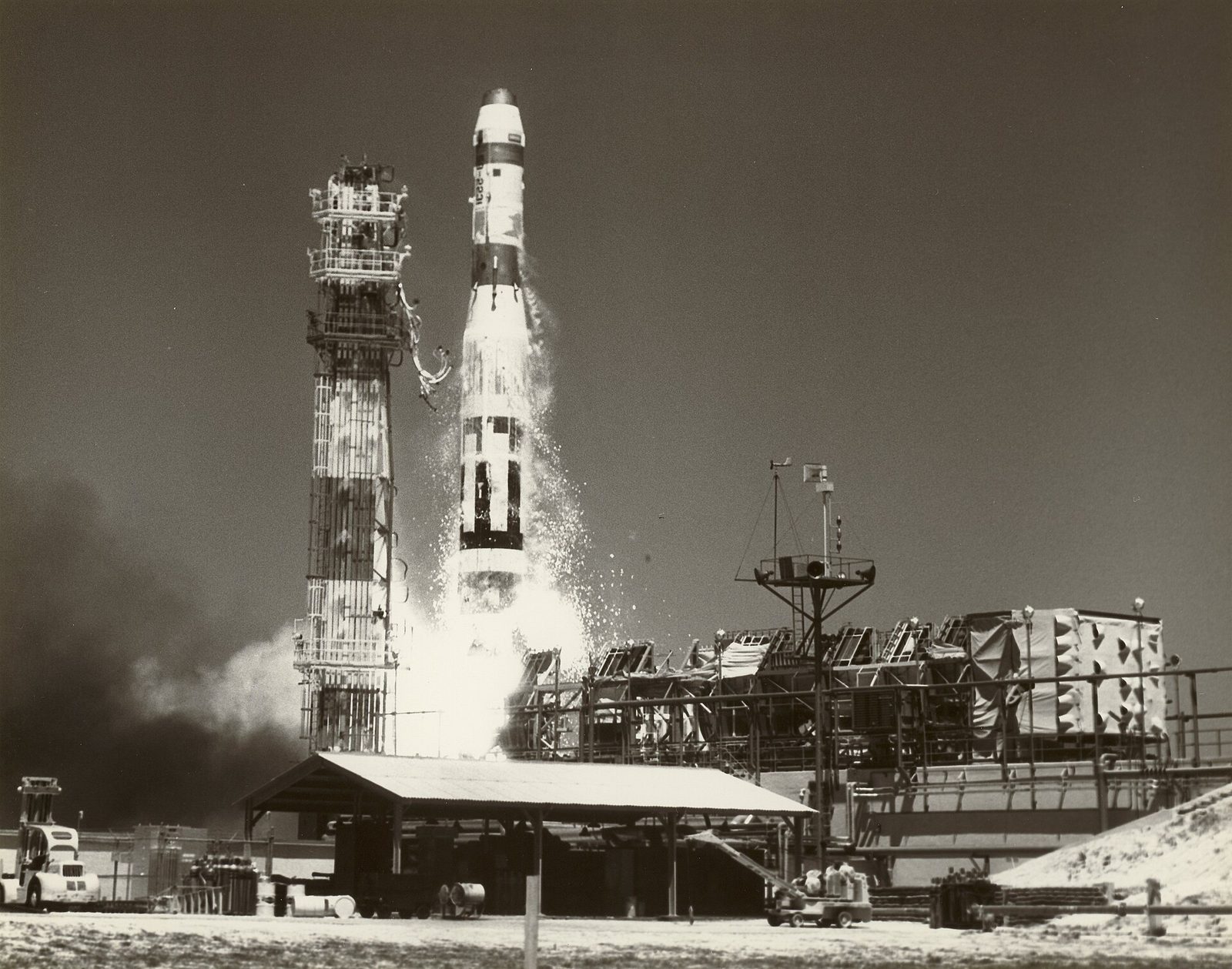
Launch Complex 16: Titan Country
Terran R will fly from Launch Complex 16 at Cape Canaveral. The Cape Canaveral Space Force Museum says the pad saw its first Titan I launch on December 12, 1959, and it counts six Titan I and seven Titan II launches, plus a Pershing missile history. It also says Relativity signed a five-year agreement for Terran 1 there, with a maiden launch “on 23 March 2023,” and that upgrades for Terran R began in 2024.
Relativity says LC-16 work includes the lightning tower, power, and flame diverter I mentioned above. I love that a 1959 pad is getting a 2026 rocket.
The Date Problem
- Company: Relativity’s Terran R page says “starting in late 2026,” and SES’s November 2025 expansion announcement also says late 2026.
- Reported: Ars predicts a first launch in September 2027. That’s Ars’s own forecast, not company language.
My own read: the hardware is clearly moving, but first launches of big new rockets rarely hold their dates. I haven’t found a Relativity statement that moves the date, so “late 2026” stands as the official position while the evidence gets tested.
Where It Sits Among the Rivals
Advertised numbers are not apples to apples, so please read this as a rough map only. Relativity advertises 23.5 metric tons to low Earth orbit with a downrange landing. Rocket Lab’s Neutron page lists 13,000 kg to low Earth orbit. Stoke’s Nova Block 2 page says 15,000 kg fully reusable, and Blue Origin’s New Glenn page says 45 metric tons. Terran R sits above Neutron and Nova on paper and well below New Glenn. (Each company defines its own flight profile, so the details differ.) Ars’s “closer to 20 tons” comment above is a good reminder of why I’d keep a pinch of salt handy.
Who Is Buying (Official)
- Backlog: the Terran R page says more than $3 billion in launch service agreements. (In 2023, the company claimed a $1.65 billion backlog across seven customers.)
- SES: expanded its multi-launch agreement on November 12, 2025, with a first launch “late 2026.” Terms were not disclosed.
- NASA Mars: on June 17, 2026, NASA announced a public-private partnership for a Mars mission called Aeolus, to launch in 2028, with Relativity supplying the spacecraft, rocket and cruise operations. It’s NASA’s first six-year reimbursable Space Act Agreement.
- NASA NLS II: on September 9, 2026, NASA added Terran R to its NASA Launch Services II contract, with ordering through June 2030 and performance through December 2032.
Terms to know ✨
- Gas-generator cycle: an engine design where a small side burner drives the pumps and its exhaust is dumped overboard. Simpler than staged combustion, a bit less efficient.
- Downcomer: the large pipe that carries propellant from a tank to the engines.
- Wet dress rehearsal: a practice countdown with the real propellants loaded.
- Integrated hot fire: a test firing with the stage’s systems working together, not just one engine alone.
- Downrange landing: the booster lands at sea, far from the pad, rather than returning to land.
What to Watch Next (As of October 25, 2026)
- More Stage 2 firings at Stennis, and a Stage 1 test campaign.
- Any official update to the “late 2026” launch date.
- Pad readiness at LC-16, including propellant loading.
- Progress on the Aeon V nozzle extension and vacuum engine tests.
- Whether Relativity names the first payload for flight one.
The Star Queen’s Takeaway 👑
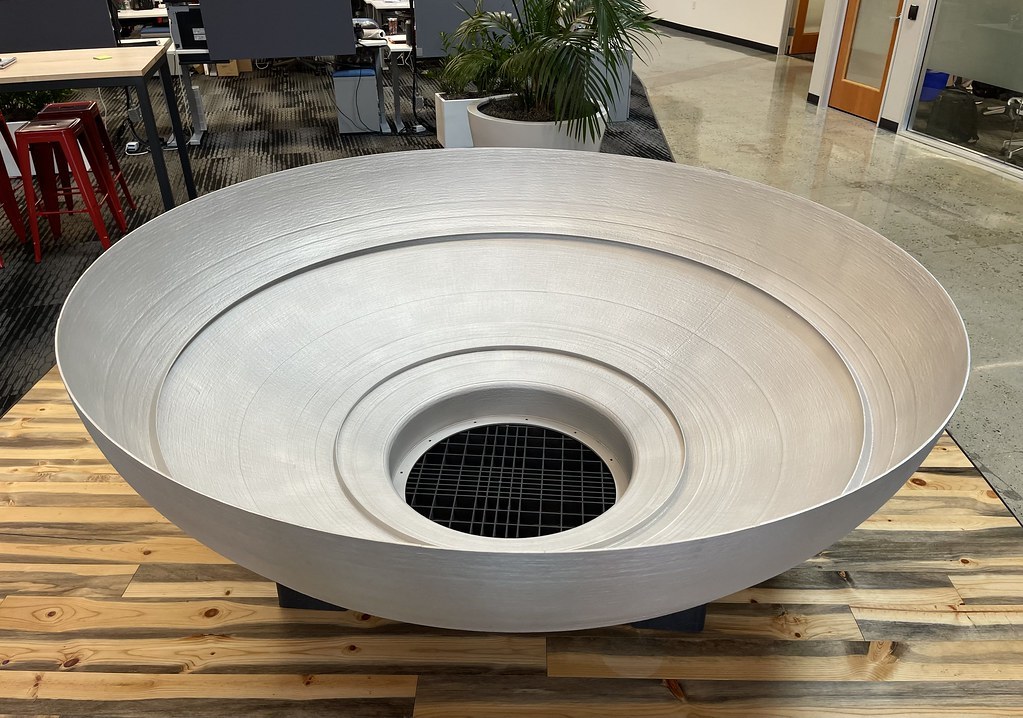
Terran R is a big, serious rocket with a lot of progress behind it: real stages, real engines, and a pad coming together. The first-launch date is the weak spot in the story, because the company says late 2026 while a respected journalist predicts September 2027. My honest view: it’s good momentum, but a rocket isn’t a rocket until it flies. If you want the backstory, the 3D-printed Terran 1 and the pivot are my favorite part of this tale. 💜
Sources
All sources below were opened on October 25, 2026.
- Terran R — Relativity Space vehicle page (undated)
- August 2026 Company Update — Relativity Space, Sep 11, 2026
- September 2026 Company Update — Relativity Space, Oct 12, 2026
- Relativity Space unveils Terran R — Relativity Space, Apr 12, 2023
- Relativity Space is moving on from the Terran 1 rocket to something much bigger — Ars Technica, Apr 12, 2023
- Does anyone actually want to win the medium-lift race in the United States? — Ars Technica, Oct 20, 2026
- SES, Relativity Space expand multi-launch agreement for Terran R — Relativity Space, Nov 12, 2025
- NASA announces public-private partnership to advance Mars science — NASA, Jun 17, 2026
- NASA adds Relativity Space’s Terran R to launch services contract — NASA, Sep 9, 2026
- Launch Complex 16 — Cape Canaveral Space Force Museum (undated)
- Launch Complex 16 (Titan I C-1 RVX-3 test) — U.S. Air Force, Mar 8, 1960, via Wikimedia Commons
- Neutron — Rocket Lab vehicle page (undated)
- Nova Block 2 — Stoke Space product page (undated)
- New Glenn — Blue Origin vehicle page (undated)
- Relativity Space 3D Print — Steve Jurvetson, Feb 3, 2022, via Flickr
