By The Star Queen · Star Queen Chronicles
My loves, there’s a race underway and I can’t look away. 🏁 Five very different rockets are all chasing the same dream: launch a payload, bring the expensive parts home, and do it again. Some of them have flown, some haven’t, and one just had a very bad day. I built a side-by-side, and every number below comes from a page I actually opened. If you’re new to why reuse matters, start with my rocket-science primer.
Labels: advertised means the company’s own page, reported is a journalist, and my math is mine.
The Side-by-Side (Advertised)
| Rocket | Advertised payload to low Earth orbit | Height | First-stage engines | Reuse plan |
|---|---|---|---|---|
| Stoke Nova Pathfinder | 2,500 kg with reusable fairing (Stoke); Ars says 3 t reusable / 7 t expendable | Not stated in sources I read | 7 Zenith (LNG/LOX), 700,000+ lbf | Both stages designed for reuse |
| Stoke Nova Block 2 | 15,000 kg, fully reusable | Not stated in sources I read | 14 Zenith | Both stages designed for reuse |
| Relativity Terran R | 23,500 kg (downrange landing); 33,500 kg (expended) | 86.6 m (284 ft) | 13 Aeon R, 269,000 lbf each | First stage reusable; second stage expendable |
| Rocket Lab Neutron | 13,000 kg | 43 m | 9 Archimedes, 165,000 lbf each | Reusable first stage |
| Blue Origin New Glenn (7×2) | 45 t | 98 m | 7 BE-4, 640,000 lbf each | First stage designed for 25 flights |
| SpaceX Starship | 100+ t, reusable | 124 m | 33 Raptor on Super Heavy | Both stages reusable |
Please read this carefully: these aren’t apples to apples. Each company picks its own orbit, landing mode and reuse assumptions, and the numbers are advertised, not demonstrated. Ars Technica, for example, wrote that Terran R’s reusable payload is “closer to 20 metric tons” and that Neutron is 8.5 to 15 tons depending on reuse and landing site. Rocket Lab’s own page says 13,000 kg.
Where Each One Stands (as of October 25, 2026)
Stoke Nova: Early 2027 (Target)
Stoke says Pathfinder’s first flight is targeted for early 2027 from Launch Complex 14, with Block 2 planned for 2029. Stoke raised $1 billion in September for a total of $2.3 billion. Ars’s own prediction for Nova’s debut is July 2027. The second stage shipped to a test site in mid-October, per Ars.
Relativity Terran R: “Late 2026” vs. September 2027
Relativity’s page says “starting in late 2026.” Ars predicts September 2027. The company’s monthly updates show all 13 first-stage engines installed and Stage 2 on a test stand; Ars reports Stage 2’s first integrated hot fire took place on October 16. Relativity also reports more than $3 billion in launch service agreements.
Rocket Lab Neutron: Slipped to 2027
Space.com reported on October 16, 2026 that Rocket Lab moved Neutron’s first launch from late 2026 to 2027 after discovering voids in carbon composite domes. A new target date is expected after a first-stage test in the first quarter of 2027. Ars’s prediction is January 2028.
Blue Origin New Glenn: Grounded After the Pad Accident
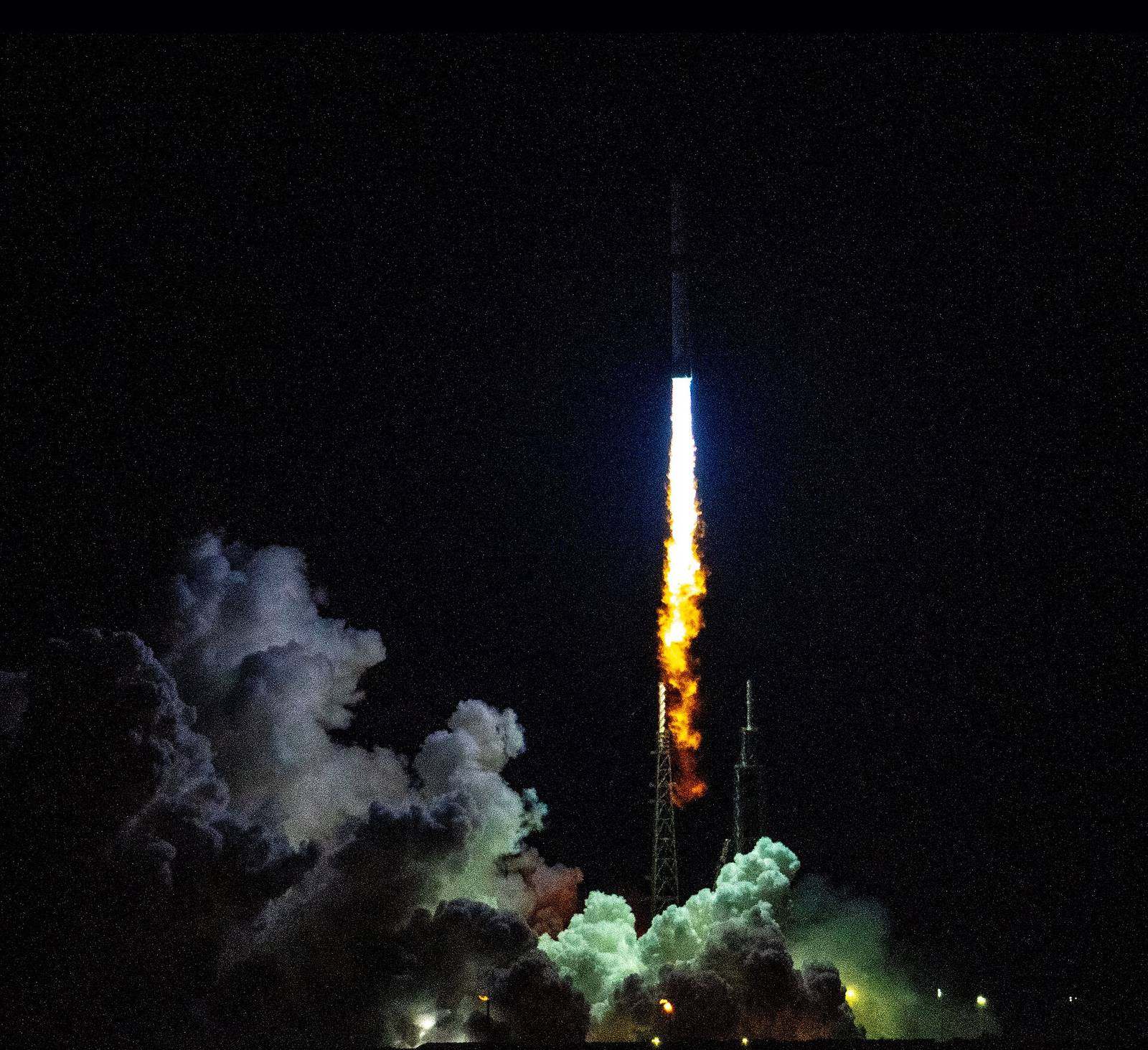
NASASpaceflight reported on October 11, 2026 that New Glenn’s May 2026 pad explosion damaged Launch Complex 36, and that Jeff Bezos targets a December return to flight (which could be as late as December 31). Ars wrote on October 16 that New Glenn has reached orbit twice, that a BE-4 problem was involved in the May loss, and that a return before the end of 2026 is “unlikely,” with “the first few months of 2027” more realistic. Ars also reported a bigger 9×4 version designed for 70 t to low Earth orbit and 20+ t toward the Moon, which could debut in 2028 “if development goes well.” That’s a plan, not a schedule.
SpaceX Starship: The One That’s Actually Flying
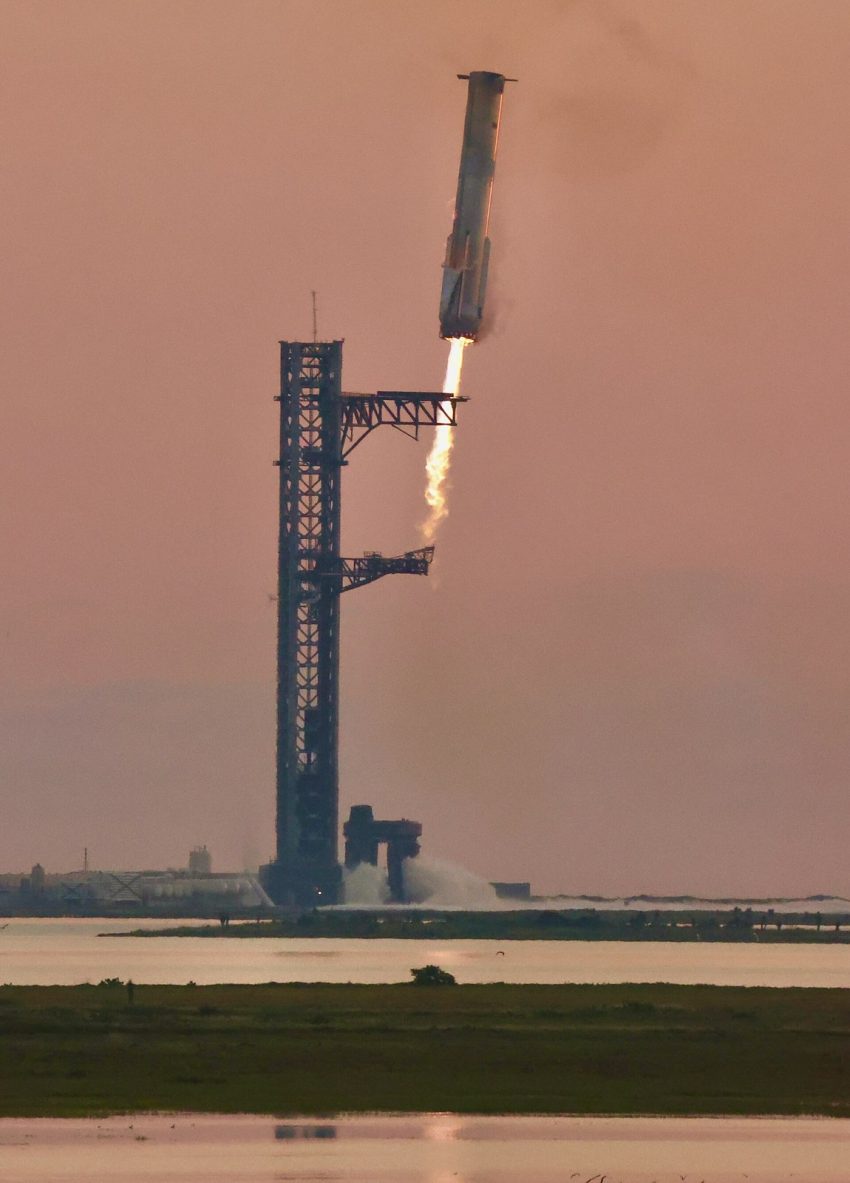
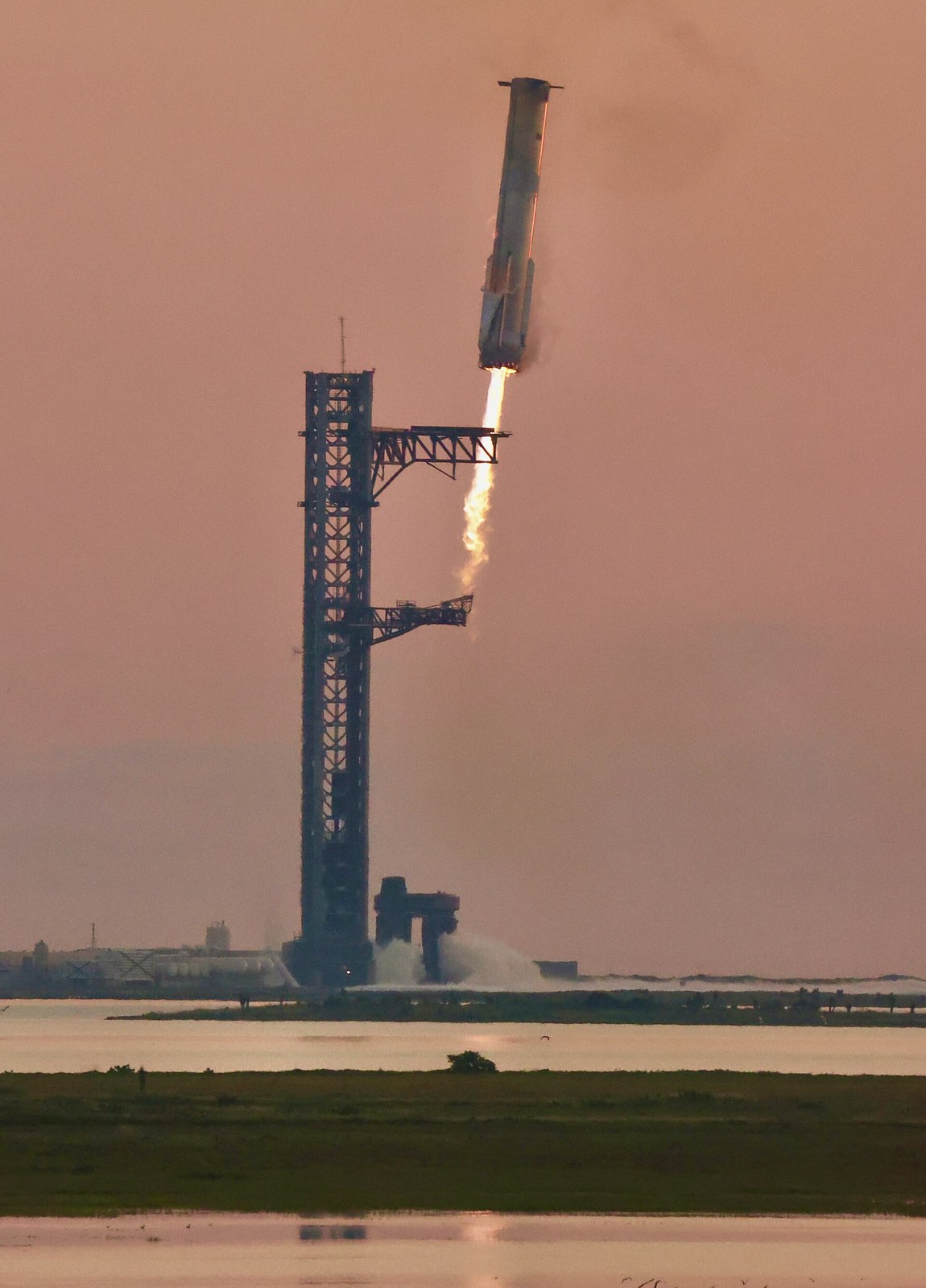
Space.com reported that Starship Flight 14 on September 28 reached orbit and deployed 26 Starlink V3 satellites, and that Flight 15 is targeted for November with a first attempt to catch both booster and ship. SpaceX has caught three boosters so far. NASASpaceflight’s September 30 article covers Flight 14 in more depth. If this is your first Starship race read, my flight-test post will get you up to speed.
How to Read the Numbers
- Payloads change with reuse. Bringing a booster home costs performance. Terran R’s two payload numbers (23.5 vs 33.5 tons) show that clearly. My math: that’s a 10-ton difference (33,500 minus 23,500).
- Different rockets, different jobs. Starship is in a different weight class. Nova, Terran R and Neutron are medium-lift, and New Glenn sits in between.
- “Reusable” isn’t “reused.” Starship has caught boosters (three, per Space.com). For the others, I haven’t seen a source in what I read showing a first stage that has flown twice.
A Little Math: First-Stage Thrust
Using the engine counts and per-engine thrust figures from the table, here is the liftoff thrust. This is my arithmetic, so please treat it as a rough comparison only:
- Terran R: 13 × 269,000 = 3,497,000 lbf (Relativity’s own page agrees).
- New Glenn: 7 × 640,000 = 4,480,000 lbf from the seven BE-4 engines. (The BE-3U engines are on the upper stage, so I left them out.)
- Neutron: 9 × 165,000 = 1,485,000 lbf.
- Nova Pathfinder: Stoke lists 700,000+ lbf; Block 2 is listed at 1,700,000+ (the page text I read didn’t show units, so I’m assuming lbf).
- Starship: I didn’t find a thrust figure on the page I read, so I’m leaving it out rather than guessing.
More thrust doesn’t automatically mean more payload, because stage weights, fuels and flight profiles differ, but it’s a fun way to picture the size of these machines.
Who Is Closest? (Reported, Not Official)
Ars’s October 20 piece predicts Nova in July 2027, Terran R in September 2027, Neutron in January 2028, and Eclipse no earlier than 2029. Those are an Ars writer’s guesses. The same article reports that SpaceX may pull Falcon 9 from the commercial market as soon as 2028, which could create real demand for medium-lift rockets. My opinion: whichever medium-lift rocket flies reliably first will be very popular.
Terms to know ✨
- LEO (low Earth orbit): an orbit a few hundred kilometers up, where many satellites and the space station live.
- GTO (geostationary transfer orbit): a higher, elongated orbit that satellites use on the way to geostationary altitude.
- Expendable vs. reusable: an expendable rocket is used once; a reusable one is recovered and flown again.
- Downrange landing: a booster lands at sea, far from the launch site.
- Medium-lift: the middle size class of rockets, below giants like Starship.
What to Watch Next (As of October 25, 2026)
- Starship Flight 15 in November, with the first ship-and-booster catch attempt.
- New Glenn’s return to flight, targeted for December by Bezos and expected “first few months of 2027” by Ars.
- Nova’s static fires and its first launch from LC-14, targeted for early 2027.
- Terran R’s stage tests and any update to “late 2026.”
- Neutron’s first-stage test in Q1 2027, which will set its new launch date.
The Star Queen’s Takeaway 👑
If this were a horse race, Starship would be miles ahead and the rest would be jostling behind, with New Glenn recovering from a stumble. The three newcomers each have a story I love: Stoke’s bold upper stage, Relativity’s reinvention, and Rocket Lab’s methodical push toward Neutron. Be skeptical of dates and hold on to the numbers loosely. I’ll keep tracking each of them for you. 💫
Sources
All sources below were opened on October 25, 2026.
- Nova Pathfinder — Stoke Space product page (undated)
- Nova Block 2 — Stoke Space product page (undated)
- Scaling Nova — Stoke Space, Sep 8, 2026
- Stoke Space Raises $1 Billion — Stoke Space, Sep 8, 2026
- With another huge infusion of cash, Stoke Space goes even bigger — Ars Technica, Sep 8, 2026
- Terran R — Relativity Space vehicle page (undated)
- September 2026 Company Update — Relativity Space, Oct 12, 2026
- Neutron — Rocket Lab vehicle page (undated)
- Rocket Lab pushes first launch of next-gen Neutron rocket to 2027 — Space.com, Oct 16, 2026
- New Glenn — Blue Origin vehicle page (undated)
- Blue Origin LC-36 rebuild — NASASpaceflight, Oct 11, 2026
- Blue Origin is going all in on the New Glenn rocket — Ars Technica, Oct 16, 2026
- Starship — SpaceX vehicle page (undated)
- SpaceX will attempt first-ever double Starship catch on next test launch — Space.com, Oct 20, 2026
- Starship makes orbit, Flight 15 preps in full swing — NASASpaceflight, Sep 30, 2026
- Does anyone actually want to win the medium-lift race in the United States? — Ars Technica, Oct 20, 2026
- Starship Booster Return on Final Approach — Steve Jurvetson, Oct 13, 2024, via Wikimedia Commons
- New Glenn launch signals new era for Space Launch Complex 36 — U.S. Space Force, Jan 16, 2025, via Wikimedia Commons

