By The Star Queen · Star Queen Chronicles
My loves, there is a rocket on the way that has one big, bold goal: bring everything back. Not just the booster, like we’re used to seeing, but the upper stage too. That rocket is Nova, from Stoke Space in Kent, Washington, and its first flight is now targeted for early 2027. 🌟 If you’ve been following the reusable-rocket story since my Starship flight-test post, Stoke is the newcomer I think you’ll want on your radar. Let’s walk through it.
A note on labels: I mark what is official (from the company), reported (from journalists), and my own math or opinion, so you always know what you’re reading.
What Nova Pathfinder Is
Pathfinder is the first, smaller flight version of Nova: a medium-lift rocket meant to carry real customers while it proves the hardest reuse technology. Official numbers from Stoke’s Nova page:
- Stage 1: seven Zenith engines, full-flow staged combustion, burning liquefied natural gas (LNG) and liquid oxygen, 700,000+ pounds of thrust, designed for 100 reuses.
- Stage 2: one Andromeda engine, liquid hydrogen and liquid oxygen, 400+ seconds of specific impulse, 25,000+ pounds of thrust, with an actively cooled heat shield.
- Payload: 2,500 kg to low Earth orbit with a reusable fairing.
Heads up on a conflict: Ars Technica reported 3 metric tons fully reusable and up to 7 tons expendable, and called the rocket methane-fueled, while Stoke says LNG (which is mostly methane). I’d treat “roughly 2.5 to 3 tons reusable” as the range until Stoke publishes more. Ars also reports Pathfinder is about 12.5 feet across.
The Zenith Engine: The Hard Way, On Purpose
Zenith is a full-flow staged-combustion engine. In general terms (this is my plain-language explainer, not Stoke’s wording), that cycle runs all of both propellants through the turbine systems before they burn in the main chamber, which is efficient but famously hard to build. The payoff Stoke is chasing is an engine that can fly again and again: the Nova page says Stage 1 is designed for 100 reuses, with Zenith delivering 345 seconds of specific impulse.
Stoke says Zenith had its first hot fire in 2024, just 18 months after development began. That’s fast for any engine, let alone one of this type. Hot-fire tests on a stand are a long way from flying, but they are real progress.
Andromeda: An Upper Stage That Comes Home
Here’s the part that made me sit up. An upper stage normally gets thrown away. Nova’s second stage is built to fly back, base first, protected by a heat shield that is also an engine.
- Official: Andromeda has 24 thrust chambers arranged in an actively cooled metallic base heat shield, with its liquid hydrogen fuel doing double duty as coolant.
- Why not tiles? Stoke’s reasoning (from its “Scaling Nova” post) is that heating inside a rocket engine can be 20 times reentry heating, and engines already survive that with active cooling, so the same idea can protect the stage coming home. That’s Stoke’s argument, and it’s a clever one, but it hasn’t been proven on a real orbital return yet.
- Steering without gimbals: Stoke says it steers by throttling its thrust chambers differently, a technique it demonstrated on its Hopper test vehicle on September 17, 2023, which flew to 30 feet and landed after 15 seconds.
Launch Complex 14: History Meets the Future
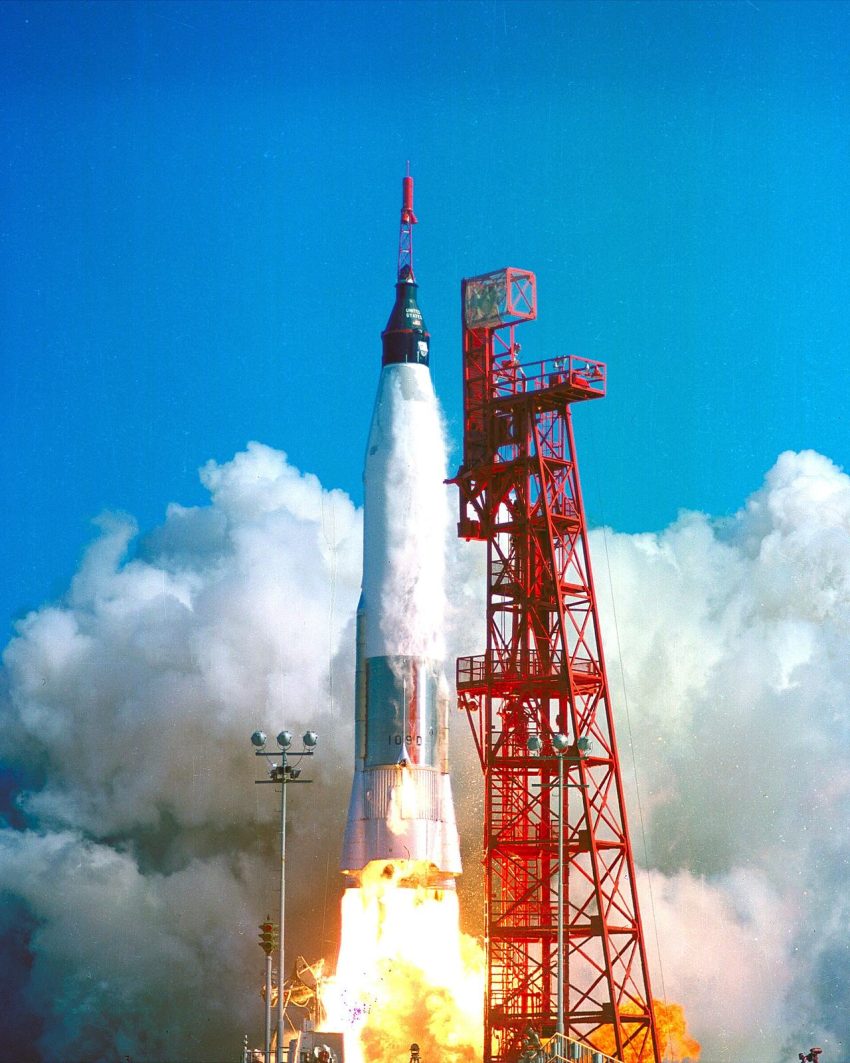
Stoke chose a legendary pad. Space Launch Complex 14 at Cape Canaveral launched John Glenn aboard Friendship 7 on February 20, 1962. Stoke says the pad then supported 35 launches, including four of the seven crewed Mercury missions, before retiring in 1967.
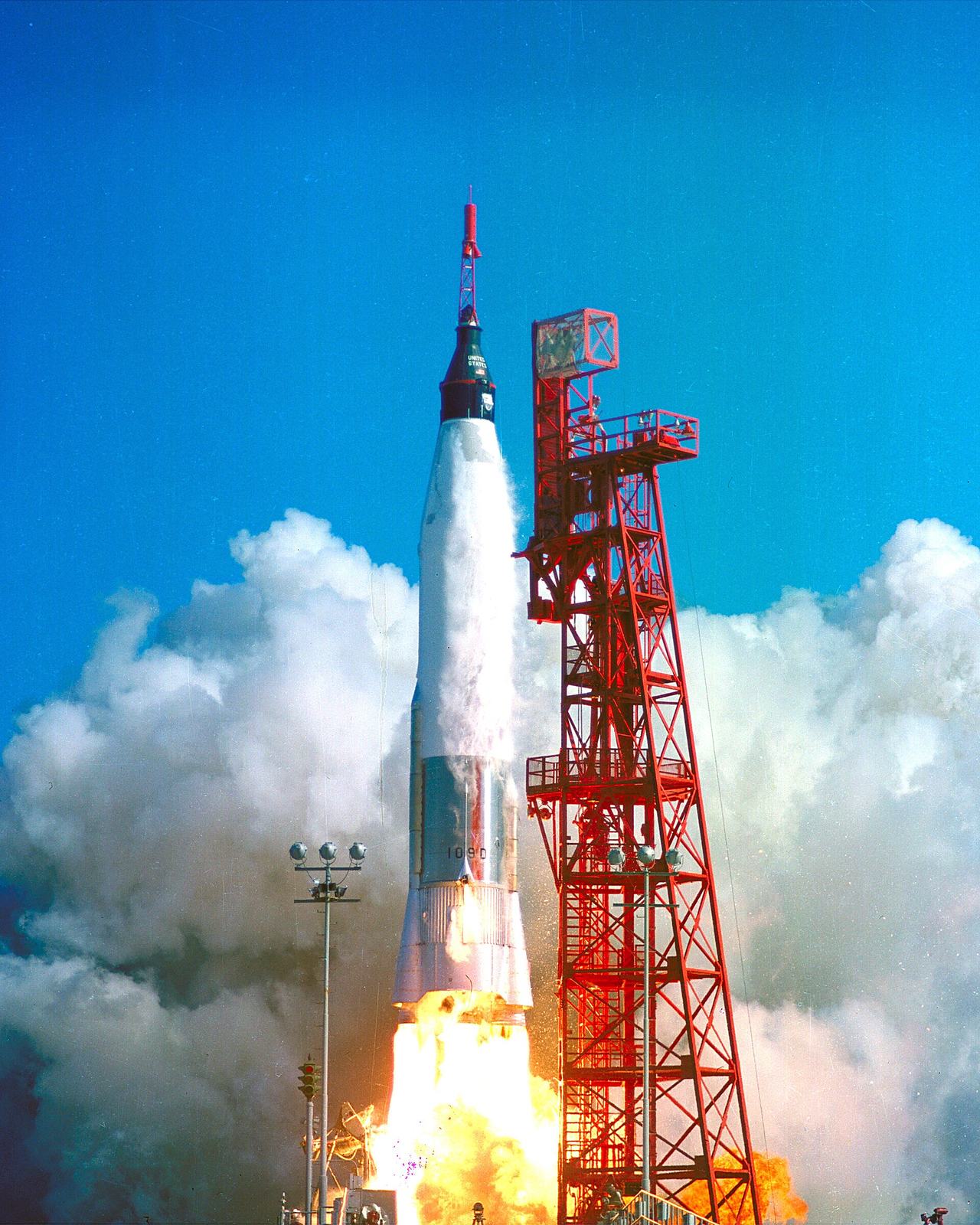
Official details from Stoke’s July 2025 pad update:
- Environmental review finished and the license was secured on October 20, 2024.
- A new 9.5-mile network of underground utilities and a 121-foot umbilical tower.
- A launch mount built to react up to 1.2 million pounds of thrust. That’s well above Pathfinder’s 700,000+, which is my guess at some headroom for later.
- More than 8,000 tons of Mercury-era concrete was crushed and reused on site, and the historic blockhouse stays open as a museum.
Stoke held a flag-raising ceremony at SLC-14 on February 20, 2026, exactly 64 years after Glenn’s flight.
Where the Hardware Is Right Now
- Stage 1: Stoke finished “proto-qualification” structural testing on June 8, 2026, verifying 46 test objectives during three weeks at Moses Lake.
- Stage 2: Ars reported on October 20 that Stoke had shipped the second stage to its test site the week before. Ars’ September report described the plan as structural testing and a hot fire there before the stage goes to Florida.
- Delivery: Stoke says it is “preparing for hardware delivery to SLC-14.” Ars wrote in September that the first stage would ship to the Cape soon, and in October described it as nearly complete at the factory in Kent. I could not confirm that any flight stage has reached Florida yet.
Flight 1, Customers, and Schedule
Stoke’s September 22, 2026 update names the first payloads: AstroForge’s Autonomy-1, which will test an autonomous spacecraft brain called Solo and support NASA Goddard’s COMPASS heliophysics payload, plus Celestis’s Infinite Flight memorial payload. Stoke plans multiple Pathfinder flights in 2027 and 2028.
The company says “early 2027” (its Series E post says early 2027, and “Scaling Nova” says the first part of 2027). Reported opinion: in its October 20 piece, Ars predicts Nova will fly in July 2027. That’s a prediction by a journalist, not a promise by Stoke.
Money and Partners
- Official: $510 million Series D on October 8, 2025, bringing total capital to $990 million, and the Series D was later extended to $860 million (February 10, 2026, per Stoke’s news page).
- Official: $1 billion Series E on September 8, 2026, co-led by Point72 Ventures and Spark Capital, bringing the total to $2.3 billion.
- Official: In March 2025 the Space Force added Stoke to its NSSL Phase 3 Lane 1 pool, with a $5 million initial task order. That is a chance to compete for missions, not a guarantee.
- Official: In June 2026, Stoke announced a partnership with NASA’s Space Technology Mission Directorate to scale reusable launch and re-entry, including hypervelocity free-flight testing at NASA Ames.
What Nobody Knows Yet
No Nova has reached orbit. Pathfinder’s full-flow engines have not yet powered a flight, the actively cooled heat shield hasn’t returned from orbital speed, and I found no public price. Early flights will be as much about learning as delivering payloads. 💫
Terms to know ✨
- Full-flow staged combustion: an engine cycle where all the fuel and oxidizer run through the turbines before burning, for efficiency with less stress.
- Specific impulse (Isp): how efficiently an engine turns propellant into push, measured in seconds. Higher is better.
- Proto-qualification: structural tests on a flight-like article to prove it can survive launch loads.
- Differential throttling: steering by running some thrust chambers harder than others.
- LNG: liquefied natural gas, which is mostly methane.
What to Watch Next (As of October 25, 2026)
- Delivery of Stage 1 to SLC-14, then a static fire at the pad.
- Stage 2’s hot fire at Moses Lake, then its trip to Florida.
- A firm launch date; so far Stoke has only said “early 2027.”
- Whether a new Nova announcement reveals pricing or more payloads.
- My rocket-science primer is a good refresher on why all of this reuse stuff is so hard.
The Star Queen’s Takeaway 👑
Nova is a big swing: a hard engine, an upper stage that comes home, and a historic pad. The funding is real and the hardware is visibly coming together, but until a Nova reaches orbit, everything else is a promise. I’ll be watching those test stands closely, and cheering for the underdog with a heat shield made of rocket engine. 🚀
Sources
All sources below were opened on October 25, 2026.
- Nova Pathfinder — Stoke Space product page (undated), vehicle specs
- Scaling Nova — Stoke Space, Sep 8, 2026
- Stoke Space Raises $1 Billion to Accelerate Fully Reusable Launch — Stoke Space, Sep 8, 2026
- Manifest Update: Nova Pathfinder Flight 1 — Stoke Space, Sep 22, 2026
- Nova Stage 1 Completes Proto-Qualification Testing — Stoke Space, Jun 8, 2026
- From Mercury to Nova: Launching the Future at Space Launch Complex 14 — Stoke Space, Jul 28, 2025
- Nova Block 2 page — Stoke Space (undated), history timeline including Feb 20, 2026 flag-raising
- Update on Hopper2: The Hopper Has Landed — Stoke Space, Sep 18, 2023
- Stoke Raises $510 Million — Stoke Space, Oct 8, 2025
- Stoke Space news index — Stoke Space, read Oct 25, 2026 (Series D extension and June 11, 2024 hot-fire headlines)
- Stoke Space selected for the U.S. Space Force’s $5.6B NSSL program — Stoke Space, Mar 28, 2025
- Stoke Space and NASA partner to scale reusable launch and re-entry — Stoke Space, Jun 26, 2026
- With another huge infusion of cash, Stoke Space goes even bigger — Ars Technica, Eric Berger, Sep 8, 2026
- Does anyone actually want to win the medium-lift race in the United States? — Ars Technica, Eric Berger, Oct 20, 2026
- Launch of Friendship 7 (GPN-2000-000686) — NASA, Feb 20, 1962, via Wikimedia Commons
