By The Star Queen
My loves, the honest summary is: Vulcan has been grounded since February 12, and as of today I can’t find a public answer for why.😬 What I can give you is the timeline, what officials and companies have actually said, what’s confirmed versus only reported, and what to watch. For the physics, try How Rockets Defy Gravity.
First, the Part in Question
Vulcan’s strap-on solid boosters are Northrop Grumman GEM 63XLs. Each one ends in a nozzle. Ars Technica describes the throat as “the area where the motor’s propellant casing connects to its bell-shaped exhaust nozzle,” where super-hot gas is driven out to make thrust (Ars Technica, Feb 12, 2026).
Anomaly One: October 4, 2024
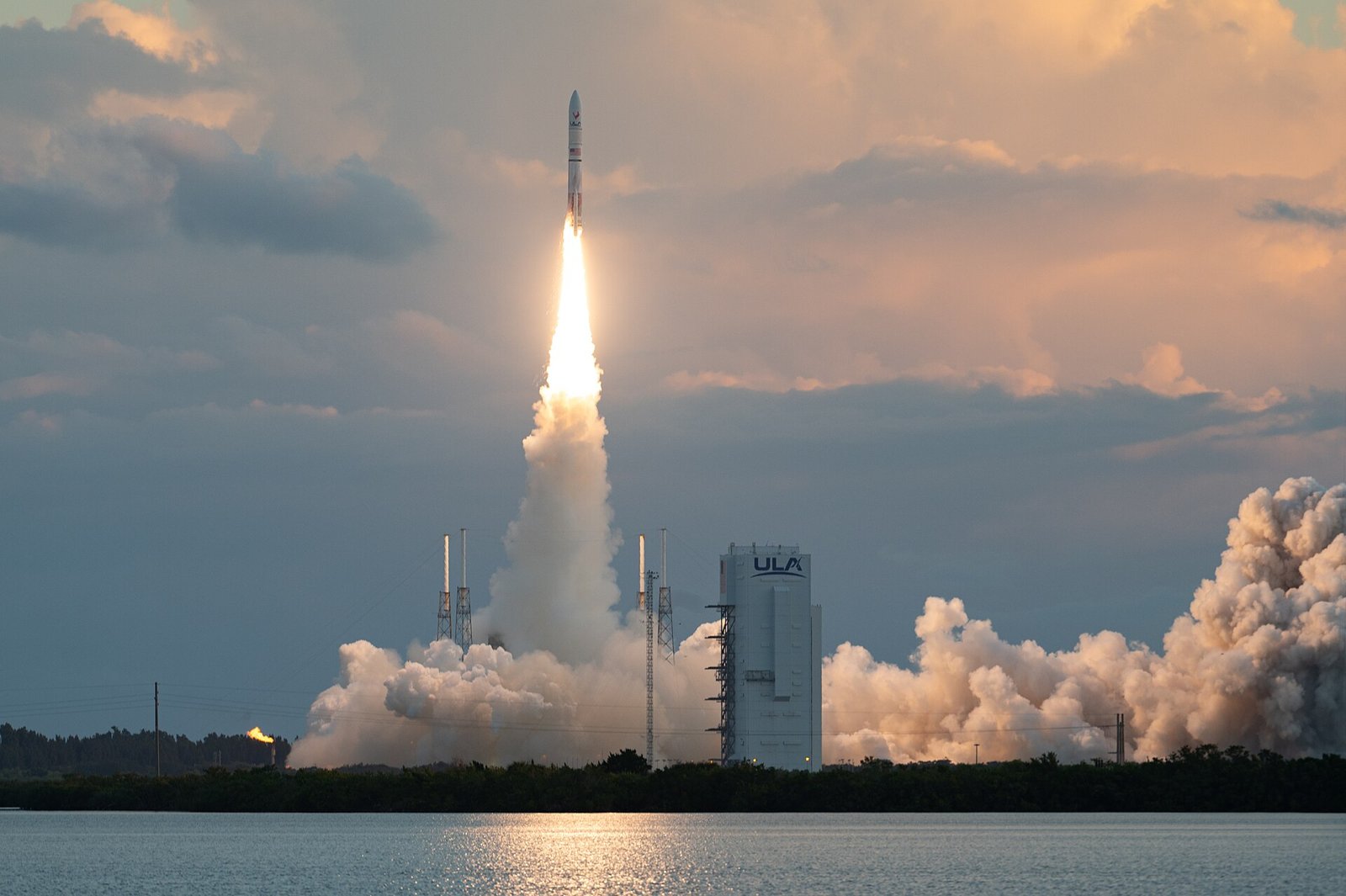
On Vulcan’s second certification flight a booster nozzle failed. Per Ars, investigators determined that a carbon composite insulator, or heat shield, inside the nozzle failed to protect the metal structure from the superheated exhaust, and engineers traced that to a “manufacturing defect” in one of the insulators. The damaged motor kept firing with less thrust, the BE-4 engines made up the difference, and the rocket reached its planned orbit (Ars Technica, Feb 12, 2026). It then stayed on the ground for about ten months while engineers looked into it (same article). Testing included a hot-fire in Utah (Spaceflight Now, Feb 12, 2026). Certification for national security missions followed in March 2025 (Spaceflight Now, Mar 27, 2025).
Anomaly Two: February 12, 2026
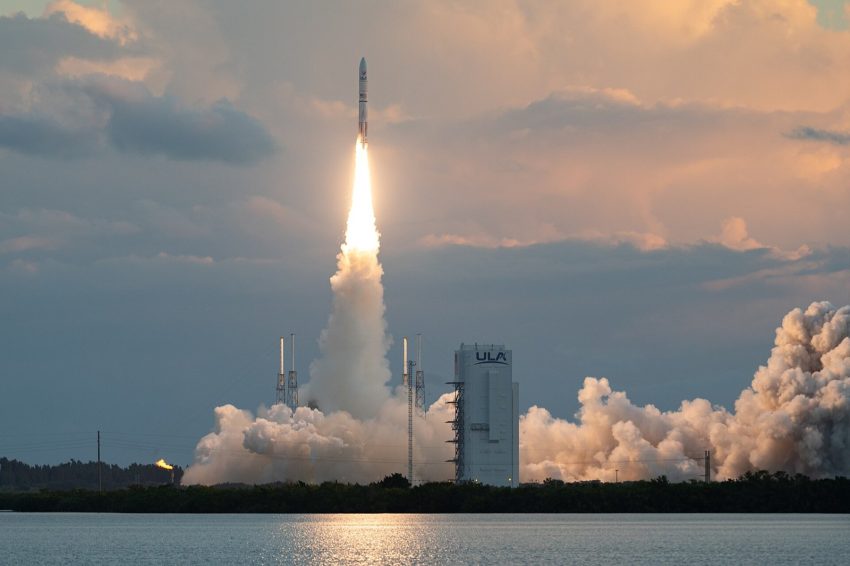
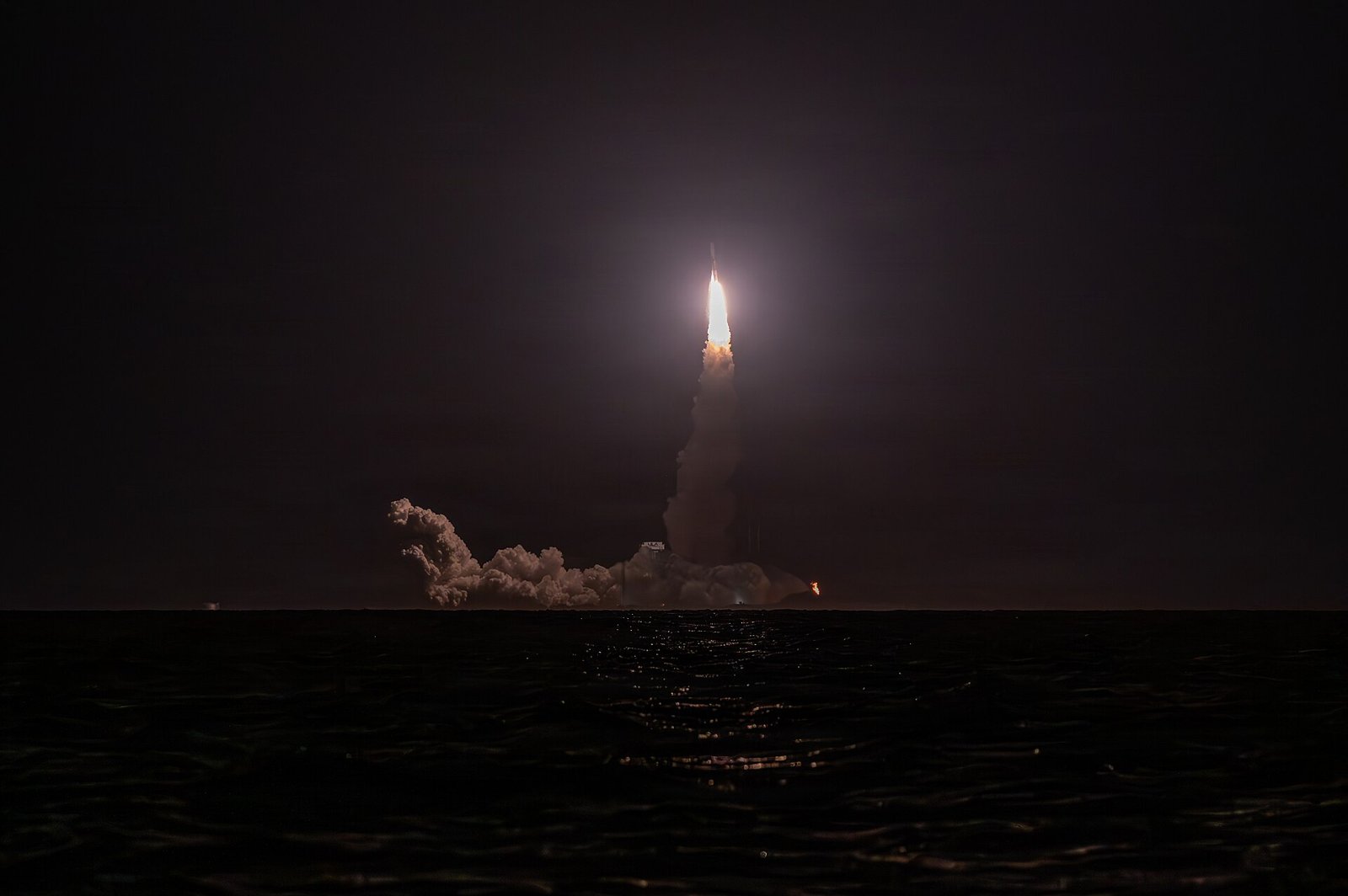
Vulcan lifted off from Cape Canaveral at 4:22 a.m. EST on a four-booster configuration, carrying the Space Force’s USSF-87 mission. Spaceflight Now reported that less than 30 seconds into flight there appeared to be a burn-through of one of the booster nozzles. The rocket rolled more than usual, appeared to counteract it, and jettisoned the boosters on schedule at T+1 minute 37 seconds (Spaceflight Now, Feb 12, 2026). ULA’s statement that day: “the team observed a significant performance anomaly on one of the four solid rocket motors,” and the booster and Centaur “performed nominally and delivered the spacecraft directly to geosynchronous orbit” (ULA release, Feb 12, 2026). A ULA vice president later told Spaceflight Now there was “some asymmetric thrust when we had that solid motor fail, it reduced performance” (Spaceflight Now, May 14, 2026).
Counting is messy: Spaceflight Now calls it “the second time in just four flights,” while Ars’s same-day report said “two similar failures in three flights.” Vulcan has flown four times, so I count two of four.
The Investigation
Pause. In late February, Space Force acquisition official Col. Eric Zarybnisky said “until this anomaly is all over, we will not be launching National Security Space Launch missions on Vulcan” (Air & Space Forces Magazine, Feb 25, 2026), and the service said the investigation could take “many months” (same article). ULA told Breaking Defense it would not fly again until the team had reviewed data, inspected the spent motors and implemented corrective actions (Breaking Defense, Feb 25, 2026).
Debris. This time the nozzle pieces fell into water “likely too deep for them to recover,” unlike in 2024 (Spaceflight Now, May 14, 2026). In April, though, Ars reported that Space Systems Command’s Lt. Gen. Philip Garrant said teams would attempt to recover the boosters from the Atlantic floor (Ars Technica, Apr 15, 2026). I found no published result of that effort, so those two accounts conflict.
Test fire. On April 15, Northrop fired a GEM 63XL in Utah. A spokesperson said it demonstrated “nozzle design enhancements which were already in work and an advanced propellant technology for future solid rocket motors” (Spaceflight Now, May 14, 2026). That tested a design change; it wasn’t an announced root cause.
Northrop’s update. On its second-quarter call in July, Northrop said it “progressed on the root cause investigation on the GEM 63XL program” and is implementing corrective actions including “a component redesign, which has now been proven in a successful static fire test.” It expects “to begin delivering the redesigned motors by the end of the year” (Northrop Grumman Q2 2026 earnings call transcript, July 21, 2026). A blog reports Northrop took charges of $71 million (Q1) and $91 million (Q2) on the program (Behind the Black, Jul 22, 2026). I treat those figures as reported, not confirmed.
Where that leaves us. On October 21, Garrant said he was confident Vulcan would return but declined to share interim findings or a firm date (SatNews, Oct 22, 2026). I found no public statement naming the February root cause, and there is a question I can’t answer: Northrop expects redesigned motors by year-end, so I don’t know which motors would fly on the return mission. That’s an open question, not a claim.
Update (October 29, 2026): Good news, my loves! 💫 On October 28, United Launch Alliance announced that Vulcan will return to flight on Friday, November 13, from Space Launch Complex 41 at Cape Canaveral, carrying 40 Amazon Leo broadband satellites on the first Vulcan ever to fly with six solid rocket boosters. The date is still pending range approval, and the Space Force wants data from commercial flights before clearing Vulcan for its own missions again, so I’m treating it as a target, not a promise (source: Spaceflight Now).
Terms to know ✨
- Nozzle throat: the narrow part where hot gas from the burning propellant is squeezed into the bell-shaped nozzle.
- Insulator: a heat shield inside the nozzle.
- Static fire: firing a motor while it’s bolted down on the ground.
- Root cause: the underlying reason for a failure.
- Return to flight: the first launch after a grounding.
- Mission swap: moving a payload between launch providers. Both providers must agree.
When Is Vulcan Flying Again?
- February 10: ULA’s chief operating officer Mark Peller said the company was aiming for 16 to 18 launches in 2026 (per Breaking Defense, Feb 25, 2026). Vulcan has flown once this year, in February.
- Spring: a ULA vice president said Vulcan would be back “by the end of the year” (Spaceflight Now, May 14, 2026).
- August 6: ULA said it was “working hard to have Vulcan’s return to flight this year,” and a blog post on a full wet dress rehearsal added, “A launch date has not been established” (ULA blog, Aug 6, 2026).
- October 9: Ars’s Rocket Report cited a no-earlier-than date of October 29 for an Amazon Leo return-to-flight launch. Amazon’s Rajeev Badyal said, “I can say we’re weeks away from launching on Vulcan” (Ars Technica, Oct 9, 2026).
- October 24: a launch tracker shows that mission, “LV-01,” on a VC6L at no earlier than Nov 30, 00:00 UTC, which is 7:00 p.m. ET on Sunday, November 29. The tracker’s history shows the date moving from Sep 30 to Oct 31 to Oct 29 and then to Nov 30, and it says the date is approximate (Space Launch Live). I found no official ULA date, so treat November 29/30 as a placeholder.
My own projection: with one flight so far and Amazon planning “at least one more Vulcan this year” beyond the return mission, 2026 will fall far short of 16 to 18. That’s my arithmetic, not an official number.
What It Did to the Manifest
Roughly half of the Space Force’s major launches over the next four years were assigned to Vulcan (Ars Technica, Apr 15, 2026). The fallout so far:
- GPS III SV-10: moved to a Falcon 9 in March (Breaking Defense, Mar 20, 2026) and launched in April (Spaceflight Now, Apr 21, 2026). In exchange, ULA will fly USSF-70 on Vulcan no earlier than summer 2028 (Breaking Defense). A Space Force colonel said, “For any of these swaps, we have to have both launch providers agree to it” (Spaceflight Now, Apr 21, 2026). So swaps are negotiated trades, not penalties.
- More swaps: Ars reported that four GPS launches had moved in two years and that officials were “working through a significant number” of additional swaps, including affected missions such as a missile-warning satellite, Silent Barker and a wideband communications satellite (Ars Technica, Apr 15, 2026). Garrant said the Vulcan experience “absolutely will shape” future launch buying.
- October: SpaceNews reported on October 24 that the Space Force moved a next-generation missile-warning satellite and a cislunar surveillance payload stack from Vulcan to Falcon Heavy (SpaceNews, Oct 24, 2026). SatNews, an outlet I treat as secondary, said six missions in total had been moved (SatNews, Oct 22, 2026). The six-mission count is reported, not confirmed by a source I could read in full.
- A no-solids workaround: the Space Force is exploring flying some missions without the boosters under investigation (SpaceNews, Apr 19, 2026). Ars says payload stacks for Space Development Agency launches could be lightened to reach orbit with no solids.
- A second gate: on September 16, SpaceNews reported that the Space Force will require a separate review before allowing Vulcan to resume national security launches (SpaceNews, Sep 16, 2026). Ars noted that ULA could fly commercial missions before the Space Force’s green light (Ars Technica, Apr 15, 2026).
Not every SpaceX win is a swap: in late July SpaceX won $1.6 billion for 18 launches under the competed Lane 1 contract (Breaking Defense, Jul 29, 2026). That’s a new order, not a reassignment from ULA.
The Pressure on ULA
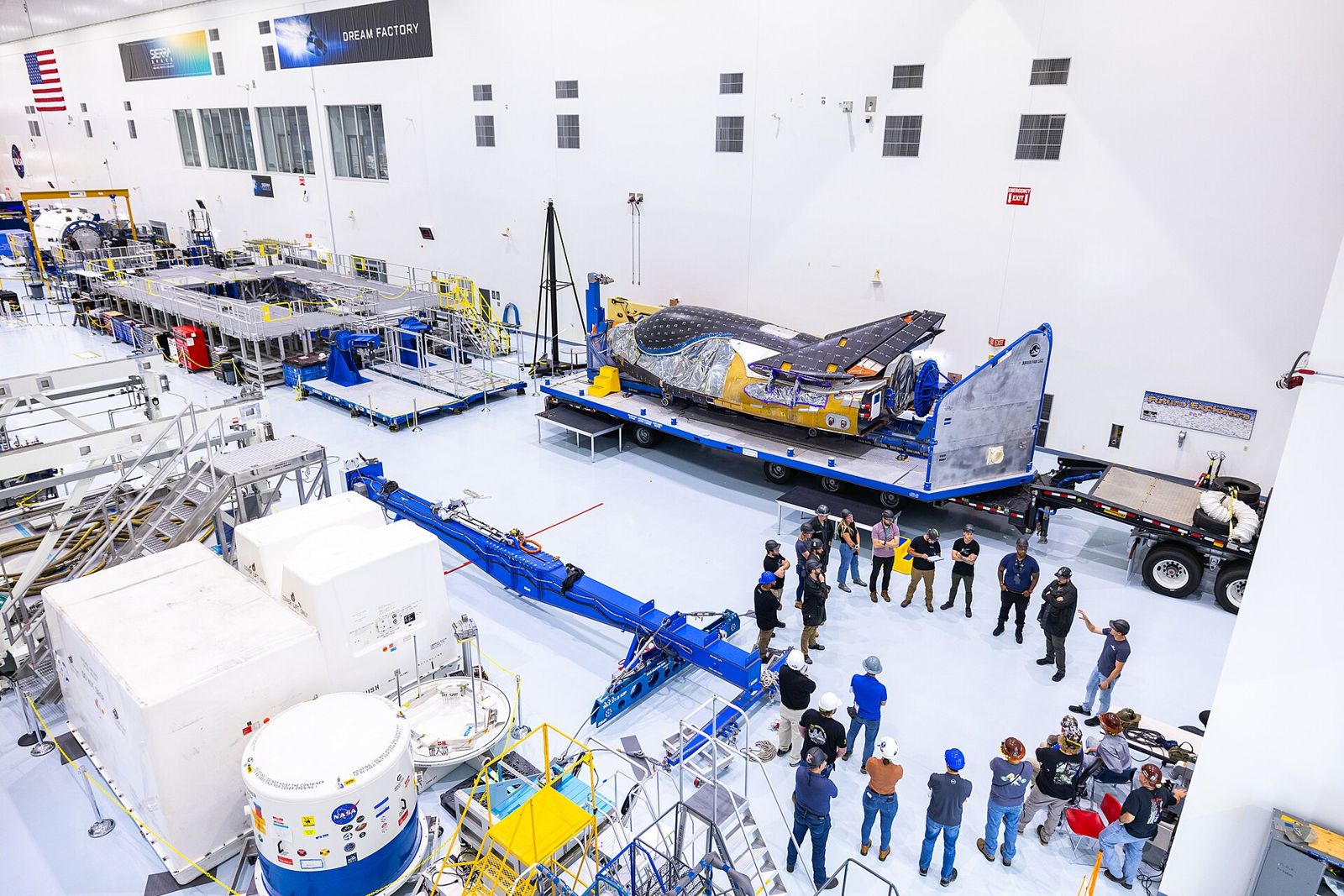
ULA planned 20 launches in 2025 and flew six, only one on Vulcan, with a backlog of more than 80 missions (Air & Space Forces Magazine, Feb 10, 2026). Its longtime CEO left in December, and Mark Peller became CEO in August (ULA release, Aug 17, 2026). Sierra Space’s Dream Chaser, once planned for Vulcan, has no firm launch date: its owner said it signed customers but gave no dates (Talk of Titusville, Sep 3, 2026, a local blog).
What to Watch Next (As of October 25, 2026)
- A confirmed date. Look for ULA or Amazon to announce the LV-01 launch time, and for a root-cause statement from ULA, Northrop or the Space Force.
- Which boosters fly. Whether the first flight uses redesigned motors, and when Northrop begins delivering them.
- The Space Force’s separate review, and when national security missions can return.
- More swaps, and who takes them.
- BE-4 modifications. ULA says Blue Origin will modify Vulcan’s BE-4s after the New Glenn explosion (Spaceflight Now, Aug 6, 2026).
The Star Queen’s Takeaway 👑
Two nozzle failures in four flights is a real problem, even though the rocket reached orbit both times. The rocket’s ability to survive both says something good about the design. But after eight months, I can’t point to a public root cause, and the launch date keeps sliding. I’m cheering for a clean return flight. 🚀
Sources
- Ars Technica (Feb 12, 2026), Apr 15, Oct 9, 2026
- Spaceflight Now: Certification (Mar 27, 2025); USSF-87 (Feb 12, 2026); GPS III swap coverage (Apr 21, 2026); static fire (May 14, 2026); Blue Origin engine issue (Aug 6, 2026)
- ULA: USSF-87 release (Feb 12, 2026); wet dress rehearsal blog (Aug 6, 2026); Peller named CEO (Aug 17, 2026)
- Air & Space Forces Magazine: ULA’s interim leader (Feb 10, 2026); Vulcan pause (Feb 25, 2026)
- Breaking Defense: Vulcan pause (Feb 25, 2026); GPS III shift (Mar 20, 2026); SpaceX $1.6B (Jul 29, 2026)
- SpaceNews (headline and opening paragraphs only; paywalled): Apr 19, Sep 16, Oct 24, 2026
- Northrop Grumman Q2 2026 earnings call transcript (Jul 21, 2026); Behind the Black (Jul 22, 2026, blog)
- SatNews (Oct 22, 2026); Talk of Titusville (Sep 3, 2026); Space Launch Live (page updated Oct 24, 2026)