By The Star Queen · Star Queen Chronicles
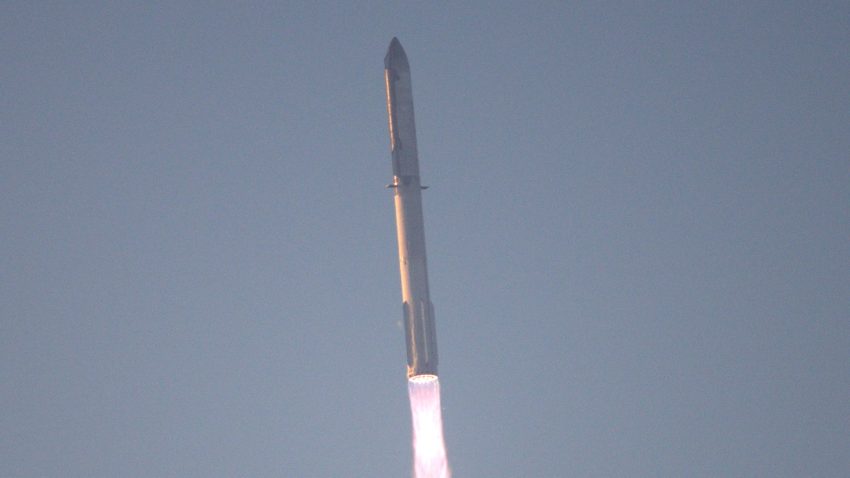
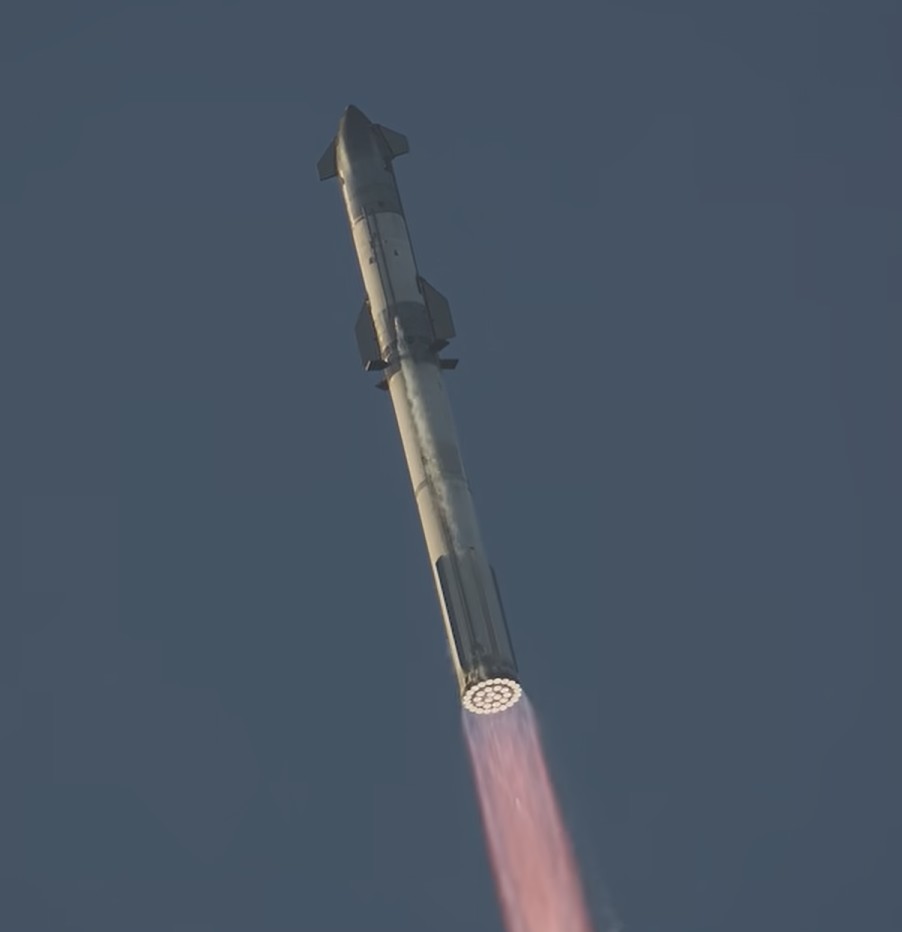
My loves, if Flight 1 was about the pad, Flight 2 was about the staging. 🌅 On November 18, 2023, at 7:02 a.m. Central (13:02 UTC, 8:02 a.m. Eastern), Starship launched again from Starbase, Texas after seven months on the ground. This time the pad survived with minimal work, the booster and ship separated for the first time with a clever new maneuver called hot staging, and the ship climbed to about 150 km, past the edge of space. It also ended with two separate explosions, about five minutes apart.
As of October 26, 2026, Flight 2 is the second of 14 Starship integrated flights. I mark numbers as official, reported or my arithmetic, and I flag it when sources disagree.

The Short Version
- What flew: Super Heavy Booster 9 and Ship 25, from Starbase’s Orbital Launch Pad 1, on November 18, 2023 (official).
- New for this flight: the first hot staging at this scale, a water-deluge steel plate under the launch mount, electric thrust vector control on the booster, expanded fire suppression and a requalified flight termination system.
- Booster: all 33 engines lit, it separated cleanly, started its boostback burn, and then broke up more than three and a half minutes into the flight, at about 90 km over the Gulf (SpaceX), from engines failing.
- Ship: all six Raptors ran. It reached about 150 km, making it the first Starship to reach space. Then a planned liquid-oxygen vent started a fire, the computers lost contact, all engines were shut down and the flight termination system destroyed it at about T+8:05.
- Official result: FAA closed the mishap investigation on February 26, 2024 with 17 corrective actions.
Terms to know ✨
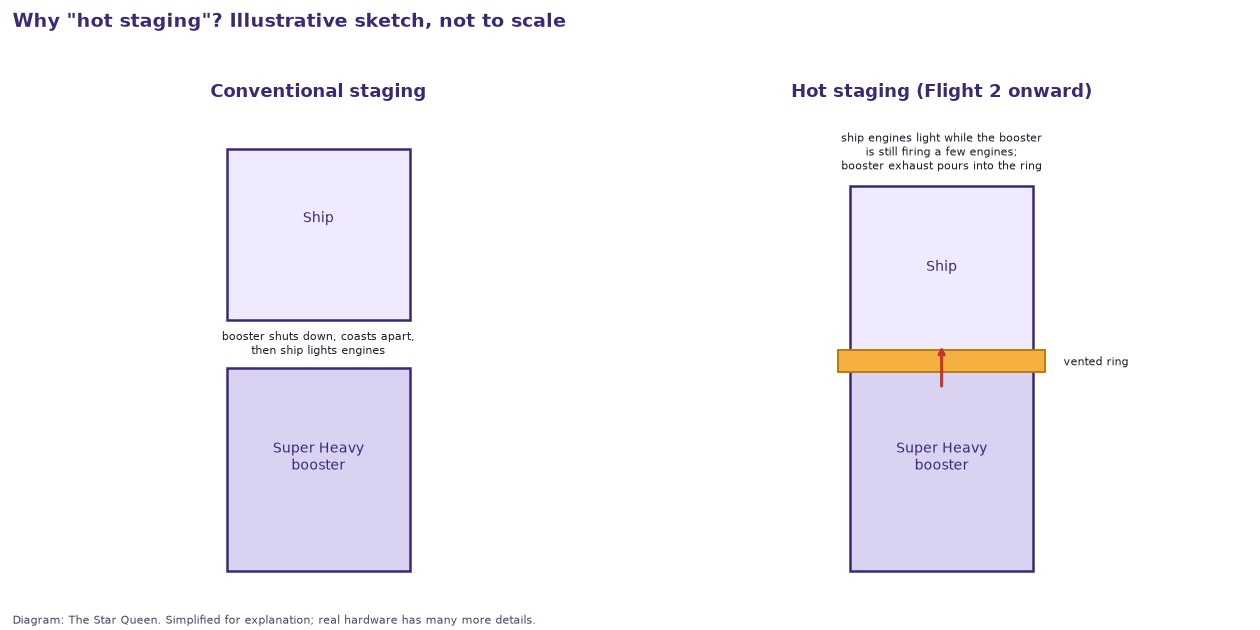
- Hot staging: the ship’s engines ignite while the booster is still attached and still firing a few engines. The ship then pushes itself free. It saves the weight and time of a separate separation system, but the booster’s exhaust pours into the ship’s base.
- Interstage / hot-stage ring: the vented metal ring between the booster and ship that lets exhaust escape during hot staging.
- Boostback burn: the booster fires engines to reverse course and head for its splashdown point.
- LOX (liquid oxygen): the oxidizer. Cold, dense, and a fire risk when it leaks. Methane is the fuel (see why methane).
- Turbopump inlet pressure: a Raptor needs a steady supply of propellant at the right pressure to its pumps. If the pressure drops, the engine can shut down or fail.
- Water deluge: water sprayed under the launch mount to absorb heat and blast energy.
- AFSS (Autonomous Flight Safety System): the onboard system that terminates the vehicle if it leaves its safe corridor or loses key systems.
- Apoapsis: the highest point of the trajectory.
- Max q: the point of maximum aerodynamic pressure during ascent.
Flight at a glance
| Item | Detail |
|---|---|
| Date and time | November 18, 2023, 13:02:50 UTC (7:02 a.m. CST local; 8:02 a.m. EST). Delayed one day from Nov 17 to replace a grid-fin actuator on Booster 9 (reported). |
| Launch site | Starbase, Boca Chica, Texas (Orbital Launch Pad 1) |
| Vehicles | Super Heavy Booster 9 (33 Raptors) and Ship 25 (6 Raptors), Block 1 |
| Planned trajectory | Booster boostback to a splashdown in the Gulf. Ship flies a near-orbital path to a splashdown in the Pacific off Hawaii. |
| Mission goals | Demonstrate hot staging, validate the new pad, fly the full ship ascent burn and test a planned LOX vent. |
| Result | Hot staging worked. Booster lost more than three and a half minutes in, during the boostback. Ship reached about 148 to 150 km, then was terminated at about T+8:05. |
| Peak altitude (ship) | About 149 km apoapsis (reported); speed about 24,000 km/h at termination |
| Classification | “Failure” in Wikipedia’s tally, with a lot of firsts achieved |
| Regulatory outcome | FAA license issued Nov 15, 2023. Mishap investigation closed Feb 26, 2024 with 17 corrective actions. |
The Road to Launch
After Flight 1, SpaceX spent months fixing the ground and the vehicle. The launch mount area was rebuilt with a water-cooled steel plate and a deluge system, and the vehicles gained hot staging, electric TVC on the booster, more fire suppression and an updated flight termination system. The FAA’s own safety review was completed on October 31, 2023, the U.S. Fish and Wildlife Service’s environmental consultation concluded on November 14, and the FAA issued the license on November 15, three days before launch (reported).
Hot Staging in Plain Language
Most rockets separate their stages like a relay handoff: the booster burns out, the two stages coast apart, and only then does the upper stage light its engine. The pause costs time, and it needs hardware to push the stages apart cleanly.
Hot staging skips the pause. While the booster is still attached and still firing a few engines, the ship lights all six of its Raptors and simply drives away from the booster. The ship’s thrust is what separates them, which saves the weight of a dedicated separation system and lets the ship keep its momentum.
The price is that the ship’s flame points straight at the top of the booster. That’s what the vented ring (the “hot-stage ring” or interstage) is for. It’s a ring with openings that lets the ship’s exhaust escape sideways instead of blasting into the booster’s tanks. Flight 2 was the first time this was flown on a full-size stack, and from the footage it did what it was meant to do. My simple diagram above shows the idea; it is illustrative and not to scale.
Play-by-Play
Times come from SpaceX’s flight timeline and flight page, as compiled by Wikipedia. Where two sources differ I say so.
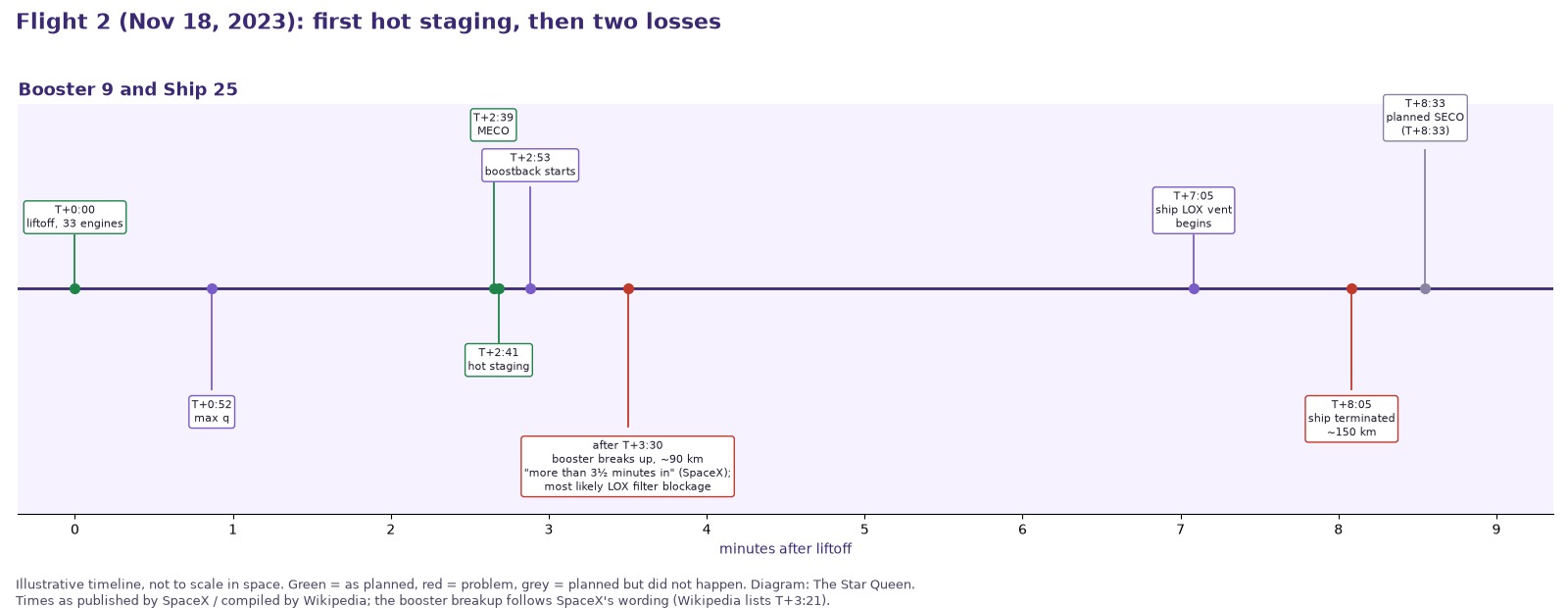
- T+0:00, liftoff. All 33 booster engines ignited, a first for the program. The pad held up: SpaceX said upgrades performed as expected with minimal post-launch work.
- T+0:52, max q. The booster throttled down through peak pressure.
- T+2:39, MECO. Most booster engines shut down, leaving three running.
- T+2:41, hot staging. The ship’s six Raptors lit while the booster was still firing. The ring did its job and the stages separated. Scott Manley’s analysis of the footage concluded that the hot staging worked.
- T+2:53, boostback begins. The booster flipped and tried to relight engines to head back toward the Gulf.
- More than three and a half minutes in, the booster breaks up. SpaceX says the breakup came “more than three and a half minutes into the flight” at about 90 km over the Gulf. (Wikipedia’s timeline lists T+3:21, which doesn’t fit SpaceX’s wording, so I’m using SpaceX’s.)
- T+7:05, ship begins a planned LOX vent. The ship was carrying propellant as a stand-in for payload mass and the vent was meant to dump some of it.
- Shortly after, fire and lost comms. A leak and fire developed in the ship’s aft section. The ship’s flight computers lost communication with each other and commanded all six engines to shut down.
- About T+8:05, termination. AFSS destroyed the ship at about 148 to 150 km altitude traveling at about 24,000 km/h. The planned SECO was T+8:33.
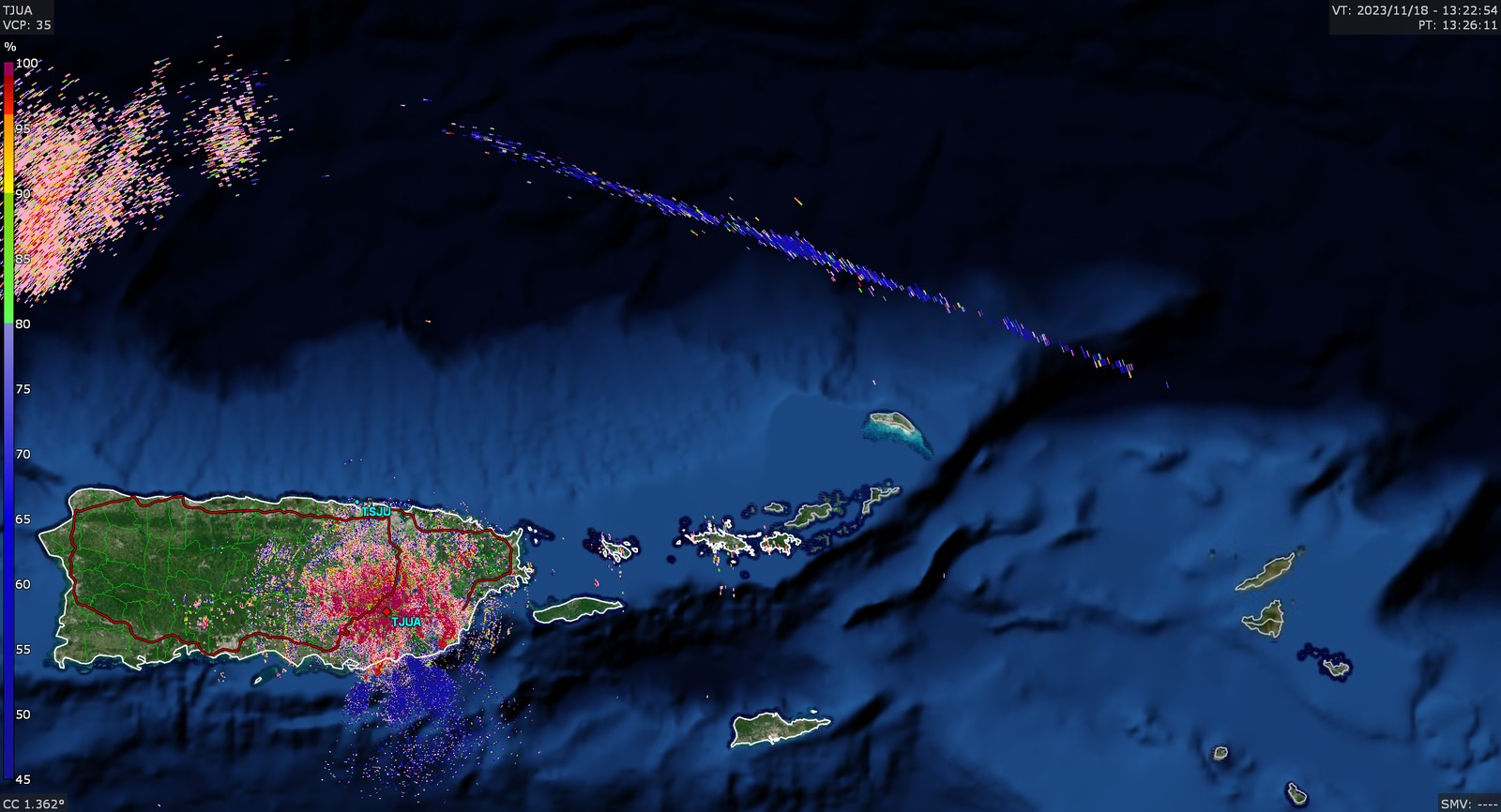
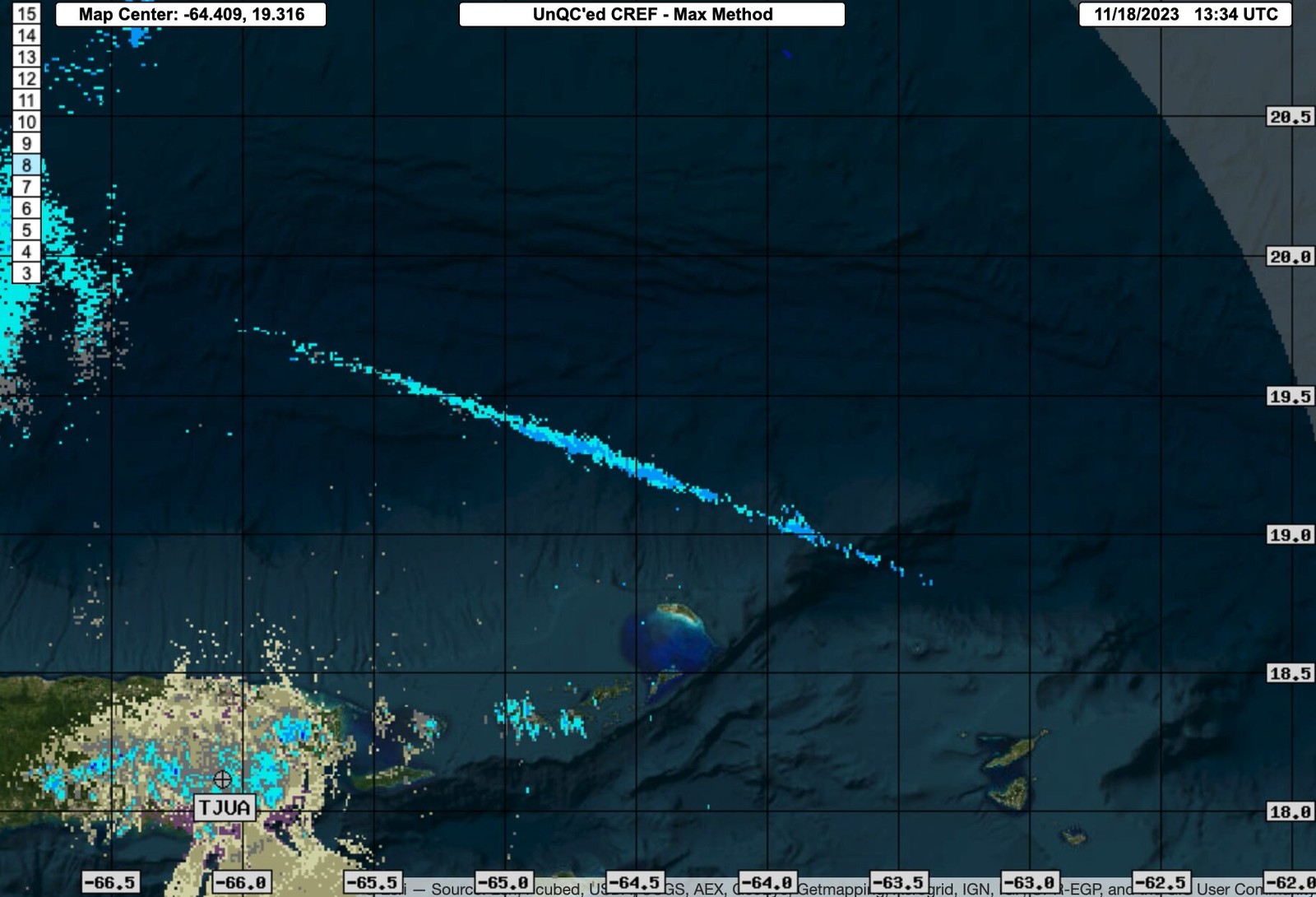
- After. NOAA radar picked up a debris cloud north of the Virgin Islands (as reproduced by astronomer Jonathan McDowell).

What Went Right
- Hot staging worked. The ship’s engines lit and the stages separated with the ring in place. For a vehicle this big, nobody had done it before.
- The new pad held. The steel plate and water deluge did their job. SpaceX described only minimal post-launch work after the Flight 2 pad.
- All 33 booster engines and all 6 ship engines lit. The ship’s six Raptors ran through the planned burn until the fire.
- It reached space. At about 149 km, Ship 25 went well past the 100 km Kármán line, a first for Starship. It was moving at roughly 24,000 km/h when it was terminated.
- The ship’s flight termination system worked as designed. AFSS ended the flight after the ship lost its engines.
What Went Wrong (and Why)
1. The booster: starved engines
SpaceX’s explanation was a blockage in the liquid-oxygen filter at the booster’s engines, which led to a loss of turbopump inlet pressure and engine failures during the boostback burn. In plain language: the engines were starved of oxygen, several began shutting down, and then one engine failed energetically, which cascaded into the booster breaking apart. SpaceX says the boostback burn commands 13 of the 33 engines, though it doesn’t say how many actually lit before the failures spread, so I’m treating that exact count as a soft number.
2. The ship: a leak during a vent
Late in the ascent burn, the ship started a planned LOX vent to dump propellant it was carrying as payload simulant. SpaceX said the vent caused a leak and a fire in the aft section of the ship. The fire cut communication between the ship’s flight computers, and the computers responded by shutting down all six engines. AFSS then destroyed the vehicle. The root idea here is simple: venting cold oxygen near a hot, busy engine bay is a risky thing to do in flight, and it showed up as a design issue to fix.

Why such tiny parts matter
You might wonder how a filter can bring down a 70-meter booster. A Raptor is a turbopump engine: pumps spin at enormous speed to push propellant into the combustion chamber, and they need a smooth, pressurized supply to stay happy. A filter is there to keep stray debris out of those pumps. If the filter gets blocked, the pump inlet pressure drops, and a pump that is starved can shut the engine down. With several engines affected at once, a booster has little chance of steering through its flip. It’s an ordinary lesson in engineering: the biggest failures often start in the cheapest, smallest part.
The Paperwork
The FAA required a mishap investigation for both vehicles. It closed it on February 26, 2024 after SpaceX submitted 17 corrective actions (reported as 10 for the ship and 7 for the booster). The list of changes below, as summarized for Flight 3, gives a good picture of what was addressed.
What Changed Next
- Delay the LOX vent until after the ship’s engine cutoff.
- Electric TVC on the ship. The ship would also use electric steering.
- Tank farm upgrades (subcoolers and pumps) to improve how propellant is delivered.
- Steel plates on the pad’s concrete and a concrete wall replacing the HESCO barriers.
- Booster fixes aimed at the engine-starvation problem (see Flight 3 for how well that worked).
The Star Queen’s Take
Flight 2 is the one that makes me want to scream “this is how test programs work” and also “oh no” in the same breath. 😅 The good: hot staging, the pad, and the full ship burn all worked, and Starship reached space. The bad: two entirely different failures, one in each stage, in the same few minutes.
The mental model I use: Flight 1 was about surviving the ground, and Flight 2 was about the plumbing. The booster died from a clogged filter, a tiny part with huge consequences. The ship died from a leak and fire in a planned vent. Both are problems you only find in flight.
I also love how honest the SpaceX framing was: it called out the firsts, and it said what it would fix. The FAA’s 17 corrective actions were a fraction of Flight 1’s 63, which tells me the list was shrinking. Still, nobody should call this flight clean. It ended in two explosions, and the booster’s loss means the “catch it later” plan was a long way off.
Watch
SpaceX’s own recap, and Scott Manley’s breakdown of the hot staging and the failures.
If the video doesn’t load, watch it on YouTube: SpaceX: Starship’s Second Flight Test
If the video doesn’t load, watch it on YouTube: Scott Manley: Starship & Superheavy Become The Biggest Rocket In Space… Before Exploding
Keep Reading
- Previous: Starship Flight 1 explained, the pad-crushing debut.
- Next: Starship Flight 3 explained, a trip to space and a propellant-transfer demo.
- The engines: Raptor, the full-flow methane engine and liquid methane, explained.
Sources
- SpaceX, Starship’s Second Flight Test (flight page): https://www.spacex.com/launches/starship-flight-2
- Wikipedia, Starship flight test 2 (timeline, FAA investigation, debris radar): https://en.wikipedia.org/wiki/SpaceX_Starship_integrated_flight_test_2
- Wikipedia, Starship flight test 3 (for the 17 corrective actions and the changes made after Flight 2): https://en.wikipedia.org/wiki/SpaceX_Starship_integrated_flight_test_3
- Ars Technica, Eric Berger, “Elon Musk provides detailed review of Starship’s first launch and what’s next” (for the electric TVC and pad plans): https://arstechnica.com/space/2023/05/elon-musk-provides-detailed-review-of-starships-first-launch-and-whats-next/
- Scott Manley, Flight 2 analysis video (linked in the Watch section): https://www.youtube.com/watch?v=hF2C7xE9Mj4
- Related posts on this site: Raptor, liquid methane
- Images: Wikimedia Commons (credit and license in each caption). Diagrams by The Star Queen.