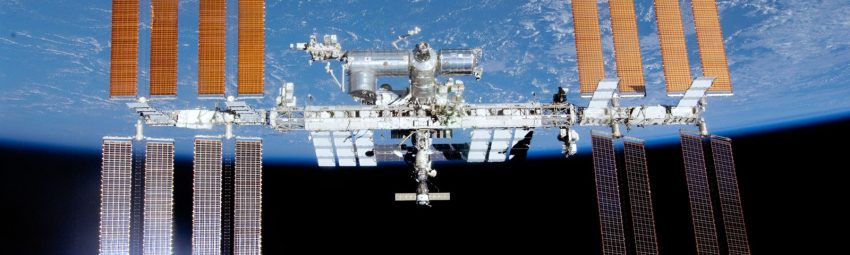
Have you ever stepped outside at dusk, spotted a bright, steady “star” gliding across the sky, and realized it was the International Space Station? I still get chills every time. Tomorrow, November 2, 2026, marks 26 years of people living aboard the ISS without a break. And yet, if everything goes according to plan, the station has only a few years left. Let’s look back at where it came from, where it is now, and what might take its place.
From Rivals to Roommates: How the ISS Began
The ISS grew out of two Cold War dreams: NASA’s planned Space Station Freedom and the Soviet Union’s Mir-2. After the Cold War ended, the two programs merged into one international project. Today, the station is run by five partner agencies: NASA, Roscosmos, ESA, JAXA, and the Canadian Space Agency.
Assembly began on November 20, 1998, when a Russian Proton rocket launched the first module, Zarya (“Dawn”). Two weeks later, Space Shuttle Endeavour (STS-88) brought up the US node Unity and connected the two. Just like that, the ISS existed!
Building a House in Orbit
Over the next decade-plus, Space Shuttles and Russian rockets delivered piece after piece: laboratories, trusses, giant solar arrays, airlocks, and robotic arms. Some highlights:
- November 2, 2000: The Expedition 1 crew moved in. People have lived aboard ever since.
- 2008: Europe’s Columbus lab and Japan’s Kibō lab arrived, along with Canada’s Dextre robot to join the Canadarm2 arm.
- 2011: The Space Shuttle retired after helping finish the station’s US segment.
- 2020: SpaceX’s Crew Dragon Demo-2 brought astronauts to the station from US soil for the first time since the shuttle era.
The result is enormous: about 109 meters (358 feet) across, as big as a football field, with roughly as much pressurized space as a Boeing 747. It circles Earth about every 93 minutes at roughly 400 km (250 miles) up. By August 2025, 290 people from 26 countries had visited.
What the ISS Gave Us
The ISS is, first and foremost, a laboratory. Thousands of experiments have run there, covering how the human body changes in microgravity, fluid physics, materials science, plant growth, and the Alpha Magnetic Spectrometer, a particle detector hunting for clues about dark matter. It has also been a diplomatic triumph: former rivals have shared a home through decades of political ups and downs.
Where Things Stand Today (November 1, 2026)
The ISS is still crewed and working, served by Crew Dragon and Soyuz for people and by cargo ships such as Dragon, Cygnus, Progress, and Japan’s new HTV-X. Private astronaut missions continue too. In early 2026, NASA awarded new private missions to Axiom Space (its fifth, targeted for January 2027) and to Vast.
But the station is aging, and the partners have agreed on an end date. US law (the CHIPS and Science Act) currently authorizes ISS operations through September 30, 2030.
The Plan for a Controlled Goodbye
You can’t just switch off a 400-plus-ton space station. Left alone, it would eventually fall out of orbit uncontrolled, and big chunks could survive reentry. So NASA plans to steer it down deliberately over a remote stretch of ocean.
That’s where SpaceX comes in again. In June 2024, NASA picked SpaceX to build the US Deorbit Vehicle (USDV) under a contract worth up to about $843 million. It’s a souped-up Dragon-derived spacecraft with far more propellant and thrust that will dock to the station and push it into a controlled reentry.
According to a June 17, 2026, report from the US Government Accountability Office (GAO):
- Starting in early to mid-2028, the station will be gradually lowered, using natural atmospheric drag plus maneuvers by the Russian segment.
- The USDV (a Dragon spacecraft with an extra-powerful propulsion trunk) is planned to launch and dock in mid-2029.
- The final reentry burn would come at the end of 2030 or early 2031, sending the surviving pieces into a remote part of the ocean.
- In 2027, NASA has to decide whether to launch the deorbit vehicle in 2029 or extend ISS operations instead.
Congress is debating the plan, too. In February 2026, the House Science Committee’s NASA bill added a requirement for NASA to study moving the ISS to a higher “safe orbital harbor” and storing it instead of destroying it. Separately, the Senate Commerce Committee’s NASA bill would extend ISS operations to September 30, 2032. As of today, neither bill has become law, so the 2030 retirement is still the official plan.
What Might Replace It?
NASA doesn’t plan to build another government station. Instead, it wants to be a customer of commercial stations. (In March 2026, NASA floated owning a core module, but by June it had dropped the idea and returned to buying services.) Here are the contenders and where they stand, along with how much the schedules have slipped:
- Vast Haven-1: a single-module commercial station planned to launch on a Falcon 9. Vast’s Haven Demo test satellite launched November 2, 2025, and was deorbited in February 2026. Haven-1 is now in integration, with launch targeted for Q1 2027. If it flies, it could be the first commercial space station in orbit. Vast is also proposing Haven-2, a larger multi-module station, as an ISS successor.
- Axiom Station: Axiom’s first module will attach to the ISS, then later undock with more modules to become a free-flyer. Thales Alenia Space is building its structure. The schedule has shifted repeatedly. Recent reporting puts the first module somewhere between 2027 and early 2028, so treat dates as tentative.
- Starlab: a joint venture led by Voyager with Airbus as a partner. It completed NASA’s critical design review in February 2026 and aims to launch in one piece on a single Starship around 2029.
- Orbital Reef: a Blue Origin and Sierra Space concept. It finished a system design review in 2025 but has no current public launch date.
- Russia’s ROS (Russian Orbital Station): In April 2026, Roscosmos said the first module would deploy in 2028, with more modules in 2029 and 2030 and a base module around 2032. The first modules would dock to the ISS’s Russian segment and undock near the end of the ISS’s life. Like every station on this list, ROS has seen its schedule shift before.
- China’s Tiangong: already up and running! China completed its three-module station in 2022 and keeps it continuously crewed. Right now, the Shenzhou-23 crew, which launched May 24, 2026, is aboard. When the ISS retires, Tiangong may become the longest-serving station in orbit.
My Feelings About All This
I’ll admit it: the thought of the ISS making one final, fiery dive into the Pacific makes my heart ache a little. It’s been the backdrop of my whole life as a space fan. But it was always meant to be a stepping stone, and what’s coming next is more variety than we’ve ever had: commercial stations, artificial-gravity experiments, and maybe even a little competition in low Earth orbit.
So the next time you see that bright dot gliding overhead, give it a wave. It’s earned it. 🌍✨
— The Star Queen
Sources
- Wikipedia, “International Space Station” (history, size, visitors, 2030 plan): https://en.wikipedia.org/wiki/International_Space_Station
- NASA, ISS facts and figures: https://www.nasa.gov/international-space-station/space-station-facts-and-figures/
- NASA, “NASA Selects International Space Station US Deorbit Vehicle” (June 2024): https://www.nasa.gov/news-release/nasa-selects-international-space-station-us-deorbit-vehicle/
- GAO-26-107805, “Low-Earth Orbit: NASA Faces Impending Decisions for Replacing International Space Station with Commercial Stations” (Jun 17, 2026): https://www.gao.gov/products/gao-26-107805
- Ars Technica, “Lawmakers ask what it would take to ‘store’ the International Space Station” (Feb 2026): https://arstechnica.com/space/2026/02/congress-advances-bill-requiring-nasa-to-reconsider-deorbiting-space-station/
- Senate Commerce Committee, NASA Authorization Act of 2026 (ISS to 2032): https://www.commerce.senate.gov/press/dem/release/commerce-committee-passes-landmark-nasa-authorization-act/
- SpaceNexus, commercial stations promise ledger (Vast, Axiom, Starlab, and Orbital Reef status): https://spacenexus.us/promises/commercial-stations
- Vast, “Vast Advances Haven-1 Into Integration Phase”: https://www.vastspace.com/updates/vast-advances-haven-1-into-integration-phase
- NASASpaceflight, “Vast and Axiom awarded new private missions to ISS” (Feb 2026): https://www.nasaspaceflight.com/2026/02/vast-axiom-2026-pam/
- National Space Society, “Private Space Stations and the Future of Low Earth Orbit”: https://isdc.nss.org/latest-news/private-space-stations-and-the-future-of-low-earth-orbit/
- Izvestia, Roscosmos on the first ROS module in 2028 (Apr 6, 2026, Russian): https://iz.ru/2073442/2026-04-06/v-roskosmose-anonsirovali-razvertyvanie-pervogo-modulia-ros-v-2028-godu
- TASS, first ROS crew and undocking from the ISS: https://en.tass.ru/science/2102695
- China Manned Space, Shenzhou-23: https://en.cmse.gov.cn/missions/shenzhou23/
Image credit — Banner image: The International Space Station photographed from Space Shuttle Atlantis after undocking, STS-132 (2010). Photo: NASA, public domain.
