By The Star Queen · Star Queen Chronicles
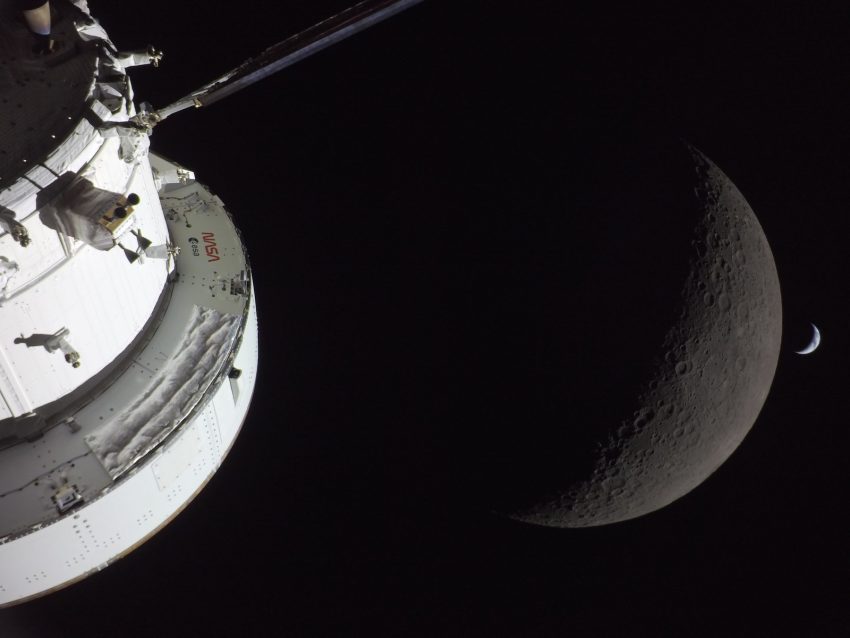
Header photo: NASA’s Orion spacecraft captured the Moon and the Earth in one frame on the sixth day of Artemis II (April 6, 2026). Credit: NASA/Johnson Space Center
Friends, the Moon is having a moment. Humans flew around it again this spring, NASA just unveiled the next steps on October 23, and robotic landers are lining up. Let’s take it one step at a time. 🌟
Artemis II: The Crew Came Home
Artemis II launched at 6:35 p.m. Eastern on April 1, 2026 from Pad 39B. Commander Reid Wiseman, pilot Victor Glover, Christina Koch and Canada’s Jeremy Hansen flew around the Moon in the Orion capsule they named Integrity. They splashed down off San Diego on April 10 (5:07 p.m. Pacific, or 8:07 p.m. Eastern).
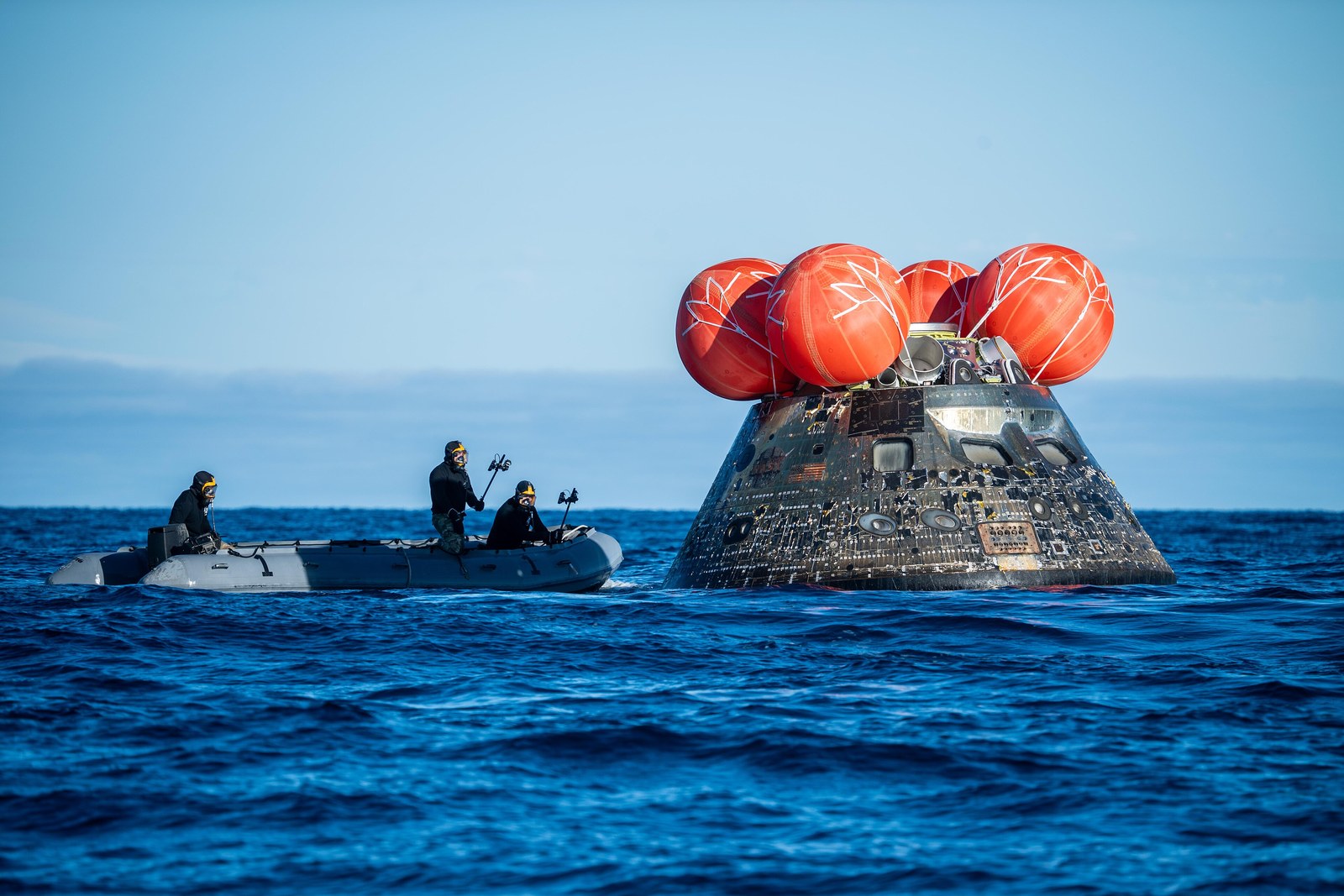
NASA says the crew traveled 252,756 miles from Earth at the farthest point, a distance record, and flew 695,081 miles in total. During the April 6 flyby, they captured more than 7,000 images. 😍
The heat shield passed. NASA’s October 15 analysis says it “performed as expected.” Engineers found only nine spots of char loss, compared with 103 on Artemis I. NASA credits a change to the reentry path. The heat shield for Artemis III has been attached, and NASA says the Orion crew and service modules were joined in July.
Artemis III Is Now a Docking Test
In February, NASA rebuilt the plan. Artemis III, once the first landing mission, became a 2027 test in Earth orbit. NASA’s October 23 update filled in the details:
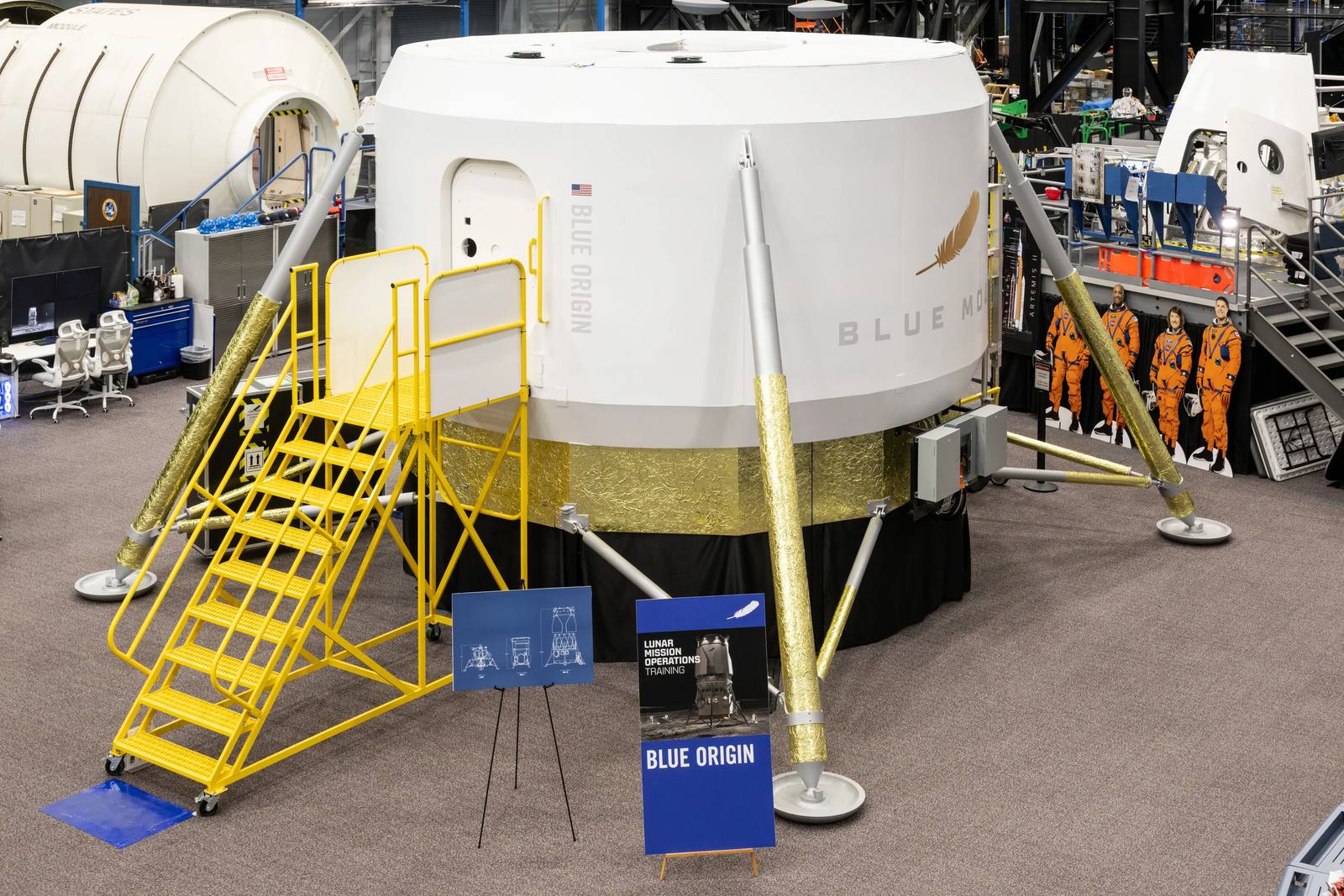
- Crew: Randy Bresnik, Frank Rubio, Andre Douglas and ESA’s Luca Parmitano.
- Length: about 14 days in low Earth orbit.
- First target: Blue Origin launches a Blue Moon Mark 2 test article first. Orion docks with it, and the crew enters it for about two days.
- Second target: SpaceX launches a Starship V3 test article from Florida. Orion docks for up to two hours, and the crew does not enter it. That test vehicle needs Starship launching from Florida, and Flight 16, tentatively December 10, could be the first.
- Launch date: NASA says 2027. Space.com, reporting on an Oct. 5 NASA presentation, says the third quarter of 2027.
The First Landing Moves to Artemis IV (2028)
NASA’s target is a landing in 2028, now on Artemis IV. NASA will choose between Starship and Blue Moon for that first landing based on readiness. Both must complete an uncrewed demonstration first.
NASA also changed how each lander works. Orion will no longer meet the landers in the Moon’s “near-rectilinear halo orbit”:
- Starship: SpaceX will gather propellant in Earth orbit, with tanker Starships filling a depot. The Starship lander will then wait in Earth orbit, dock with Orion, and push the combined stack toward the Moon, per NASA. NASA is working on modifying Orion for that.
- Blue Moon: Blue Origin will skip propellant transfer on the 2028 mission. It will use three transfer stages to send the Mark 2 lander to an elliptical polar orbit around the Moon.
- The landing: NASA plans two moonwalks of about two hours each, using a suit from Axiom Space.
The schedule is tight. Space.com reports NASA’s plan has SpaceX flying an uncrewed lunar landing demonstration before the end of 2027 and Blue Origin in Q1 2028. Ars Technica reports SpaceX plans a ship-to-ship refueling test early in 2027. These are plans, not guarantees.
Robots Go First: Moon Base and CLPS 🤖
NASA is also building a Moon Base. Phase I, through 2029, includes more than twenty robotic landings, and some technology demonstrations reuse hardware from the Gateway station’s HALO module. NASA paused Gateway in March to focus on the surface.
Here’s the 2026–2027 lander lineup, per NASA and Aerospace America:
- Griffin-1 (Voyager Technologies, which acquired Astrobotic in July): no earlier than November. It would land near the south pole carrying Astrolab’s FLIP rover. It’s the only lunar launch NASA expected this year.
- Blue Moon Mark 1 “Endurance” and Intuitive Machines’ IM-3 “Trinity”: the first part of 2027.
- Firefly’s Blue Ghost Mission 2 (the far side): later in 2027.
Blue Moon Mk 1 flies on New Glenn, so it depends on that rocket returning to flight. An FAA planning slide shown October 22 lists a tentative return on December 28, but Ars Technica thinks early 2027 is more likely (see my launch-providers post).
China and Others 🌏
China’s Chang’e-7 is a south-pole mission with an orbiter, lander, rover and hopper. On August 23, China’s human spaceflight agency said it “does not meet the conditions for launch” and called off the launch window. It gave no new date. Ars Technica speculated about the cause, and social-media chatter points to a new window around February or March 2027, which is unconfirmed.
China has long said it aims for a crewed lunar landing before 2030. I couldn’t verify its latest status for this post.
On the SpaceX side, Elon Musk said in February that the company is shifting its focus from a Mars city to a city on the Moon. India’s ISRO chief said on Oct. 24 that Chandrayaan-5, a joint mission with Japan’s space agency with a 350-kg rover, is planned.
The Star Queen’s Take 👑
I love this plan. Artemis II showed Orion can carry people, Artemis III will test the hard parts without risking a landing, and robots are scouting the way. But I’ll say plainly: 2028 is ambitious. Both landers have a lot to prove, so I’ll be watching every test closely.
Keep reading: The ship NASA is counting on is in my Starship post, and the New Glenn story behind Blue Moon is in my launch-providers post. Coming Thursday, Oct. 29: my spaceports post.
Sources
- NASA, Artemis II return (Apr. 10): https://www.nasa.gov/news-release/nasa-welcomes-record-setting-artemis-ii-moonfarers-back-to-earth/
- NASA, Artemis II heat shield (Oct. 15): https://www.nasa.gov/missions/artemis/artemis-2/rigorous-analysis-confirms-nasas-artemis-ii-heat-shield-performance/
- NASA, Artemis III plan (Oct. 23): https://www.nasa.gov/missions/artemis/nasas-artemis-iii-mission-to-test-future-moon-lander-operations/
- NASA, lander concepts of operations (Oct. 23): https://www.nasa.gov/missions/artemis/nasa-partners-accelerate-lander-development-for-2028-moon-missions/
- Space.com, lander timelines (Oct. 21): https://www.space.com/space-exploration/artemis/when-will-spacex-and-blue-origin-fly-to-the-moon-nasa-reveals-lunar-lander-timelines-and-an-artemis-iii-update
- Ars Technica, SpaceX cadence and refueling (Oct. 21): https://arstechnica.com/space/2026/10/spacex-will-attempt-to-reach-weekly-starship-launches-by-early-2027/
- NASA, Moon Base cargo landers (Aug. 4): https://www.nasa.gov/missions/moon-base/nasa-provides-updates-on-moon-base-cargo-landers-tech-demonstrations/
- Aerospace America, CLPS schedule (Sept. 15): https://aerospaceamerica.aiaa.org/nasa-expects-one-lunar-launch-this-year-moon-base-manager-says/
- Space.com, Gateway pause and SR-1 (Mar. 24): https://www.space.com/astronomy/mars/nasas-1st-nuclear-powered-interplanetary-spacecraft-will-send-skyfall-helicopters-to-mars-in-2028
- Ars Technica, Chang’e-7 delay (Aug. 23): https://arstechnica.com/space/2026/08/due-to-need-for-absolute-success-china-delays-critical-moon-launch-to-2027/
- Xinhua via SpaceChina, Chang’e-7: https://english.spacechina.com/n17212/c4696661/content.html
- Space.com, SpaceX’s Moon-city shift (Feb. 9): https://www.space.com/astronomy/moon/a-city-on-the-moon-why-spacex-shifted-its-focus-away-from-mars
- Hindustan Times/PTI, Chandrayaan-5 (Oct. 25): https://www.hindustantimes.com/india-news/isro-plans-four-functional-launch-pads-by-2029-outlines-gaganyaan-mission-roadmap-sslv-complex-kulasekarapattinam-tamil-nadu-101792908657184.html
- Behind The Black, FAA tentative dates for Starship and New Glenn (Oct. 22): https://behindtheblack.com/behind-the-black/points-of-information/faa-provides-tentative-dates-for-two-starship-launches-and-next-new-glenn-launch/
- Ars Technica, Blue Origin going all in on New Glenn (Oct. 16): https://arstechnica.com/space/2026/10/blue-origin-is-going-all-in-on-the-new-glenn-rocket/