By The Star Queen · Star Queen Chronicles
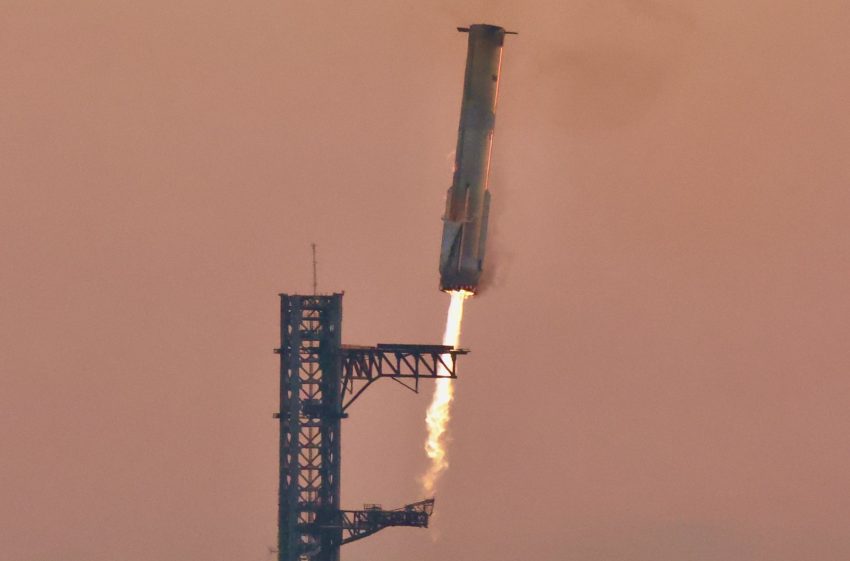
Header photo: Super Heavy returning to the Starbase tower for a catch during Starship’s fifth flight test (October 2024). Credit: Steve Jurvetson (CC BY 2.0, cropped)
My loves, I have been waiting years to write this sentence: Starship reached orbit. 🌟 If you’ve followed my blog for a while, you know how much this rocket means to me. Let me walk you through what happened, what went wrong, and what comes next.
Flight 14: The Morning Starship Made Orbit
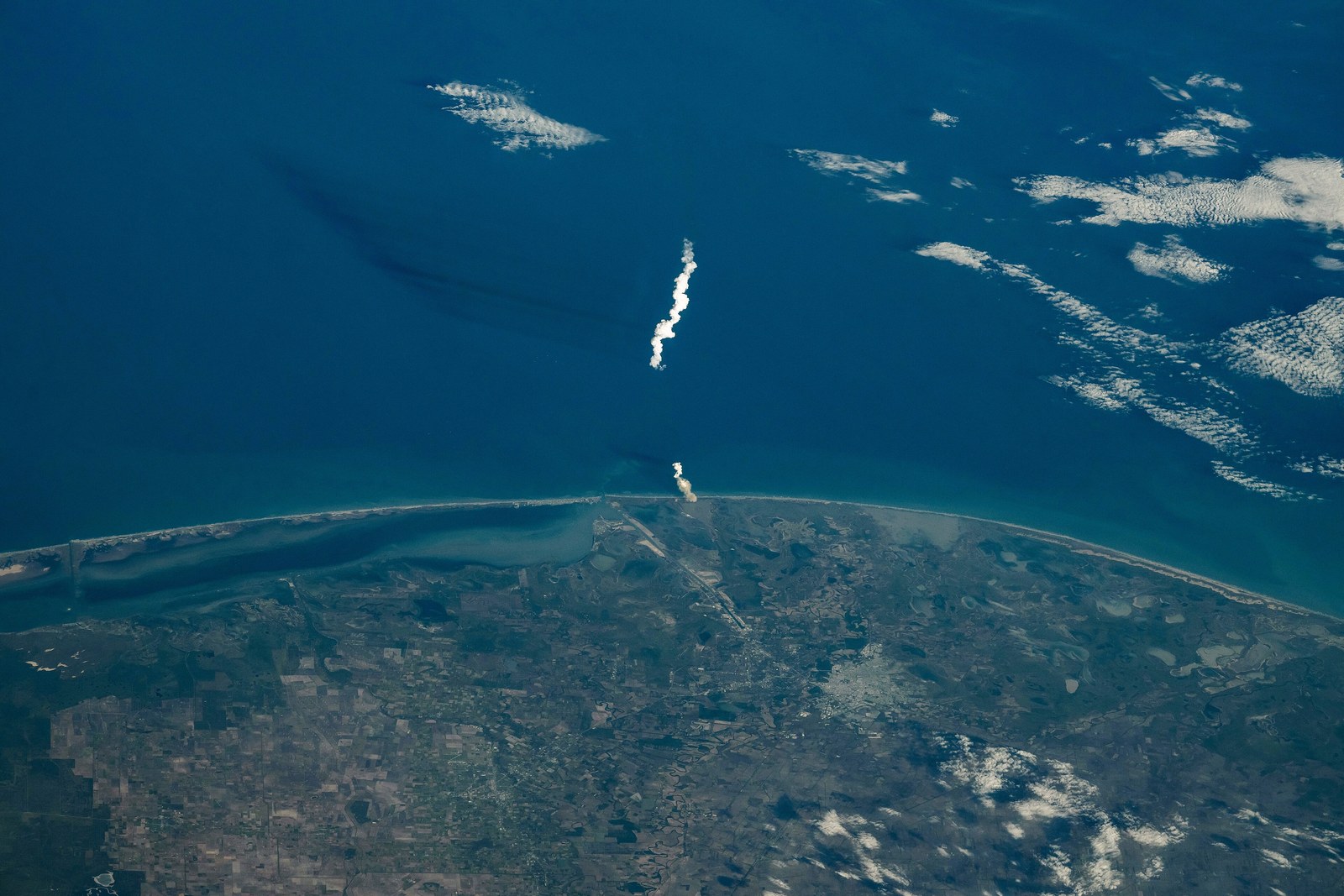
On Monday, September 28, Starship lifted off from Starbase, Texas, at 7:48 a.m. Central (that’s 8:48 a.m. Eastern). SpaceX’s own page calls it the first orbital Starship flight and the first with a meaningful payload.
The payload was 26 Starlink V3 satellites. Every one of them made contact over laser links, ground stations and user terminals soon after deployment.
The ship reached an orbit of roughly 262 × 275 km. It got there with a single Raptor sea-level engine burn. After about two orbits, the ship made its deorbit burn and splashed down in the Pacific, just north of Hawaii, according to NASASpaceflight.
I won’t quote a total flight duration, because SpaceX’s page and NASASpaceflight give very different numbers.
It Wasn’t a Perfect Flight, and That’s Okay
Starship isn’t flawless yet. Here is what went wrong, according to SpaceX and NASASpaceflight:
- A booster engine shut down early on ascent. The booster, Booster 21, ended up using 31 of 33 engines for the boostback burn and 11 of 13 for the landing burn.
- A Raptor Vacuum engine on the ship shut down during ascent. The ship burned its other engines longer to make up the difference. NASASpaceflight says this was the second time in three V3 flights that a vacuum engine went out on ascent.
- A tense pause. Mission control spent roughly 10 minutes deciding before the call came: “go for orbit.”
- The ship took a cautious landing. SpaceX says it used the first contingency landing opportunity out of caution, and it still splashed down on target.
Musk has described the engine issue as a software “glitch” isolated to one engine computer, according to NASASpaceflight’s account of an interview. SpaceX hasn’t published a formal root cause that I could find.
The booster did not get caught. It lost several engines during its landing burn, relighting 11 of 13, then 5, then 3, before a Gulf splashdown, and then SpaceX intentionally triggered its flight termination system as a safety-hardware demonstration. 🎆
What “V3” Actually Means
Flight 14 was the third flight of Starship Version 3:
- Flight 12 (May 22, 2026) was the first V3 launch, the first with Raptor 3 engines, and the first from Pad 2.
- Flight 13 (July 24) deployed the first Starlink V3 satellites and brought Ship 40 down intact in the Indian Ocean. SpaceX has since brought that ship back to Starbase.
- Flight 14 (Sept. 28) reached orbit.
The full stack stands about 408 feet (124 meters) tall, per Space.com. Starlink V3 satellites are bigger than the current ones and are meant to launch only on Starship, with a planned constellation of roughly 100,000 (Space.com).
Flight 15: Catch Everything 🤞
This is the part that gave me goosebumps. On SpaceX’s October 20 earnings call, Elon Musk said SpaceX will try to catch both the booster and the ship on Flight 15. Space.com reports he called success “more likely than not.”
Here is what we know, and what we don’t:
- Date: SpaceX hasn’t announced one. NASASpaceflight says the current internal “no earlier than” date is November 8, and Musk said it should be before Thanksgiving. Treat that as a target, not a promise. FAA planning information shown on October 22 still lists November 8, unchanged from earlier reports, according to Behind The Black. That’s still an unofficial planning date, not a SpaceX announcement.
- The vehicles: Flight 15 should use Booster 22 and Ship 42. Both still need static fires. Ship 42’s engines were removed ahead of its test, and the reason isn’t public.
- The license: SpaceNews says the flight is “pending regulatory approval.” The ship must return over land, including northern Mexico. SpaceX president Gwynne Shotwell said she expects the FAA license to include return to launch site and tower catch for both stages.
So far SpaceX has caught Super Heavy three times, on Flights 5, 7 and 8. The ship has never been caught.
Florida Is Next 🌴
Starship is about to move beyond Texas. According to NASASpaceflight and Space.com:
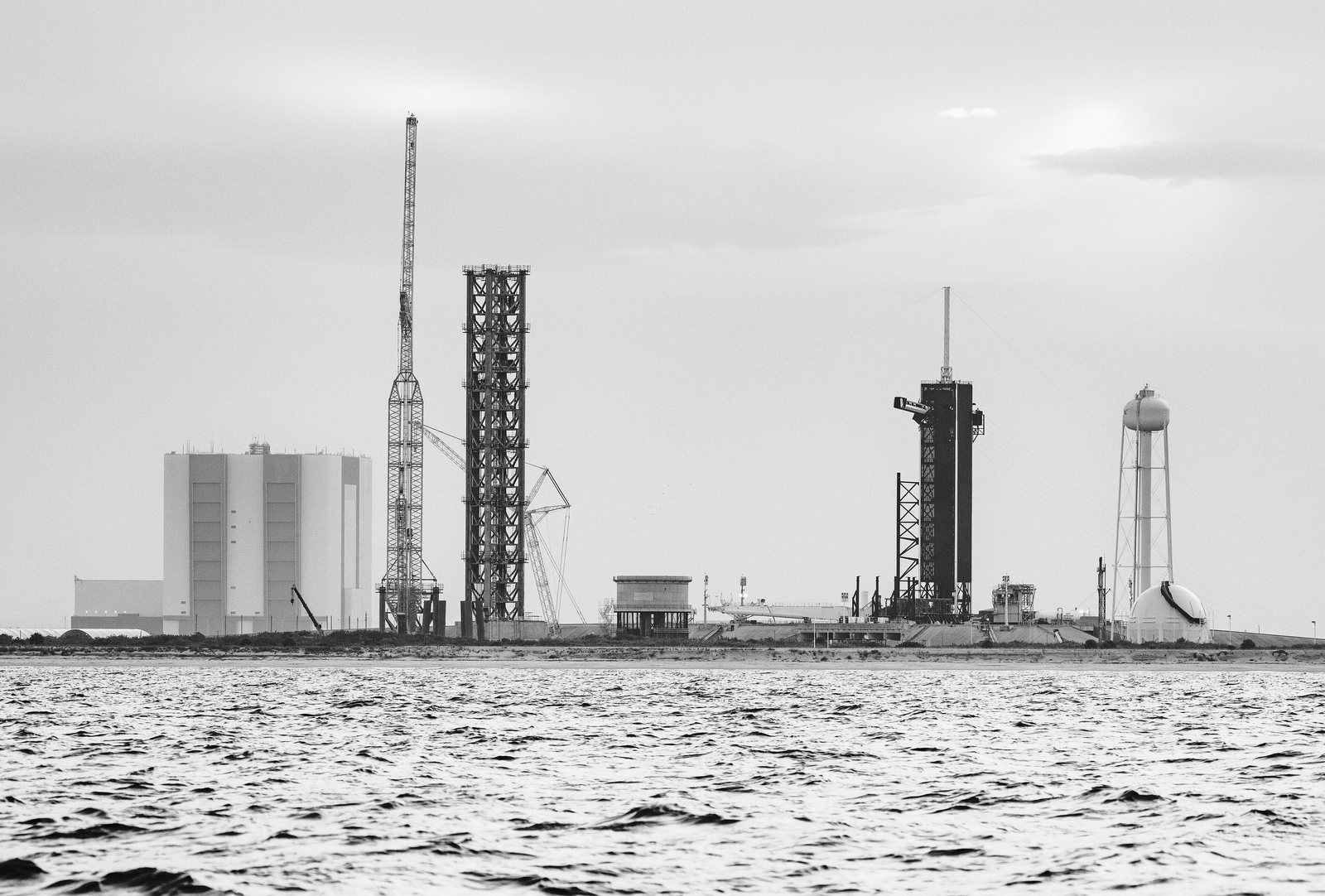
- Flight 16 is tentatively targeted for December 10, per the same FAA planning information shown October 22, and could be the first Starship launch from Pad 39A at Kennedy Space Center. It would use Booster 23 and Ship 43. Neither SpaceX nor the FAA has confirmed the launch site (one FAA schedule listing only called the mission “Starlink 30-1”), so I’m saying “could,” not “will.” 🤞
- The paperwork: The FAA has completed an environmental review of Starship at 39A that analyzes up to 44 launches a year, but the FAA says finishing the review doesn’t guarantee a license. SpaceX still needs a license for Florida launches.
- At 39A, the Starship tower is nearly complete and moving into testing. That’s according to SpaceX’s Julianna Scheiman on Oct. 1.
- SLC-37 at Cape Canaveral will get two Starship pads, and a Gigabay is planned at SpaceX’s Roberts Road facility.
- NASA’s Artemis III Starship test vehicle will launch from 39A (per NASA and Space.com).
If both flights happen, Starship will have flown only about five times in 2026.
What Comes After
- SpaceX wants to refly a Starship upper stage “early” next year and finish its first ship-to-ship propellant transfer early in 2027, per Shotwell on the earnings call, as reported by Ars Technica. That transfer is the key step for NASA’s Moon missions.
- Musk predicted a weekly flight cadence in the first half of 2027 and twice weekly in the second half. Ars Technica notes that Musk often gives optimistic timeframes. I’d call it a goal.
- The FAA has begun an environmental review that could eventually allow up to 456 launches a year from Starbase (NASASpaceflight). Nothing has been approved.
The Star Queen’s Take 👑
I’m thrilled. Flight 14 proved Starship can deliver real satellites and come home. The engine issues and the regulatory homework are real, but a double catch would be one of the most dramatic things I’ve ever seen on a launch pad. Come back to the blog after launch day!
Keep reading: New to rockets? Start with my Basic Rocket Science primer. On Tuesday, Oct. 27, I tour the launch providers racing around the world, and my five-part Basic Rocket Science series starts Saturday, Oct. 31.
Sources
- SpaceX, Starship Flight 14: https://www.spacex.com/launches/starship-flight-14/
- NASASpaceflight, “Starship makes orbit, Flight 15 preps in full swing” (Sept. 30): https://www.nasaspaceflight.com/2026/09/starship-14-orbit-flight-15/
- NASASpaceflight, “SpaceX working through Starship Flight 15 and 16 milestones” (Oct. 18): https://www.nasaspaceflight.com/2026/10/spacex-flight-15-16-milestones/
- Space.com, double-catch plan (Oct. 20): https://www.space.com/space-exploration/launches-spacecraft/spacex-will-attempt-1st-ever-double-starship-rocket-catch-on-next-test-launch-a-profound-technology-milestone-elon-musk-says
- SpaceNews, Starship upper-stage catch (Oct. 20): https://spacenews.com/spacex-plans-starship-upper-stage-catch-on-next-launch/
- Ars Technica, earnings call and cadence (Oct. 21): https://arstechnica.com/space/2026/10/spacex-will-attempt-to-reach-weekly-starship-launches-by-early-2027/
- Space.com, Pad 39A (Oct. 7): https://www.space.com/space-exploration/launches-spacecraft/things-are-going-super-well-at-39a-spacex-gearing-up-to-launch-starship-from-florida-for-1st-time
- The Space Road, flight history: https://thespaceroad.com/articles/every-starship-flight-so-far/
- Teslarati, catch animation: https://www.teslarati.com/spacex-starship-tower-catch-flight-15/
- Behind The Black, FAA tentative dates for Starship and New Glenn (Oct. 22): https://behindtheblack.com/behind-the-black/points-of-information/faa-provides-tentative-dates-for-two-starship-launches-and-next-new-glenn-launch/
- Florida Spaceflight, FAA planning schedule for Starship and New Glenn: https://flspaceflight.com/news/starship-new-glenn-florida-december-2026-launch-targets
- FAA, Starship-Super Heavy at Kennedy Space Center LC-39A: https://www.faa.gov/space/stakeholder_engagement/spacex_starship_ksc