By The Star Queen · Star Queen Chronicles
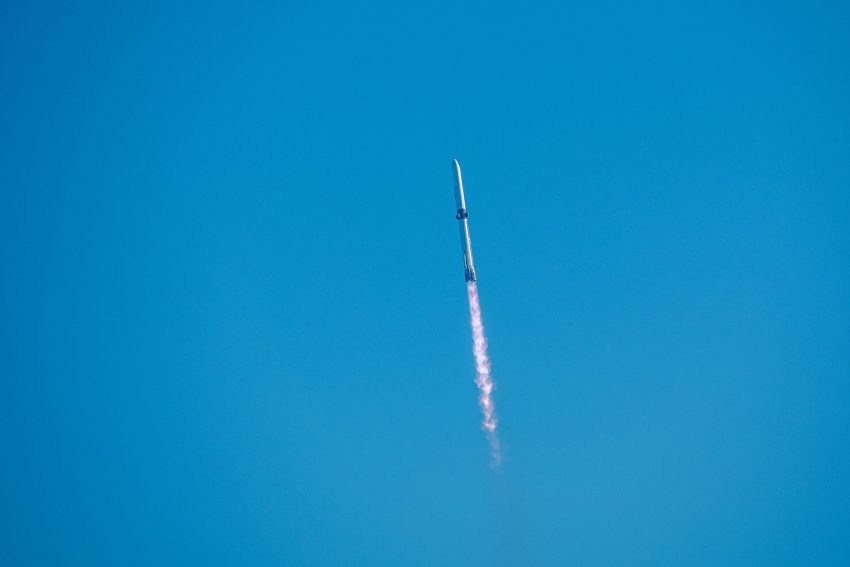
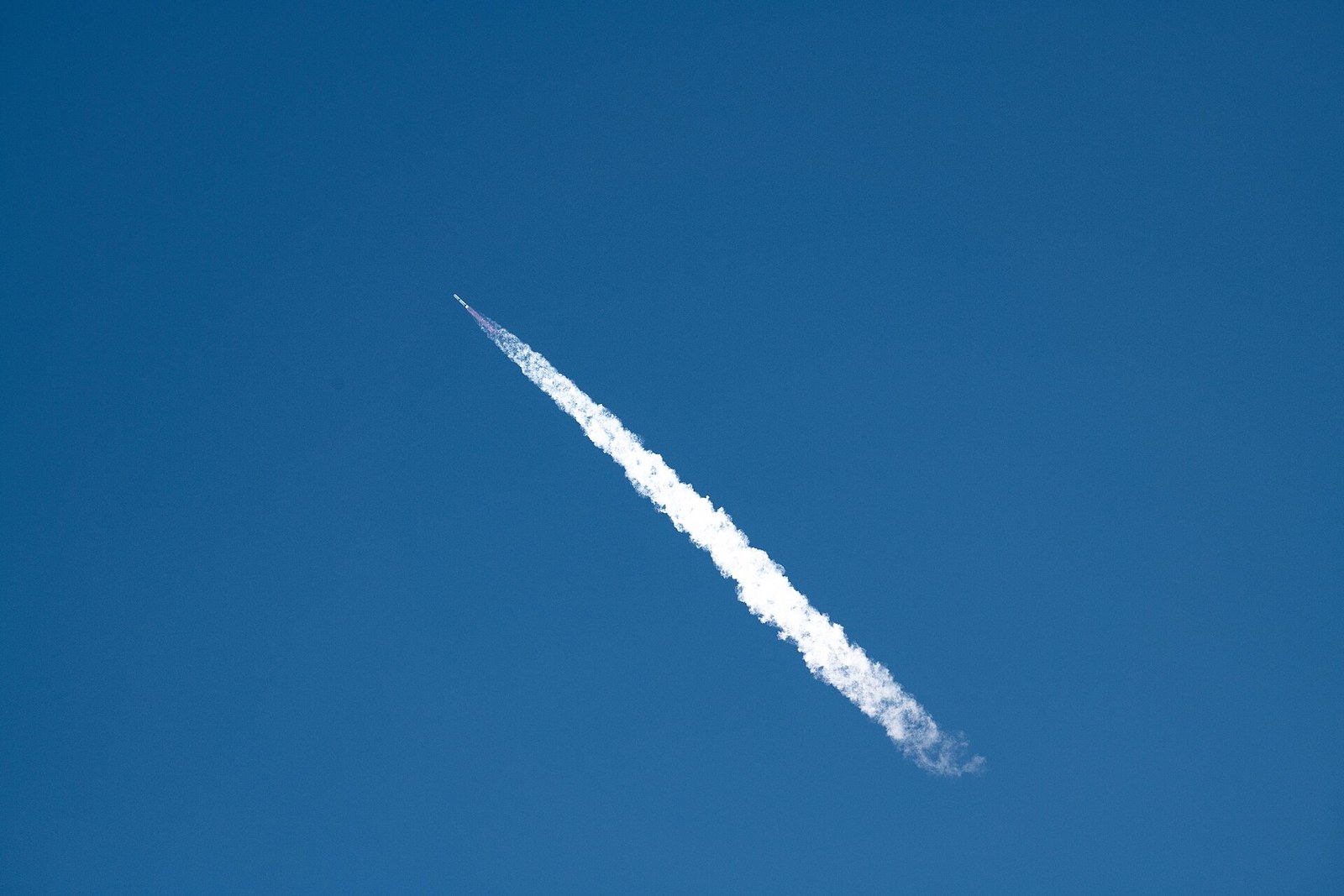
My loves, after the NG-1 booster fell short, everyone watching NG-2 had one eye on the sky and one eye on the ship. 🚢 And at about nine minutes after liftoff on November 13, 2025, a tall black-and-white booster came down through the smoke and settled onto the deck of Jacklyn, about 600 kilometers (375 miles) east of Cape Canaveral. Blue Origin called it “full mission success.” Ars Technica said the touchdown looked electric at Blue Origin facilities, which fed live views of cheering employees into the webcast.
I’m writing this on October 26, 2026, so I can also tell you where the passengers are now. NASA’s two ESCAPADE spacecraft, “Blue” and “Gold,” are still on a very patient route to Mars. I’ll flag where sources differ and mark anything that rests on one outlet.
The Short Version
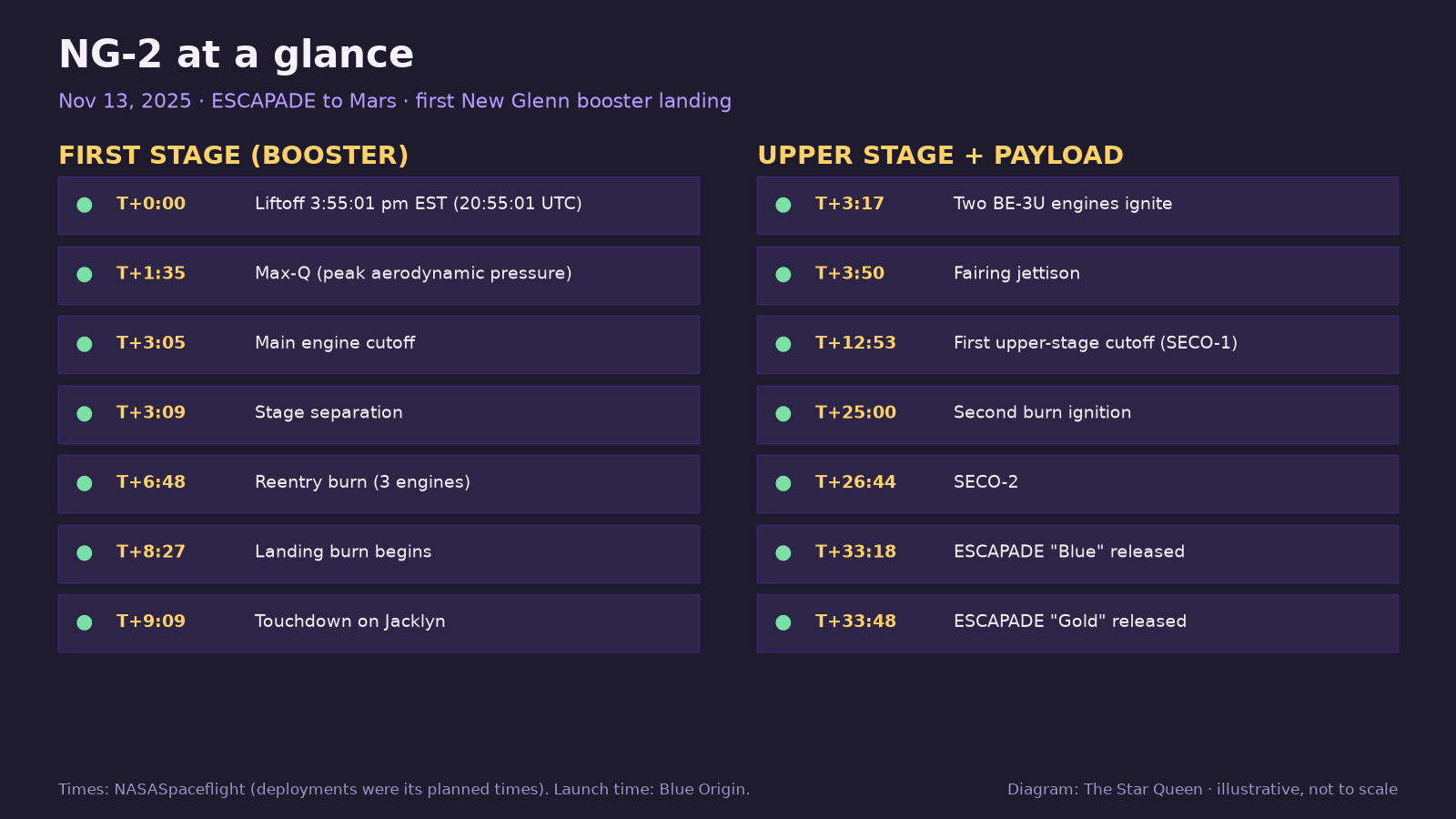
- When: Thursday, November 13, 2025, liftoff at 3:55:01 pm EST (20:55:01 UTC), from LC-36 at Cape Canaveral.
- Payload: NASA’s twin ESCAPADE spacecraft, plus a Viasat communications demonstration riding on the upper stage (Blue Origin calls it HaloNet; NASASpaceflight calls it InRange).
- Booster: “Never Tell Me The Odds” (GS1-SN002). It landed on Jacklyn about nine minutes after liftoff, the first time a New Glenn booster had come back.
- Upper stage: Two BE-3U engines fired twice and released both ESCAPADE spacecraft into a loiter orbit, a little more than half an hour after launch.
- FAA: I found no FAA mishap statement for NG-2.
- Where is ESCAPADE now: Waiting for its Mars departure burn, expected in November 2026.
Terms to know ✨
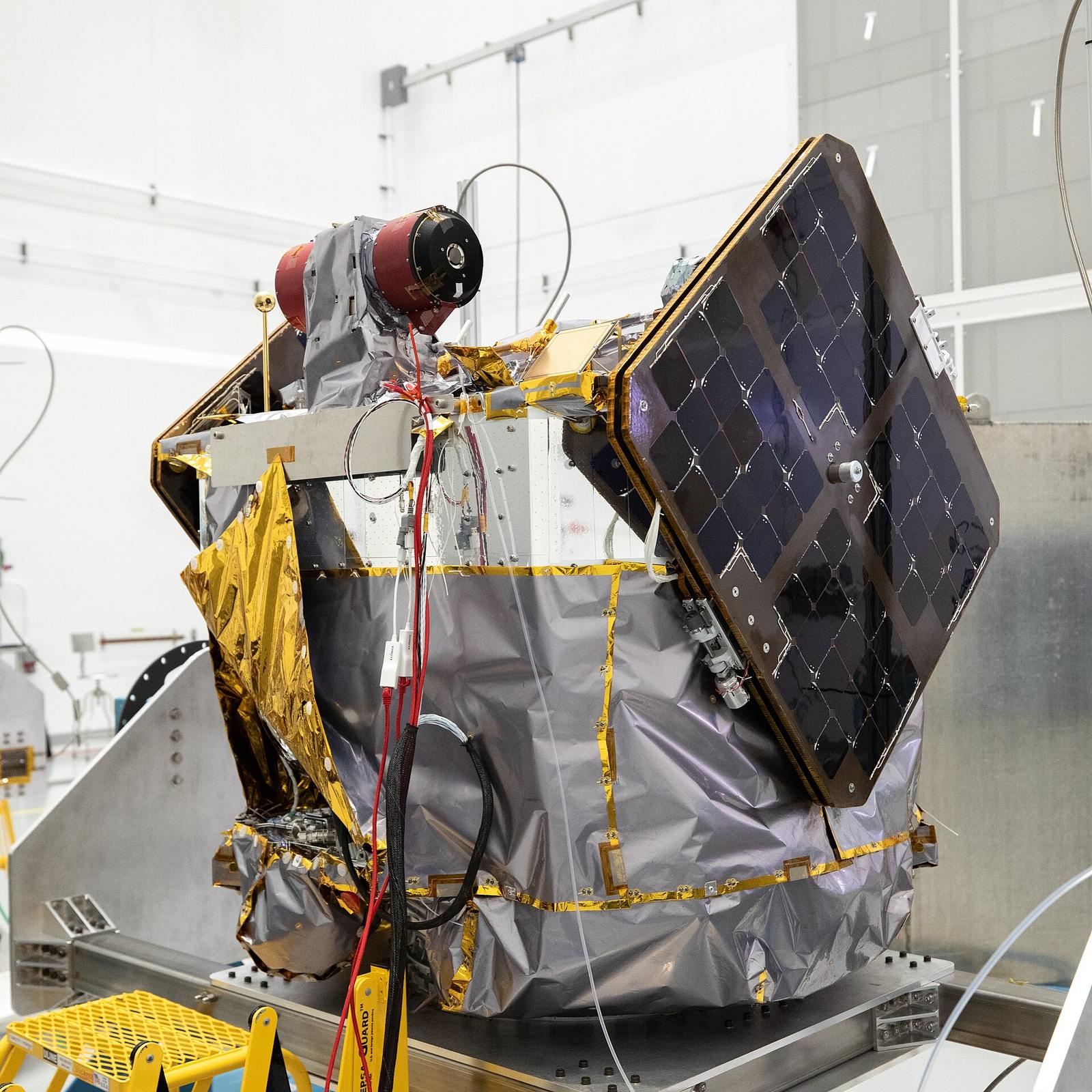
- ESCAPADE: “Escape and Plasma Acceleration and Dynamics Explorers,” two matching NASA spacecraft that will study how the solar wind strips Mars’s atmosphere. Built by Rocket Lab and led by UC Berkeley.
- Loiter orbit: a waiting orbit. Here, the spacecraft looped far from Earth while Mars lined up.
- Lagrange point (L2): a gravitational balance point about a million miles from Earth, on the side away from the Sun.
- Trans-Mars injection: the big engine burn that sends a spacecraft toward Mars.
- Oberth effect: a burn adds more speed when the spacecraft is already moving fast, as it does near Earth.
- Max-Q: the moment of peak aerodynamic pressure as the rocket climbs.
NG-2 at a glance
| Item | Details |
|---|---|
| Date and time | November 13, 2025, 3:55:01 pm EST (20:55:01 UTC) |
| Launch site | LC-36, Cape Canaveral Space Force Station |
| Payloads | NASA ESCAPADE (two spacecraft); Viasat demonstration on the upper stage |
| Booster | “Never Tell Me The Odds” (GS1-SN002); landed on Jacklyn |
| Cost | ESCAPADE: about $80 million total; about $20 million for the launch (Ars Technica) |
| Delays | Weather on Nov 9; a solar storm on Nov 12 |
| Certification | Second National Security Space Launch certification flight (Blue Origin) |
The Road to NG-2
This was a new booster, GS1-SN002, with fixes for the NG-1 landing failure. The vehicle rolled out on October 28, and its hotfire on October 30 ran 38 seconds in total: seven BE-4s at full thrust for 22 seconds, then a landing-sequence rehearsal. Dave Limp wrote on X that the team had extended the hotfire “to simulate the landing burn sequence by shutting down the non-gimballed engines after ramping down to 50 percent thrust.” Per NASASpaceflight, Limp said a landing on NG-1 would have been a “bonus,” but on NG-2 it was a primary objective.
The launch was set for Sunday, November 9, then delayed for weather. It was then held again on November 12 because two coronal mass ejections had hit Earth’s magnetosphere, and Ars Technica described the delay as a solar storm sending hazardous radiation toward Earth. It flew on November 13.
What Went Right: A Landing From a Rocket’s Second Try
NASASpaceflight’s mission timeline is the most detailed I found. Times through touchdown and the first upper-stage cutoff are reported as events that occurred. The later ones, from the second burn on, are NASASpaceflight’s timeline, written in the future tense in its launch-day story, so I’d treat them as planned times.
| Time after liftoff | Event (NASASpaceflight timeline) |
|---|---|
| T+1:35 | Max-Q |
| T+3:05 | Main engine cutoff |
| T+3:09 | Stage separation |
| T+3:17 | Two BE-3U engines ignite |
| T+3:50 | Fairing separation |
| T+6:48 | Booster entry burn |
| T+8:27 | Booster landing burn |
| T+9:09 | Touchdown on Jacklyn |
| T+12:53 | First upper-stage cutoff |
| T+25:00 | Second burn ignition |
| T+26:44 | Second cutoff |
| T+33:18 and T+33:48 | ESCAPADE “Blue” and “Gold” released |
Ars Technica reported the booster’s apogee at 79 miles (127 kilometers). Three engines reignited to slow its descent in the upper atmosphere, then moments before reaching the Atlantic three engines lit again as the landing legs extended, and the booster settled onto the football-field-size deck of Jacklyn. NASASpaceflight’s reporter wrote that it “looked like it was going to miss, but slid back into the target.” Ars Technica said the fix came from “propellant management and engine bleed control improvements,” the same wording Blue Origin used after NG-1, and that the fixes appeared to work. Ars Technica called it the first time any company besides SpaceX had propulsively landed an orbital-class booster.
The Engineering, In Plain Language
Why three engines, not seven?
By the time the booster comes back, most of its propellant is gone, so it’s light. Seven engines at full thrust would be far more push than a nearly empty stage needs. Blue Origin hasn’t published a full explanation, but Limp’s hotfire description tells us the landing sequence uses fewer engines at reduced thrust, with the engines that don’t swivel (the “non-gimballed” ones) shut down. That’s my plain-language reading, not a Blue Origin diagram.
Why two burns?
The first, the reentry burn (NASASpaceflight times it at T+6:48), slows the booster before it plunges into the thick lower air. The second, the landing burn (T+8:27), slows it for touchdown. In between, the booster steers and falls. On NG-1 the booster didn’t get its first burn.
What happens after landing?
After touchdown on Jacklyn, Ars Technica reported, the ship was expected to return to Port Canaveral within days so crews could inspect and refurbish the booster. Blue Origin intends each booster to fly up to 25 times.
The Long Road to Mars
Ars Technica reported that ESCAPADE was supposed to launch in 2024, when Earth and Mars were positioned for a direct trip, but Blue Origin delayed the launch, forcing a yearlong wait. So the twins went into a loiter orbit more than a million miles from Earth until the next Mars window. Blue Origin says they will set off “once the planets have returned to the ideal alignment in fall 2026.” Each spacecraft is about 535 kilograms (NASASpaceflight), so “about a half-ton” is Ars Technica’s rounding.
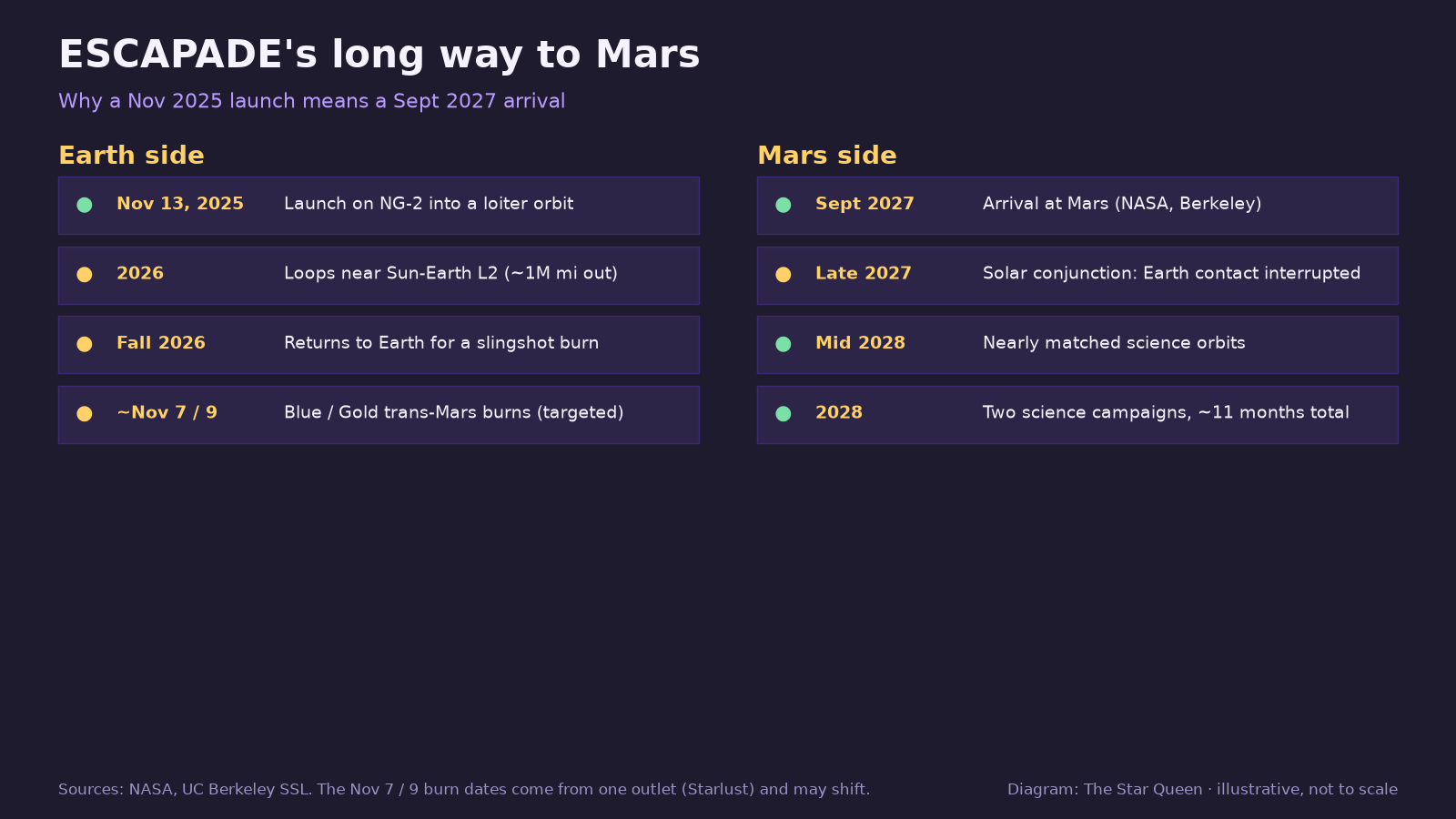
UC Berkeley’s mission page describes a roughly one-year, “kidney bean-shaped” Earth-proximity phase, then a return to a low perigee for a trans-Mars injection burn in November 2026, “taking advantage of the Oberth Effect.” In plain terms, a burn buys more speed deep in Earth’s gravity well, so they return close to Earth to do it. NASA calls it using Earth’s gravity “to slingshot toward Mars.”
One outlet, Starlust, reported targeted burns of November 7 for Blue and November 9 for Gold. That’s a single source, and Berkeley shows “nominal dates” for noncritical burns, so I’d treat those dates as “targeted,” not firm. Arrival at Mars is expected in September 2027. Communications will be interrupted by solar conjunction in late 2027, the spacecraft reach nearly matching science orbits by mid-2028 (NASA), and Berkeley says science begins in late spring 2028. NASA counts 11 months of prime science and about 3 years 7 months in total. NASA’s mission page also links news about trajectory maneuvers, which I haven’t summarized, so check it for current status.
What the FAA Said
I couldn’t find an FAA mishap statement for NG-2, which fits with Blue Origin calling the flight “full mission success.” That’s an absence of evidence, not a statement. The FAA’s NG-1 closure said it would verify Blue Origin’s corrective actions before NG-2. I haven’t found a public document describing that verification. The NG-1 closure wording is in my NG-1 explainer.
Then and Now
What changed from NG-1: The booster relit and landed. The upper stage did two burns again and released the payload. What came next: Ars Technica reported that Blue Origin planned to reuse this booster for its next launch. NG-3 did fly it again, 157 days later, with a different payload than Ars expected. For why the landing mattered to Blue Origin’s plans, see New Glenn 7×2 vs 9×4.
The Star Queen’s Take 👑
Ars Technica said Blue Origin had 34 New Shepard landings before this one, which I think matters: this team has years of practice landing rockets, just not this big. I’m also fascinated by ESCAPADE’s waiting orbit, which is clever physics, and a reminder that launch day isn’t the end of a mission.
One caution: “full mission success” is Blue Origin’s phrase. I’d call it a very successful flight, and ESCAPADE’s real test is still ahead.
Watch
Blue Origin’s replay of the NG-2 webcast, and Spaceflight Now’s live coverage.
If the video doesn’t load, watch it here: Blue Origin on YouTube.
Link fallback: Spaceflight Now on YouTube.
Keep Reading
Previous: New Glenn NG-1 Explained. Next: New Glenn NG-3 Explained. Also: BE-4 deep dive and Blue Moon landers.
Sources
- Blue Origin, “New Glenn launches NASA’s ESCAPADE, lands fully reusable booster”: https://www.blueorigin.com/news/new-glenn-launches-nasa-escapade-lands-fully-reusable-booster
- Ars Technica, “Blue Origin caps second heavy-lift launch with first offshore landing”: https://arstechnica.com/science/2025/11/blue-origin-caps-second-heavy-lift-launch-with-first-offshore-landing/
- NASASpaceflight, “NG-2 ESCAPADE launch”: https://www.nasaspaceflight.com/2025/11/ng-2-escapade-launch/
- NASA, ESCAPADE mission: https://science.nasa.gov/mission/escapade/
- UC Berkeley Space Sciences Laboratory, ESCAPADE mission design: https://escapade.ssl.berkeley.edu/mission-design/
- Starlust, ESCAPADE Earth gravity-assist coverage (single source for the Nov 7 and Nov 9 burn dates): https://starlust.org/nasas-escapade-orbiters-head-toward-earth-for-gravity-assist-as-they-prepare-to-set-course-for-mars/
- FAA statements: https://www.faa.gov/newsroom/statements/general-statements
- Images (Wikimedia Commons; U.S. Space Force photos by Senior Airman Samuel Becker, public domain, and a NASA/Kim Shiflett photo, public domain; the featured image is the first): https://commons.wikimedia.org/wiki/File:Blue_Origin_New_Glenn_Rocket_Successful_Launch_(9387522).jpg, https://commons.wikimedia.org/wiki/File:Blue_Origin_New_Glenn_Rocket_Successful_Launch_(9387524).jpg, https://commons.wikimedia.org/wiki/File:ESCAPADE_Unboxed_at_Astrotech_(KSC-20240822-PH-KLS01_0030).jpg